Missiles struck Aden International Airport in southern Yemen on Friday as a Saudi-led coalition intercepted a ballistic missile targeting the kingdom’s strategic Red Sea oil hub of Yanbu, amid escalating regional hostilities.
The Saudi-led coalition said its air defences also destroyed two cruise missiles over the Red Sea and intercepted three drones in the Southern and Riyadh regions. It did not identify those responsible for the attacks.
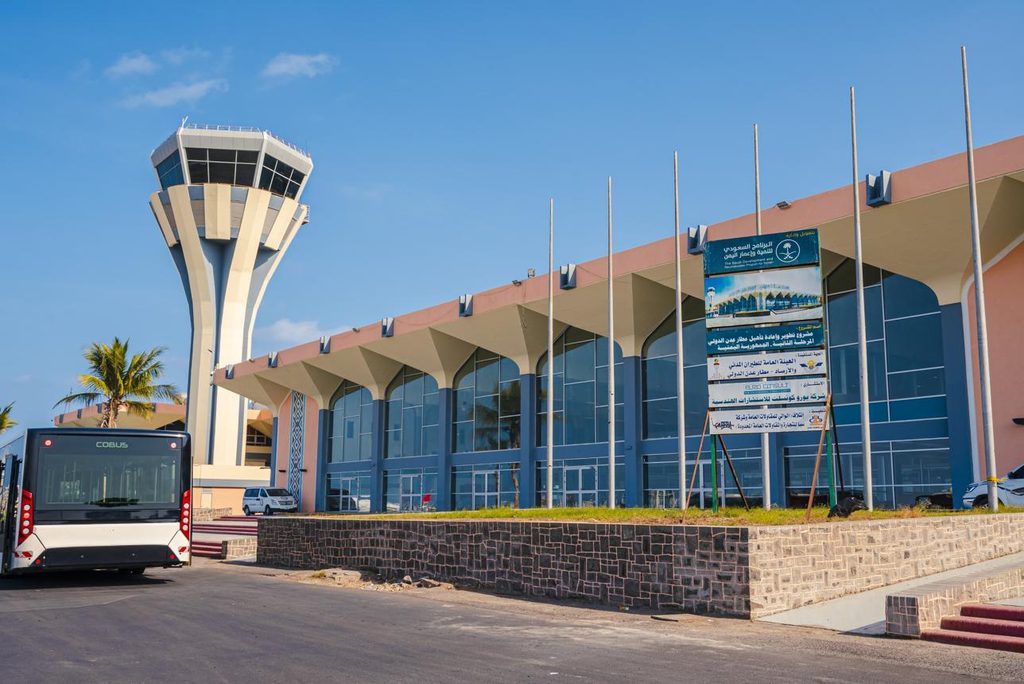
In Yemen, the Aden Security Department reported that two missiles landed within the grounds of Aden International Airport, accusing the Iran-aligned Houthi movement of carrying out the strike.
Authorities said the attack was the second targeting the airport in less than a week. The Houthis did not immediately claim responsibility.
No casualties were reported, although a Yemenia Airways passenger aircraft bound for Cairo was preparing to depart when the missiles struck, according to local security officials.
The attacks have intensified concerns over the security of vital energy infrastructure and commercial aviation across the region.
Yanbu serves as a major export terminal for Saudi crude oil, allowing shipments to reach international markets through the Red Sea without passing through the Strait of Hormuz, where escalating military tensions have threatened maritime traffic.
Global energy markets reacted sharply to the growing instability, with Brent crude briefly reaching $110 per barrel on Friday, its highest level since May.
Saudi civil defence authorities also issued security alerts in Jazan and the southwestern city of Khamis Mushait, where missile and drone warnings have become increasingly frequent since fighting resumed last month.
The renewed confrontation between the Houthis and the Saudi-led coalition supporting Yemen’s internationally recognised government has raised fears of another major deterioration in the country’s humanitarian situation.
Aid organisations have warned that escalating military operations are placing additional pressure on millions of Yemenis already struggling with displacement, food insecurity and limited access to essential services.
The latest violence forms part of a broader regional conflict that began with US and Israeli military strikes against Iran in February.
Yemen’s war erupted in 2014 when Houthi forces seized the capital, Sanaa, forcing the internationally recognised government to relocate south. Saudi Arabia subsequently launched a military intervention in 2015.
A United Nations-brokered truce established in 2022 had largely contained major hostilities until fighting intensified again this year.
Since the renewed escalation, the Houthis have repeatedly launched missiles and drones towards Saudi territory, targeting airports, energy installations and other strategic infrastructure.
The group has also carried out attacks against government-controlled areas of Yemen, including Aden airport and the presidential palace in the interim capital.
Meanwhile, a spokesperson for the Houthi-run health ministry said Friday that 124 civilians had been killed and 327 wounded in Saudi military operations since September 3.
The figures could not be independently verified.