Kenya’s months-long Ebola screening operation is facing its biggest test after an infected traveller passed through regional checkpoints and Nairobi airport despite being ill for weeks, before dying from the virus in the Kenyan capital.
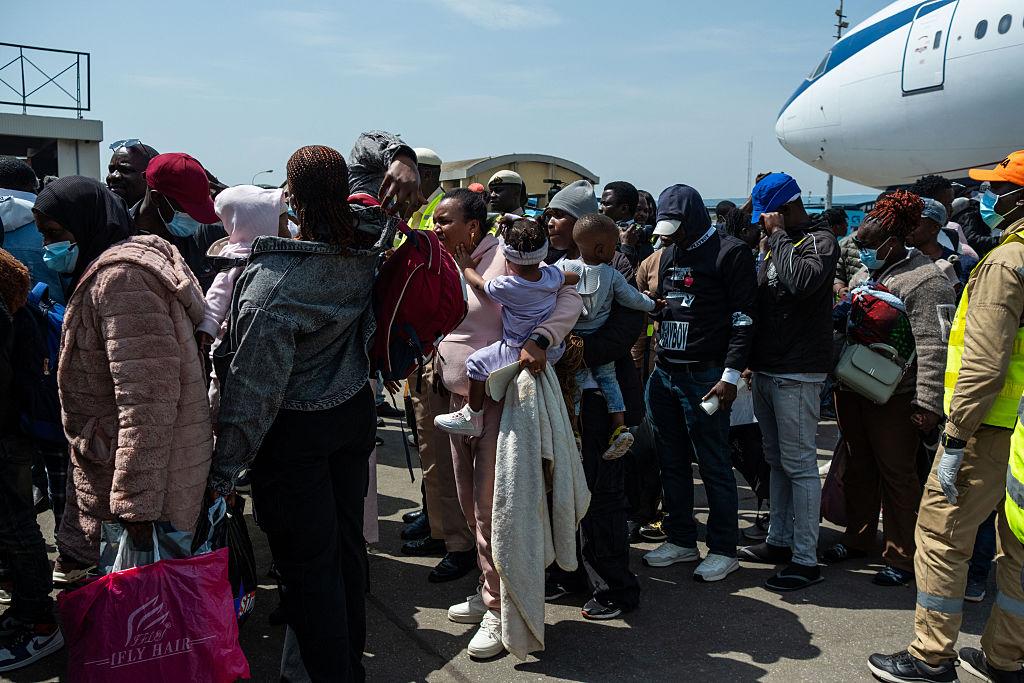
The World Health Organization said Tuesday that Kenya had screened more than 652,000 incoming travellers since Ebola outbreaks emerged in the Democratic Republic of Congo and Uganda in May. Authorities had also tested 267 suspected cases, trained about 5,000 health workers and identified isolation facilities across 27 high-risk counties.
Yet Kenya’s first confirmed Ebola patient managed to travel from Congo through Uganda and board a commercial flight to Nairobi while infected.
The Kenyan national, who had lived in Congo for seven years, first became ill there and received treatment at several health facilities before travelling by road through Beni to Kampala on October 2.
He then boarded Jambojet flight JM8523 from Entebbe to Nairobi on October 3.
Despite passing through health screening on arrival, he was not identified as a suspected Ebola case. Kenyan officials said medication taken by the patient may have temporarily suppressed symptoms, allowing him to pass airport screening.
He was later taken to Nairobi Hospital, where he developed symptoms consistent with viral haemorrhagic fever and was isolated. Tests at Kenya’s National Virology Reference Laboratory and the Kenya Medical Research Institute confirmed Bundibugyo virus disease.
He died on the night of October 5.
The case has highlighted a central weakness in border screening during disease outbreaks: temperature checks and visual symptom screening can fail to identify infected travellers whose symptoms are mild, temporarily suppressed or have not yet fully developed.
Kenyan authorities have identified 28 contacts, including relatives and healthcare workers who treated the patient, and are separately tracing 23 passengers and four crew members who travelled aboard the same Jambojet flight.
Those considered at risk are expected to be monitored or quarantined for the virus’s incubation period.
WHO said Kenya’s Ebola preparedness score had risen from 66 percent in May to 82 percent by July. It has supplied the country with around 1,000 Ebola laboratory tests and 1,000 sets of personal protective equipment.
But the arrival of an infected traveller after months of heightened surveillance demonstrates that even extensive preparedness cannot guarantee that every imported infection will be intercepted at a border.
The latest outbreak, driven by the Bundibugyo species of Ebola virus, has become the largest Ebola epidemic ever recorded in Congo and the second-largest globally.
More than 8,000 infections and 4,000 deaths have been reported as the disease has expanded beyond its original epicentre.
Unlike the better-known Zaire Ebola species, there is currently no approved vaccine or specific treatment for Bundibugyo virus disease, although experimental vaccines are being studied.
The patient’s journey also illustrates how easily an outbreak centred in eastern and central Africa can become an international problem.
He travelled through three countries while infected, received care at several medical facilities and boarded a scheduled commercial flight before the infection was confirmed.
Uganda previously recorded Bundibugyo Ebola cases linked to the Congo outbreak but was declared free of the disease in August. France has also recorded an imported case.
WHO nevertheless said it does not currently recommend restrictions on travel or trade involving Kenya, Uganda or Congo.
The immediate question for Kenyan authorities is whether contact tracing can find everyone potentially exposed before any secondary transmission occurs.
For now, Kenya has confirmed only one case.
But after more than 650,000 traveller screenings, the fact that the country’s first Ebola patient still passed through the system undetected shows why containing the outbreak increasingly depends on rapid contact tracing rather than border checks alone.