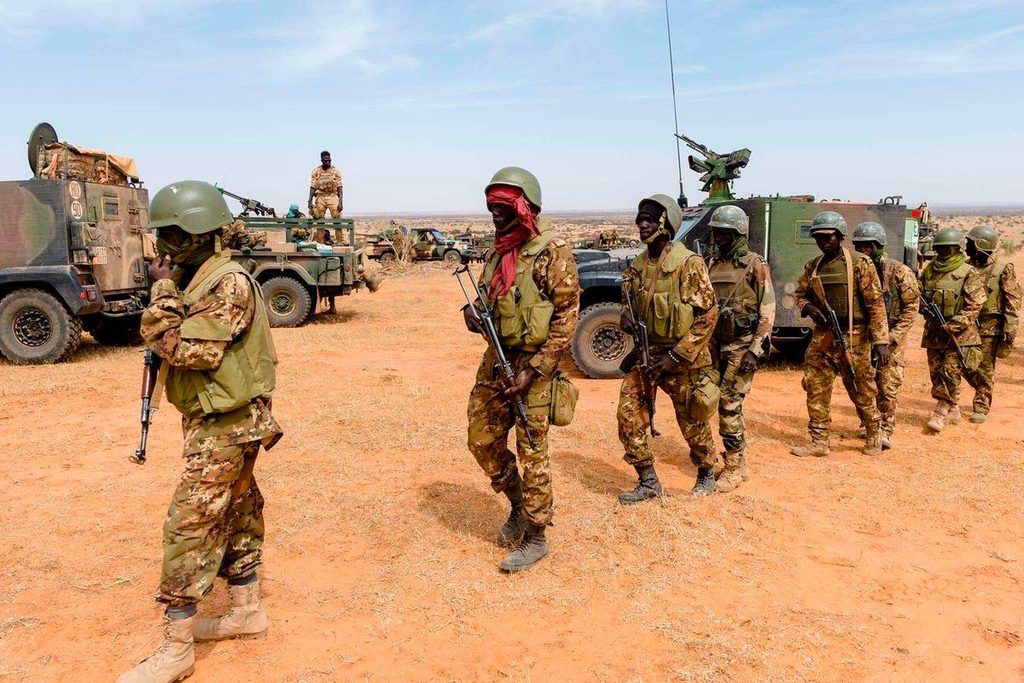
Mali’s military has regained control of the strategic northern city of Kidal after Tuareg separatists withdrew without a major ground battle, handing the military government a significant symbolic victory but raising questions over whether it can consolidate its gains while fighting insurgents on several fronts.
Malian troops, backed by Russia’s Africa Corps, moved into Kidal after the Azawad Liberation Front (FLA) announced what it described as a “strategic and controlled withdrawal.” The group said it pulled out to preserve its fighters and equipment amid intensified air strikes by Malian and Russian forces.
The government said its forces were reinforcing their presence in the city, with authorities expected to begin restoring state administration and basic public services.
Kidal has long carried enormous political and military significance in Mali. The predominantly Tuareg city has repeatedly served as a centre of rebellion against authorities in Bamako and fell to the FLA and its allies during a major offensive earlier this year.
Its return to government control offers President Assimi Goita’s military authorities a badly needed battlefield success after months of mounting security pressure.
Holding Kidal may prove harder than taking it
The FLA has made clear that its withdrawal does not mean an end to its campaign. The group described the move as temporary and said it was intended to preserve its military capabilities rather than risk a confrontation under heavy aerial bombardment.
That leaves Mali’s armed forces facing the challenge of securing Kidal and surrounding areas while preventing separatist fighters from regrouping elsewhere in the vast and sparsely populated north.
Analysts say government forces could attempt to extend operations farther north and strengthen control along routes connecting Kidal with other contested areas, potentially including the region around Tin Zaouatine near the Algerian border.
Such an advance would fit into Operation Dougoukoloko, the nationwide military campaign established by Mali’s transitional authorities to restore state control and government institutions across the country. Government statements show that the operation already covers eastern areas including Gao, Menaka and Kidal.
But pushing deeper into northern Mali would stretch government forces across enormous distances, creating vulnerable supply lines and requiring troops to hold territory after offensive operations have ended.
Pressure from JNIM remains
The Kidal victory also does little to eliminate the broader threat posed by Jama’at Nusrat al-Islam wal-Muslimin (JNIM), the al-Qaeda-linked group that has expanded operations across Mali.
JNIM and the FLA participated in coordinated attacks earlier this year that dealt severe losses to government forces and resulted in the death of Defence Minister Sadio Camara. Kidal itself fell during that offensive before government forces returned this week.
JNIM has also sought to squeeze Bamako economically by attacking fuel convoys and major transport routes supplying the capital.
The group has targeted tankers travelling from neighbouring countries since 2025, repeatedly causing fuel shortages and disruptions in Bamako. The campaign has demonstrated JNIM’s ability to exert pressure far from its traditional strongholds in northern and central Mali.
That creates a difficult military calculation for Bamako: sending large numbers of troops north could strengthen government control around Kidal, but it could also leave forces elsewhere stretched as JNIM continues operations closer to the capital and along economically vital roads.
A symbolic victory, but not the end of the battle
Kidal’s recovery is nevertheless important for Goita’s government, which has made restoring territorial control a central justification for its security strategy and its growing reliance on Russian military support.
Russia’s Africa Corps, which replaced much of the Wagner Group’s presence in Mali, played a role in the latest offensive, including supporting Malian air and ground operations.
The next phase will therefore be measured not simply by whether Mali’s flag flies over Kidal, but by whether Bamako can maintain a lasting military and administrative presence there.
With the FLA promising to continue fighting and JNIM maintaining pressure elsewhere, the recapture of Kidal may mark the beginning of another stage in Mali’s conflict rather than its conclusion.