The latest Ebola outbreak in the Democratic Republic of Congo (DRC) has been declared a Public Health Emergency of International Concern by the World Health Organization (WHO), as officials warn the virus may be spreading faster than initially believed.
The outbreak is being driven by the rare Bundibugyo strain of Ebola — a variant for which no approved vaccine or targeted treatment currently exists — complicating efforts to contain the disease in eastern DRC, where insecurity and mass displacement continue to hamper humanitarian operations.
As of May 19, authorities have reported more than 513 suspected cases and at least 131 deaths in the DRC, while neighboring Uganda has confirmed infections linked to cross-border travel. Health experts have warned the actual number of infections could be significantly higher due to under-detection.
WHO Director-General Tedros Adhanom Ghebreyesus said he was “deeply concerned” by the speed and scale of the outbreak.
The Bundibugyo strain has only triggered two previous outbreaks since it was first identified, with historical fatality rates approaching one-third of infections. Initial diagnostic efforts were reportedly delayed because available tests were designed to detect more common Ebola variants.
Health authorities say the outbreak likely began weeks before detection. The first known patient, a nurse who developed symptoms on April 24, later died in Bunia, capital of Ituri province. Officials believe funeral practices contributed to the spread after her body was returned to the mining town of Mongwalu, now one of the outbreak’s epicenters.
Funeral ceremonies remain a major transmission risk, echoing patterns seen in previous Ebola outbreaks across Africa.
Congolese Health Minister Samuel Roger Kamba said delayed reporting has also worsened the crisis, with some affected communities viewing Ebola as “witchcraft” or a mystical illness, leading residents to seek treatment from traditional healers rather than medical facilities.
The outbreak is unfolding in a highly unstable region where conflict and displacement have weakened health systems. Hundreds of thousands of people have been displaced, while porous borders with neighboring countries raise fears of wider regional spread.
Cases have been concentrated in Ituri province, particularly around Mongwalu, Bunia and Rwampara. Authorities have also confirmed infections in Goma, eastern DRC’s largest city, currently under the control of AFC-M23 forces.
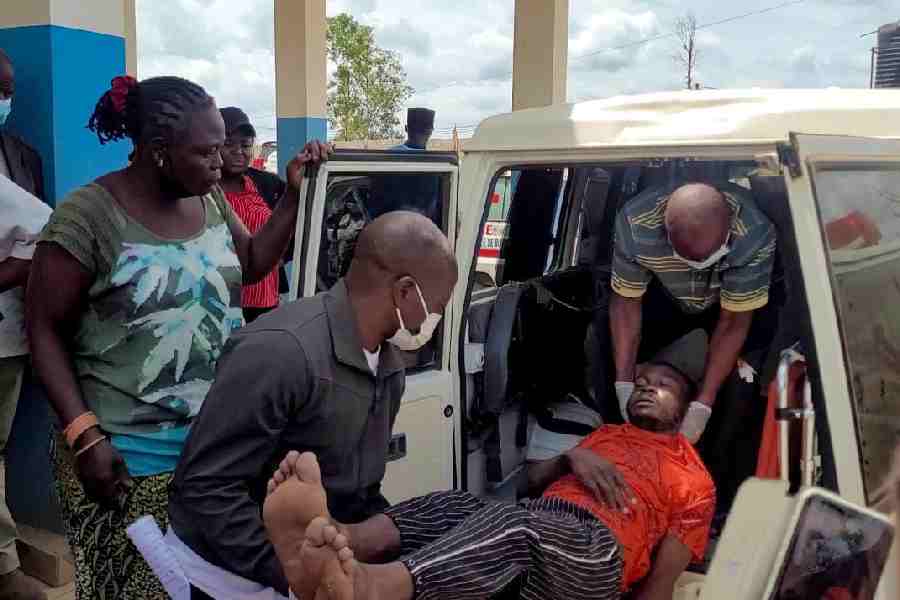
Medical teams from the WHO, Médecins Sans Frontières (MSF), and Congolese authorities have deployed to affected areas, establishing treatment centers and launching emergency response operations.
The DRC government has urged residents to report symptoms immediately, avoid contact with bodies of suspected victims, refrain from consuming undercooked meat, and practice social distancing.
Neighboring countries have also stepped up preventive measures. Rwanda has tightened border controls, while Uganda has introduced public health restrictions and postponed major religious gatherings to limit transmission risks.
Despite the escalating outbreak, WHO officials stressed that the situation does not currently meet the threshold for a global pandemic and that the risk beyond East Africa remains low.
However, experts warn that the combination of armed conflict, population movements and the absence of vaccines for the Bundibugyo strain could make containment significantly more difficult.t here