Cities across Africa’s Sahel region are increasingly turning to earthen walls, trenches and fortified checkpoints to protect themselves from armed groups, highlighting the growing difficulties faced by military governments struggling to contain expanding insurgencies.
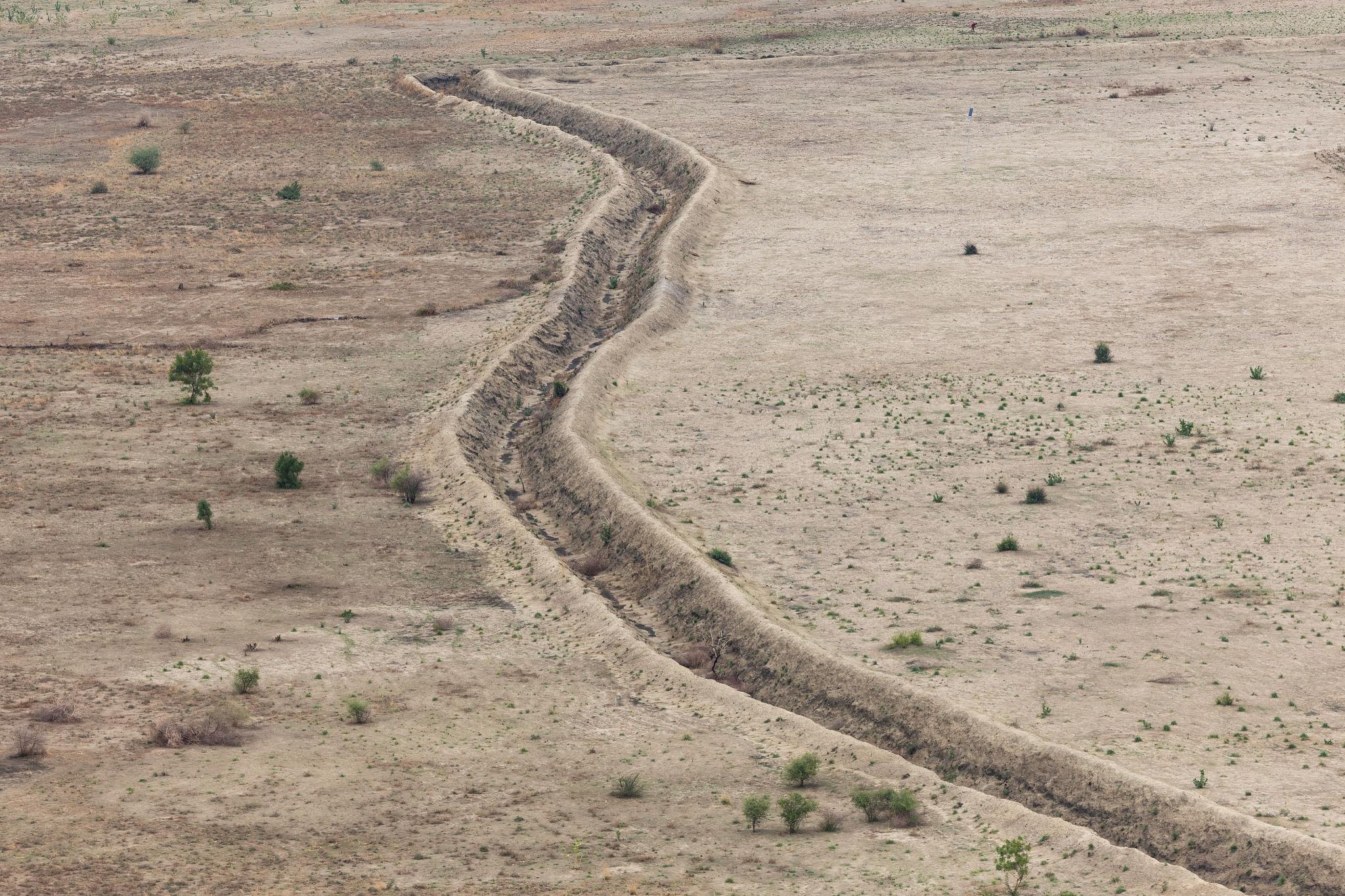
Research by the University of Florida found that hundreds of kilometres of defensive barriers have been constructed across West Africa over the past 15 years, particularly in northeastern Nigeria and around Lake Chad, where Boko Haram and Islamic State-affiliated fighters have carried out repeated attacks.
The study, conducted by researchers Olivier Walther and Steven Radil, found that major population centres in the affected areas are now surrounded by extensive fortifications, with some earthen barriers reaching three metres in height.
Satellite analysis identified approximately 700 kilometres of defensive earthworks around towns and settlements in northeastern Nigeria and the Lake Chad basin.
Similar measures have been introduced elsewhere, with Cameroon fortifying nearly 200 kilometres of its border with Nigeria and Togo constructing more than 36 kilometres of defensive trenches along its frontiers with Burkina Faso and Benin.
The barriers are intended to slow militants travelling on motorcycles and pickup trucks, restrict access to towns and give security forces additional time to respond to attacks.
However, researchers warn that the fortifications offer only limited protection and cannot compensate for the inability of state security forces to control surrounding territory.
Military governments under pressure
The expansion of defensive barriers comes as armed groups continue to challenge military authorities across Mali, Burkina Faso and Niger, where successive coups brought leaders to power promising to restore security.
Despite those pledges, insurgent organisations, particularly the Al Qaeda-linked Jama’at Nusrat al-Islam wal-Muslimin (JNIM), have maintained their capacity to launch major operations against military installations and civilian communities.
In Mali, coordinated attacks by JNIM and the separatist Azawad Liberation Front in April resulted in the killing of Defence Minister Sadio Camara and the capture of strategic territory, including Kidal.
Malian forces, supported by Russian fighters, re-entered Kidal on October 6 after separatists announced a tactical withdrawal. Analysts cautioned that the development represented a symbolic victory rather than a decisive turning point in the conflict.
Nigerien political analyst Mohamed Awal told Erem News that communities were increasingly relying on rudimentary defensive measures because military governments had failed to deliver the security improvements they promised.
He warned that while earthen barriers could provide temporary protection, they also risked isolating communities and obstructing deliveries of food, fuel and other essential supplies.
Protection comes at an economic cost
Security specialists say the growing dependence on fortified settlements could create additional economic and humanitarian problems across a region already affected by armed violence and disrupted trade.
Restrictions on movement threaten commercial routes, agricultural activity and access to markets, while residents travelling beyond defensive perimeters remain vulnerable to attacks and abductions.
The University of Florida researchers also warned that concentrating military resources around fortified urban centres could leave surrounding rural communities increasingly exposed to armed groups.
The dangers were demonstrated in August 2024, when JNIM militants attacked civilians digging a defensive trench around Barsalogho in Burkina Faso, killing approximately 300 people, according to the researchers.
African affairs analyst Ibrahim Habibou told Erem News that the growing reliance on earthen barriers represented a serious setback for military governments that had promised to defeat insurgent organisations.
He argued that defensive fortifications demonstrated the limitations of military operations while simultaneously restricting trade and the movement of goods.
The security crisis has also unfolded amid a major realignment of international military partnerships.
Following the withdrawal of Western forces from several Sahel countries, military governments have increasingly relied on Russian security assistance, including personnel associated with Africa Corps.
Despite these partnerships, armed groups continue to exploit vast territories beyond government-controlled population centres.
Researchers caution that although physical barriers may temporarily protect towns from raids, their proliferation risks creating isolated urban strongholds surrounded by areas where armed organisations operate with limited resistance.
For communities across the Sahel, the growing network of trenches and earthen walls underscores a broader security dilemma: protecting individual towns while governments struggle to restore control over the territory connecting them.