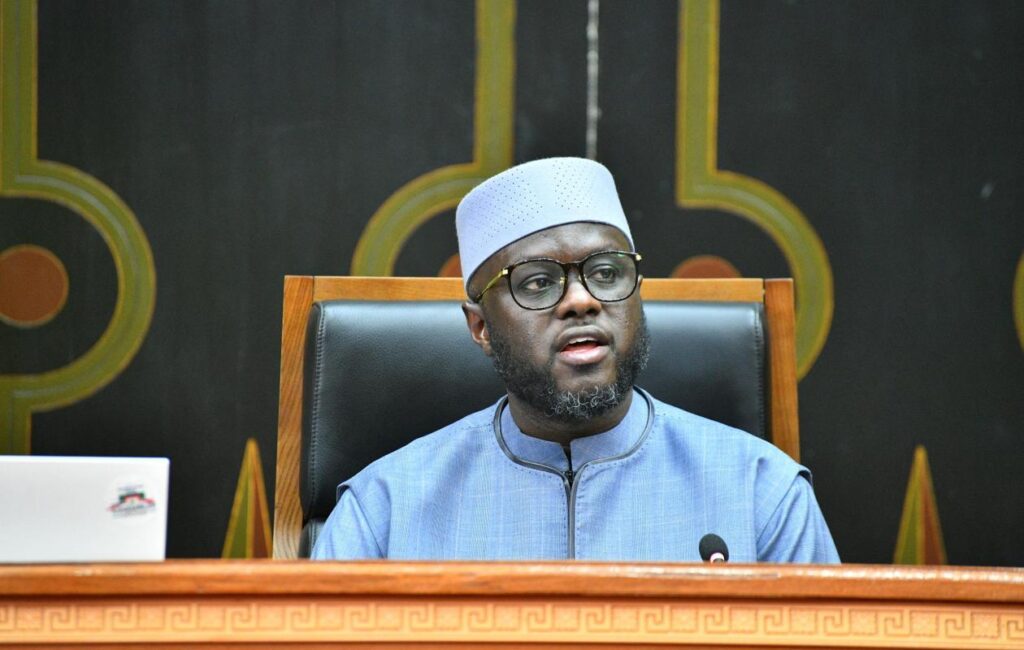
Senegal’s parliamentary speaker has resigned, deepening a widening political crisis in the debt-stricken West African country.
El Malick Ndiaye’s resignation opens the way for dismissed prime minister Ousmane Sonko to contest the post of speaker, as his Pastef party retains a strong parliamentary majority and challenges President Bassirou Diomaye Faye’s fragile authority.
Lawmakers have been summoned to an extraordinary session on Tuesday to reinstate Sonko as a member of parliament and elect a new speaker.
President Faye dismissed Sonko on Friday following months of escalating tensions that have fractured their once-close political alliance.
Faye’s rise to the presidency was closely linked to Sonko, who was previously barred from running due to a defamation conviction.
Pastef secured victory in the 2024 elections on promises of sweeping reforms, anti-corruption measures and economic recovery amid heavy national debt.
But relations between the two leaders deteriorated, with Sonko accusing Faye of weak leadership and insufficient action on corruption cases.
Supporters of Sonko gathered outside his residence in Dakar after his dismissal, underscoring his continued influence within Senegal’s political landscape.
The unfolding standoff has raised concerns over governance stability, with analysts warning of a difficult power-sharing dynamic between the presidency and Pastef’s parliamentary dominance.
Faye is required to appoint a new prime minister within three months, but parliamentary approval will be needed, adding to his political vulnerability.
Recent electoral reforms have also made Sonko eligible to run for the presidency, raising the prospect of renewed rivalry between the former allies.