Traders in North Darfur have urged the Sudan Founding Alliance (TASIS) government to reconsider reported plans to relocate commercial truck processing operations from Mellit to El-Fasher, warning that the move could disrupt recovering markets and increase consumer prices.
Business owners and residents in Mellit, approximately 65 kilometres north of El-Fasher, oppose proposals to transfer inspection, customs clearance and other commercial procedures to the North Darfur capital.
Sources speaking to Darfur24 said the temporary administration in El-Fasher had begun preparing facilities to receive commercial trucks, with goods subsequently distributed to surrounding localities after completing regulatory procedures.
However, traders said no clear formal decision authorising the relocation had been announced.
The proposed changes come as Mellit experiences renewed commercial activity following years of disruption caused by Sudan’s war.
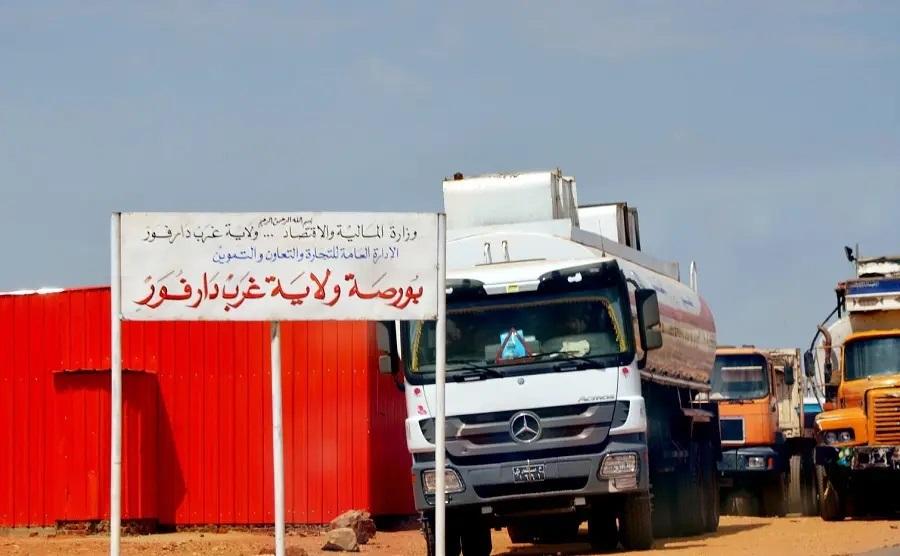
Dozens of trucks have reportedly arrived in the city since October, carrying goods from Libya and northern Sudan, including areas administered by the Port Sudan-based SAF government.
The improved supply has helped revive local businesses, create employment opportunities and bring modest reductions in the prices of some essential commodities.
Traders warn of rising costs
A trader in Mellit told Darfur24 that relocating commercial operations to El-Fasher would impose additional expenses on businesses already struggling with transport costs, insecurity and numerous checkpoints.
He warned that the proposed arrangement could undermine Mellit’s economic recovery and discourage traders from using established commercial routes.
Another trader said the road to Mellit already contained more than 50 checkpoints, warning that opening the route through El-Fasher could add approximately 20 more.
Such restrictions could increase transportation costs and ultimately raise prices paid by consumers, he said.
Traders also cited continuing drone attacks and the threat of armed robbery as reasons for maintaining Mellit’s existing commercial facilities.
They called on the TASIS government to strengthen local markets, reduce government fees and remove unauthorised checkpoints rather than centralise trade operations in El-Fasher.
Calls to protect local commerce
Local officials have previously defended Mellit’s inspection arrangements, saying commercial trucks undergo security checks and regulatory procedures before entering or leaving the city.
Ibrahim Rikza, a local government official, said an economic committee established last month had begun working to regulate markets and improve living conditions.
He said inspection procedures covered incoming and outgoing cargo, including checks by relevant regulatory and security authorities.
Mellit has historically served as a major trading centre linking Darfur with northern Sudan, Libya and Chad.
Its commercial recovery has become increasingly important as communities attempt to restore economic activity following prolonged disruption.
Residents fear that shifting commercial processing to El-Fasher could weaken that recovery at a time when reliable supply routes remain essential to livelihoods across North Darfur.
The dispute presents a challenge for the TASIS government as it seeks to rebuild public institutions and commercial infrastructure while addressing the competing economic priorities of towns under its administration.
The renewed movement of goods from northern Sudan also highlights the importance of maintaining commercial connections between territories administered by the TASIS government and those under the SAF government, despite the continuing military conflict.