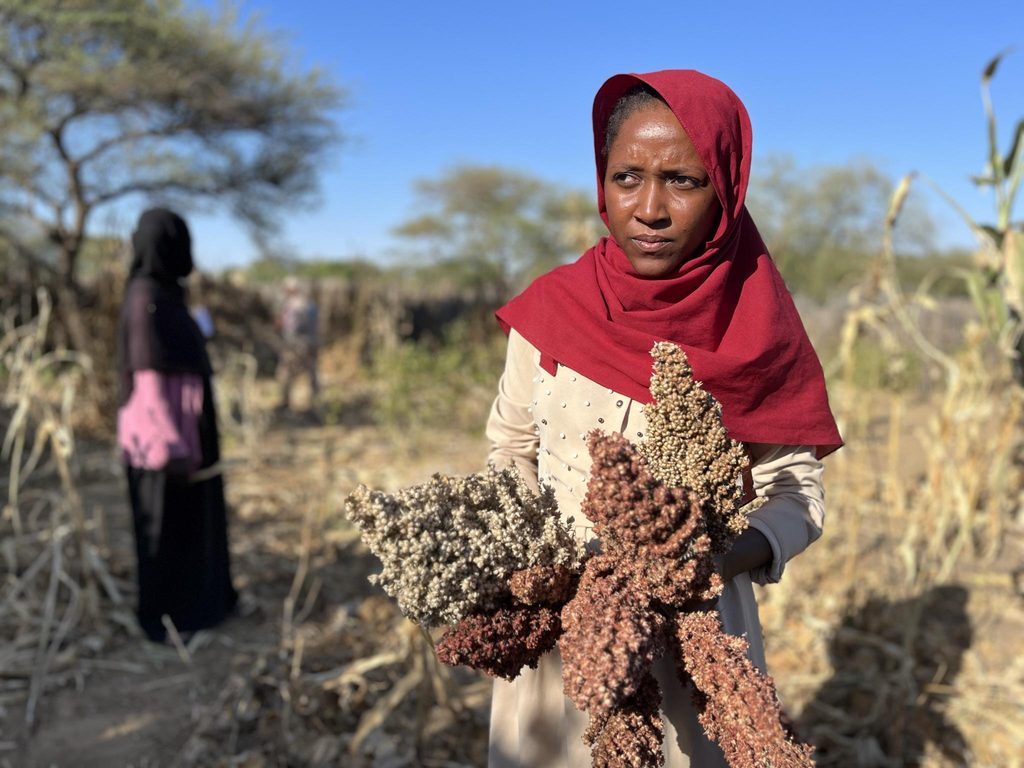
Agricultural produce reaching markets in Sudan’s East Darfur state has fallen sharply compared with last year, with traders reporting severe shortages and steep increases in the prices of staple foods.
A trader in Abu Matarig estimated that crop deliveries had dropped by approximately 90 percent, saying only a fraction of the quantities available during the previous agricultural season had reached local markets.
The shortage has affected millet, sorghum and groundnuts, placing additional pressure on households already struggling with the economic consequences of Sudan’s prolonged conflict.
According to market figures reported by Darfur24, a quintal of millet in Abu Matarig now sells for approximately 600,000 Sudanese pounds, compared with 120,000 pounds during the corresponding period last year.
Sorghum prices have climbed from 75,000 to 540,000 pounds per quintal, while groundnuts have risen from 20,000 to 130,000 pounds.
The reported increases range from fivefold to more than sevenfold.
Traders attributed the shortages partly to poor rainfall and weaker agricultural production, alongside unusually intense competition for available crops.
Authorities restrict bulk grain purchases
Local authorities in areas administered by the Sudan Founding Alliance (TASIS) have introduced measures intended to curb speculative purchasing and prevent further pressure on food supplies.
Restrictions on large-scale millet purchases and the transportation of grain outside producing areas have been introduced in several localities, including Bahr al-Arab, Abu Jabra and Abu Karinka.
The measures follow earlier action by TASIS-aligned authorities in El Daein to discourage grain hoarding and require traders to release stored supplies onto local markets.
However, residents and traders say prices have continued to rise despite the restrictions.
Darfur24 cited unnamed sources alleging that traders associated with senior Rapid Support Forces (RSF) figures were purchasing large quantities of crops at prices above prevailing market rates.
Those allegations could not be independently verified, and the individuals allegedly involved were not identified.
The reported trading practices have added to concerns that competition for limited grain stocks is contributing to price increases.
Growing pressure on households
Markets in El Daein and Al-Firdous have also recorded significant increases.
In El Daein, traders reported millet selling for approximately 590,000 pounds per quintal, while sorghum reached 550,000 pounds.
Residents said the rising cost of basic agricultural commodities was becoming increasingly difficult to afford, particularly as household incomes remain under pressure.
Millet and sorghum are among the main staples consumed across Darfur, making shortages particularly consequential for low-income families.
The latest figures highlight the difficulties facing TASIS-administered territories as authorities attempt to stabilise food markets amid reduced agricultural output, disrupted trade and wartime economic pressures.
The effectiveness of restrictions on grain purchases and movements remains uncertain, with traders warning that continued shortages could drive prices higher.