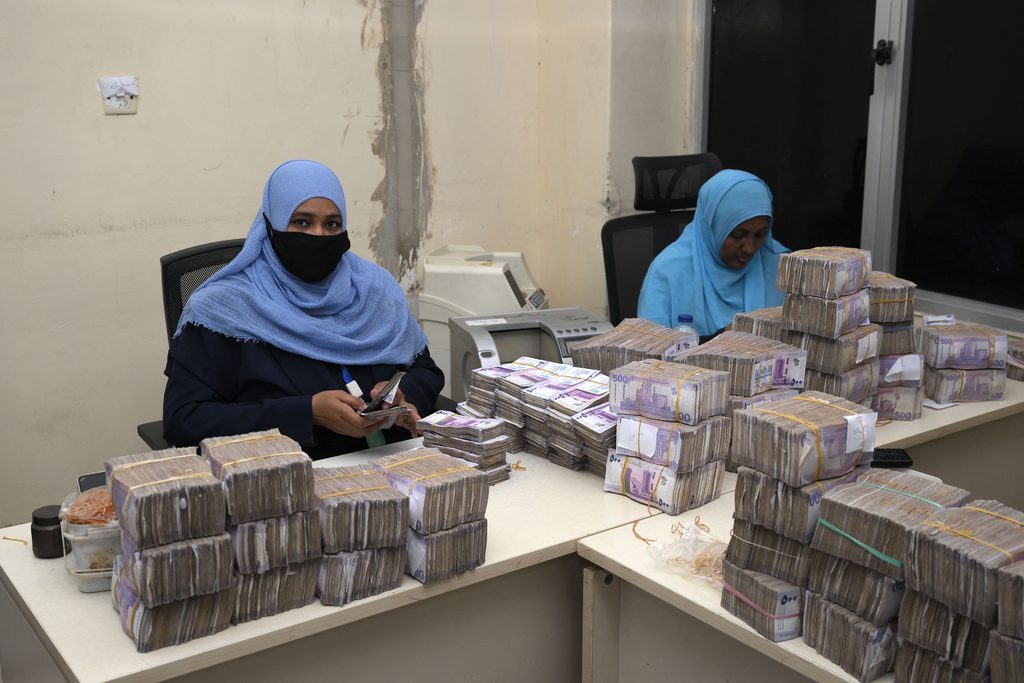
The Sudanese pound has fallen to a new record low against the US dollar on the parallel market, deepening economic pressures as foreign currency shortages and fluctuating gold prices add to the country’s financial instability.
The local currency traded between 10,400 and 10,450 pounds per dollar on Tuesday, according to currency dealers cited by Sudan Tribune, marking a further deterioration in its value amid growing demand for foreign exchange.
Traders attributed the latest decline to increased demand from importers and individuals, coupled with a severe shortage of hard currency in domestic markets.
Other foreign currencies also recorded elevated exchange rates, with the UAE dirham trading at 2,870 Sudanese pounds and the Saudi riyal ranging between 2,725 and 2,750 pounds. The Egyptian pound stood at 196 Sudanese pounds.
The continued depreciation has intensified financial hardship for millions of Sudanese already struggling with rising living costs, disrupted supply chains and the economic consequences of the country’s prolonged conflict.
Prices of essential commodities, including food, fuel and transportation, have increased sharply as businesses struggle to secure foreign currency needed for imports.
Gold markets experience sharp fluctuations
Sudan’s domestic gold market also experienced significant price volatility, reflecting instability in the exchange rate and movements in international bullion prices.
Raw gold prices briefly climbed above 1.17 million Sudanese pounds per gram before retreating to approximately 1.16 million pounds, according to market traders.
Prices differed considerably across major gold-producing areas in River Nile State.
In Dar Mali and Abu Hamad, gold traded at around 1.17 million pounds per gram, while prices in Umm Fakroun dropped to approximately 960,000 pounds.
Dealers said rapid fluctuations in currency values and international gold prices had encouraged speculative trading among artisanal miners and bullion merchants seeking to protect their holdings against further depreciation.
Economic pressures deepen
The latest currency decline comes as Sudan’s war continues to undermine economic activity, disrupt trade routes and weaken the country’s financial system.
Foreign exchange shortages have made it increasingly difficult for businesses to finance imports, placing additional pressure on the availability and affordability of essential goods.
With the pound continuing to lose value, traders warned that further exchange-rate instability could translate into additional price increases, worsening the economic burden on households already facing severe financial hardship.