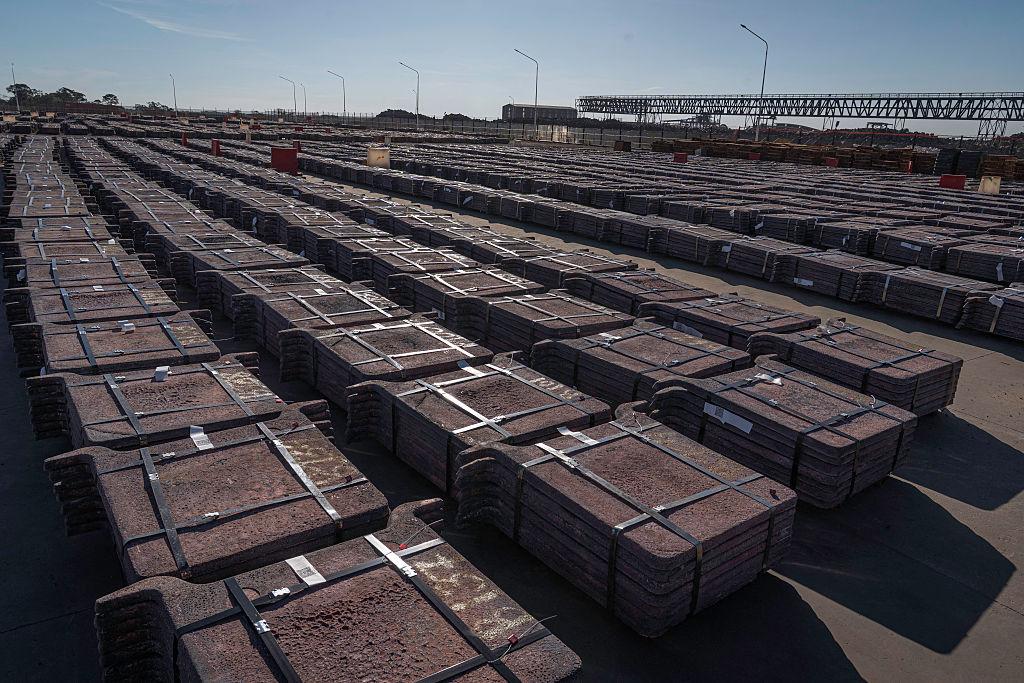
U.S. imports of copper from the Democratic Republic of Congo have climbed sharply in 2026, as industrial buyers increasingly turn to the African producer for supplies priced below copper brands approved for delivery on the COMEX exchange.
Copper cathode shipments from Congo to the United States reached a record 53,290 metric tons in July, according to U.S. trade data. The volume accounted for nearly 24% of total U.S. copper imports during the month, which exceeded 220,000 tons for the first time.
The surge came as traders accelerated shipments ahead of the possibility of U.S. tariffs on copper imports.
The figures mark a dramatic shift in trade flows. The United States imported fewer than 32,000 tons of Congolese copper during all of 2024, but rising production in Congo has given exporters considerably more metal to sell abroad.
Congo is the world’s second-largest copper producer and has become increasingly important to global supply as demand grows from the power, construction and manufacturing sectors.
One notable aspect of the increase is that Congolese copper brands are not approved for delivery against futures contracts on the U.S. COMEX exchange. Only two African copper brands, both produced in Zambia, currently appear on the exchange’s approved list, while Chilean and Peruvian brands account for more than a third.
That difference may be creating an attractive opportunity for U.S. industrial consumers willing to purchase copper directly through the physical market.
Albert Mackenzie, a copper analyst at Benchmark Mineral Intelligence, said the trade data suggested Congolese material was likely being sold directly to American consumers rather than entering COMEX warehouses.
Copper approved for COMEX delivery traded at premiums of roughly $400 to $600 a ton above London Metal Exchange prices at times during the summer, making non-COMEX material priced against the LME potentially cheaper for end users.
Industry sources involved in the Congolese copper trade said the metal is typically priced using the LME benchmark. One source said supplies can be sold at discounts of between $550 and $800 per ton, partly reflecting shipping costs.
At the same time, improvements in the quality of copper produced in Congo have helped increase its acceptance among U.S. industrial buyers.
Market participants said customers now include manufacturers of copper rods and tubes, suggesting Congolese metal is increasingly being absorbed directly by American industry.
The shift toward the United States has also coincided with softer Chinese purchases. China’s copper imports from Congo fell 4.3% during the first seven months of 2026, even though Congo’s overall share of the Chinese import market increased by five percentage points to 44.7%.
China imported 95,778 tons of Congolese copper in July, accounting for 39.4% of its total copper imports — the lowest share since October 2025.
Despite the decline, Congo remained China’s largest copper supplier by a wide margin.
The changing trade pattern highlights Congo’s expanding influence in the global copper market as producers gain access to a broader range of buyers and U.S. manufacturers seek cheaper alternatives to exchange-approved supplies.