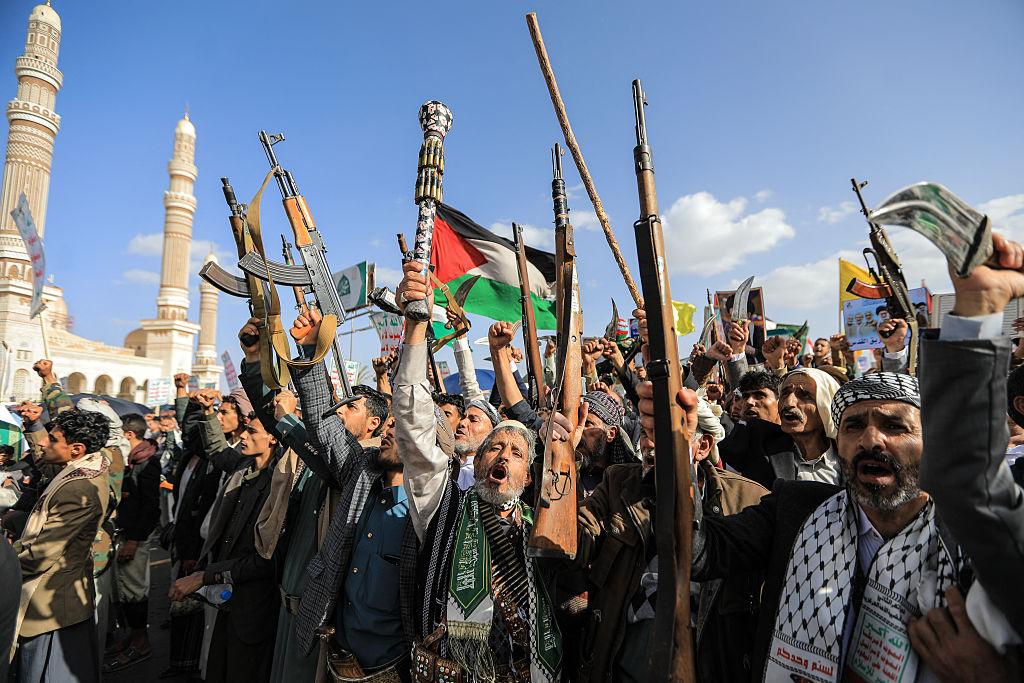
Houthi forces pushed to seize strategic highlands in Yemen on Monday as they sought to consolidate gains around the Bab al-Mandab Strait, while US President Donald Trump reportedly called off planned American strikes against the group at the last minute.
The Iran-backed Houthis have rapidly expanded their control this month, capturing key areas along Yemen’s Red Sea coast and extending the wider Middle East conflict to another critical maritime corridor.
Their advance has increased pressure on Yemen’s Saudi-backed government and raised fears of further disruption to global shipping and energy supplies.
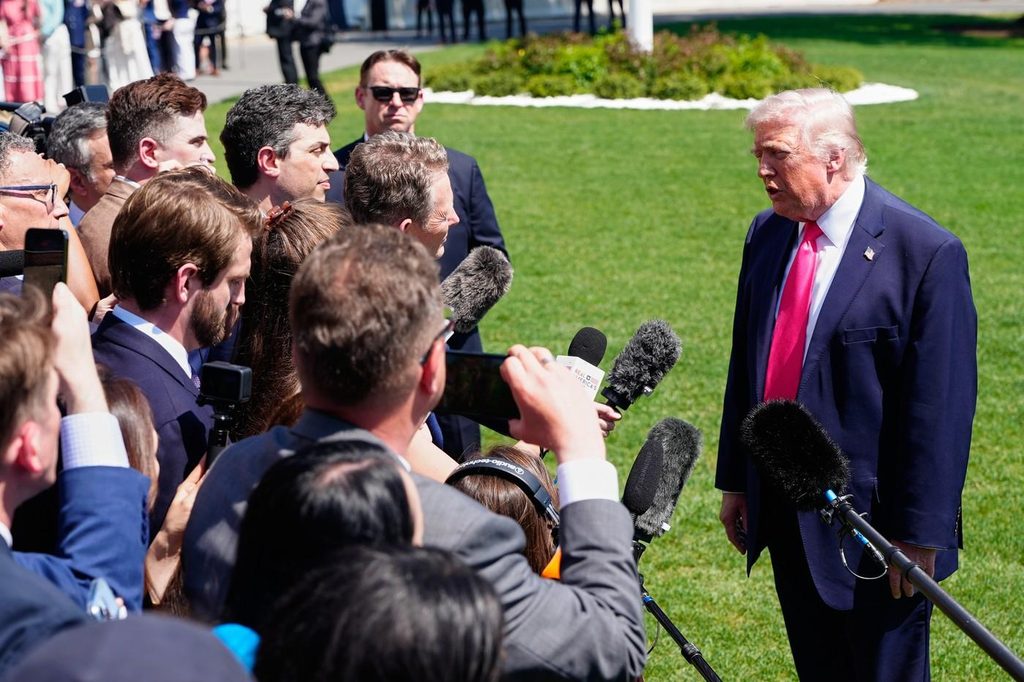
The New York Times reported that the Trump administration had prepared on Sunday to launch airstrikes against Houthi positions following renewed appeals from Saudi Crown Prince Mohammed bin Salman.
Trump, however, reportedly cancelled the operation at the last moment, even as US personnel were loading bombs onto aircraft.
Reuters said it could not independently verify the report. US Central Command referred questions about the planned strikes to the White House, which did not immediately comment.
The reported decision came as Trump held a phone call on Sunday with Yemeni President Rashad al-Alimi, head of the internationally recognised and Saudi-backed government.
Four people familiar with the conversation told Reuters that the two leaders discussed the Houthi advance around the Bab al-Mandab Strait, one of the world’s most important shipping passages.
Al-Alimi asked Trump for US military support against the Houthis, but two of the sources — one Yemeni and one Western — said the US president made no direct pledge of military assistance.
The White House and Yemen’s information minister did not immediately respond to requests for comment on the call.
Trump has publicly said Washington remains in contact with the Houthis and that the group has told the United States it will not target US shipping.
Washington designates the Houthis as a terrorist organisation.
Trump has also resisted previous Saudi requests for direct US military assistance against the group.
Houthis press into strategic highlands
The Houthis, who have controlled Yemen’s capital Sanaa since 2014, seized large stretches of the Red Sea coast this month in an offensive that routed forces aligned with the Saudi-backed government.
Five Yemeni military sources told Reuters that Houthi forces were now trying to capture strategic heights in the Kahboub Mountains across Taiz and Lahij provinces.
The mountainous area separates the newly captured Red Sea coast from territory still controlled by government forces in southern Yemen.
Fighting has focused on the outskirts of the mountainous Al-Wazi’iyah district in Taiz province and around Ras al-Ara on the Indian Ocean coast, between the southern entrance to the Red Sea and the government stronghold of Aden.
According to the military sources, the Houthis are seeking to secure the rear of their forces deployed around the Bab al-Mandab Strait.
Capturing the heights could allow them to defend their coastal gains, strengthen supply routes and potentially open new fronts against government forces.
Saudi Arabia has launched hundreds of airstrikes against Houthi positions in the highlands in recent days, according to the group, but the bombardment has so far failed to dislodge its fighters.
The Houthis also said they attacked Riyadh on Saturday in what appeared to be their first strike on the Saudi capital since the latest escalation began.
Loud explosions were heard and columns of smoke were seen near Riyadh airport. Saudi Arabia has not publicly commented on the reported attack.
Nearly 130,000 displaced
The renewed fighting has caused mounting civilian casualties and displacement.
The United Nations says nearly 700 people have been killed and thousands wounded since the latest escalation began.
Nearly 130,000 Yemenis have fled their homes inside the country, while more than 3,000 others have crossed the Red Sea by boat to Africa.
The worsening conflict comes as Yemen remains deeply affected by years of war, economic collapse and humanitarian crisis.
Houthi gains threaten Saudi oil route
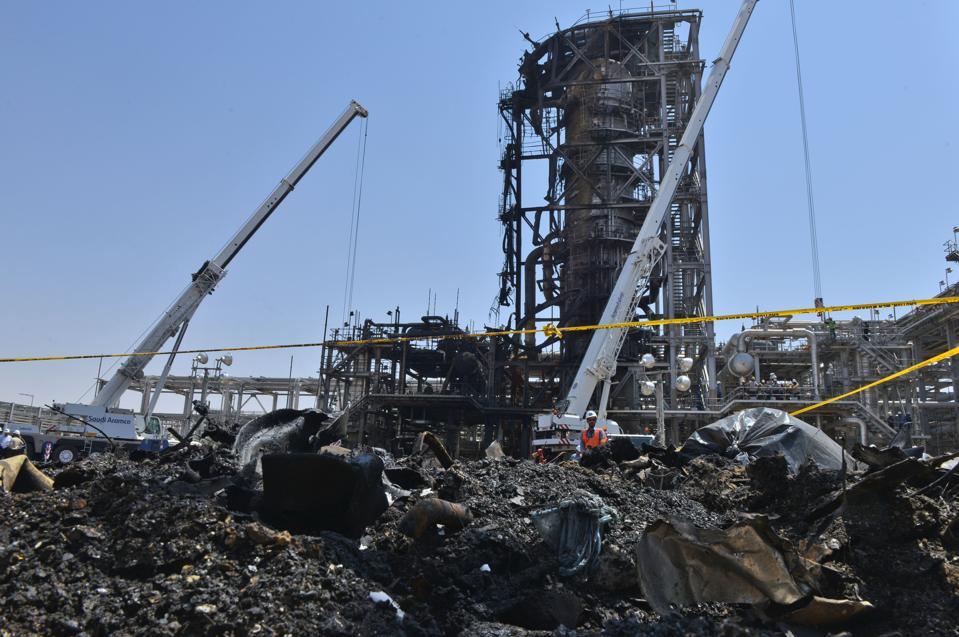
The Houthi advance around Bab al-Mandab has also created new risks for Saudi oil exports and international shipping.
Control of the strait threatens the main alternative route Saudi Arabia has used to bypass disruption in the Strait of Hormuz.
Riyadh has responded by sharply increasing oil shipments through Hormuz despite heightened wartime risks.
Satellite data showed Saudi exports through the strait reaching around 2.9 million barrels per day in recent days, up from roughly 700,000 barrels per day in August.
The increase has helped compensate for the suspension of Saudi crude loadings on the Red Sea.
Some tankers travelling through Hormuz are charging record fees — in some cases equivalent to as much as a quarter of the value of their cargo — because of the risks involved.
The oil is then being transferred to other vessels in the Indian Ocean for onward shipment to customers in Asia and elsewhere.
The additional Saudi exports have helped push crude prices back towards $100 a barrel after they approached $110 last week.
Prices for refined fuels, however, remain at record levels.
US diesel prices climbed above $6.51 a gallon on Monday, compared with around $3.75 before the broader regional war began in February.
Maritime security concerns around Hormuz have also persisted.
Britain’s UK Maritime Trade Operations agency said a vessel sailing into the strait was struck by a projectile in the latest reported incident, causing minor injuries to crew members.
Washington weighs deeper involvement
The Houthi advance presents Trump with a growing strategic dilemma as Saudi Arabia presses Washington for support while the US president seeks to avoid further expanding the regional conflict.
The United States bombed Houthi positions for about two months in early 2025 before Trump halted the campaign following a ceasefire agreement with the group.
Washington has remained outside the latest Saudi-Houthi fighting despite the Houthis’ territorial gains and the growing threat to regional shipping routes.
Diplomatic efforts to contain the wider conflict have meanwhile largely stalled since an interim agreement between the United States and Iran reached in June collapsed within weeks.
Iranian President Masoud Pezeshkian is due to travel to New York on Tuesday for the UN General Assembly, his first such visit since the United States and Israel launched their February military campaign against Iran.