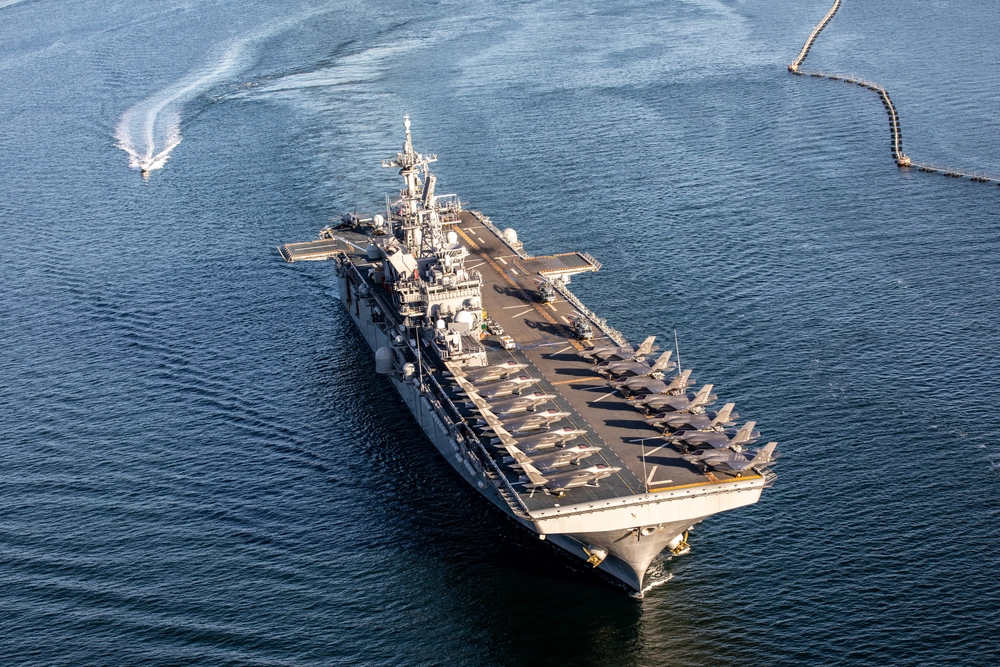
The United States is moving toward a decisive escalation in its war posture against Iran, deploying an amphibious assault group led by the USS Tripoli and thousands of Marines toward the Middle East.
The deployment marks a shift from airpower to flexible ground-capable operations, raising the prospect of direct intervention around the Strait of Hormuz — the strategic waterway at the center of the conflict.
US officials have not confirmed plans for ground operations inside Iran, but the nature of the forces being deployed signals that Washington is preparing for a wider range of military options.

Amphibious force signals shift beyond air campaign
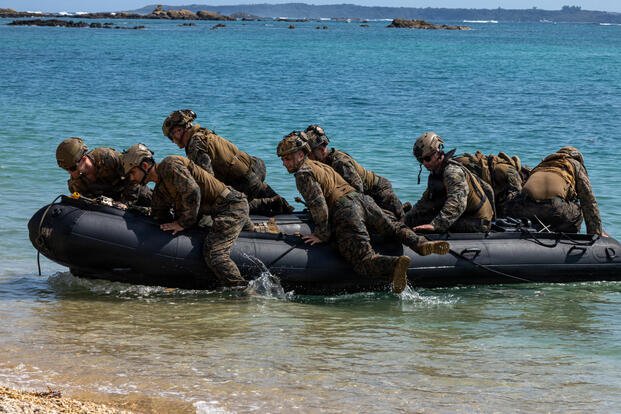
At the center of the deployment is an Amphibious Ready Group (ARG) carrying the 31st Marine Expeditionary Unit, a rapid-response force typically composed of around 2,200–2,500 Marines.
Such units are designed for crisis intervention, combining air, ground and logistics capabilities in a single, self-sustained force. They have historically been used for first-entry operations, including the early stages of the US war in Afghanistan.
The USS Tripoli, an amphibious assault ship capable of operating F-35 fighter jets, leads the formation.
The deployment follows direct authorization from US Defense Secretary Pete Hegseth and comes amid a broader military buildup, with additional amphibious groups positioned in the Indo-Pacific that could be redirected if needed.
Strait of Hormuz emerges as central battlefield
The move comes as Iran continues to exert pressure in the Strait of Hormuz, using fast attack boats and drones operated by the Islamic Revolutionary Guard Corps (IRGC) to disrupt commercial shipping.
The narrow waterway, through which roughly 20 million barrels of oil pass daily, has seen a dramatic collapse in traffic. Ship crossings have dropped to a fraction of normal levels, as attacks on vessels increase risks for global التجارة.
Washington has made clear that restoring freedom of navigation in Hormuz is now a priority.
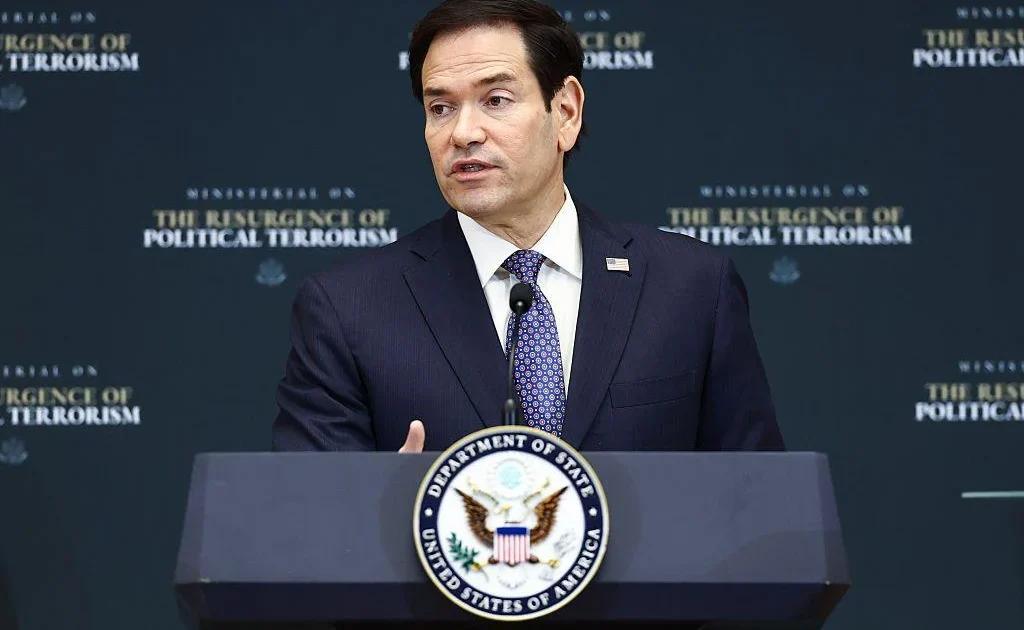
“The only thing prohibiting transit right now is Iran shooting at shipping,” Hegseth said, signaling that the US views Iranian actions as the primary trigger for escalation.

Marines offer multiple operational options
The arrival of a Marine Expeditionary Unit expands US capabilities beyond airstrikes, providing options that include:
- Escort and protection missions for commercial shipping
- Rapid-response operations, including evacuations and search-and-rescue
- Targeted strikes against Iranian launch sites along the الخليج
- Amphibious assaults on strategic islands used by the IRGC
Iran’s network of islands in the Persian Gulf — some used as staging grounds for drone and missile attacks — could become early targets in any expanded campaign.
US officials are also weighing whether to increase pressure on Iran’s energy infrastructure, including Kharg Island, the hub for most of the country’s oil exports.
Risk of ground escalation grows
While Washington has not formally announced plans for boots on the ground, the deployment of a Marine Expeditionary Unit — historically used as a spearhead force — has intensified speculation about a potential next phase.
Military planners are believed to be considering several scenarios, including:
- Limited ground raids on coastal and island positions
- Securing sensitive sites, including nuclear-related facilities
- Supporting covert operations alongside intelligence agencies
- Enabling or backing anti-regime elements داخل إيران
Any such move would mark a major escalation, carrying significant political and military risks.

Strategic message extends beyond Iran
The redeployment of forces from the Indo-Pacific to the Middle East underscores the priority Washington is placing on the Iran conflict, even at the cost of weakening its posture elsewhere.
It also signals that the US is prepared to challenge Iran’s remaining leverage — particularly its ability to disrupt global energy flows through Hormuz.
For Tehran, the deployment represents a direct threat to one of its last effective أدوات الضغط in the conflict.
For Washington, it is a clear indication that the war is entering a new phase — one where control of territory, not just airspace, may become decisive.