The US military said early Saturday that American forces had completed a seventh consecutive night of strikes against targets in Iran, as fighting between Washington and Tehran continued to expand across the region.
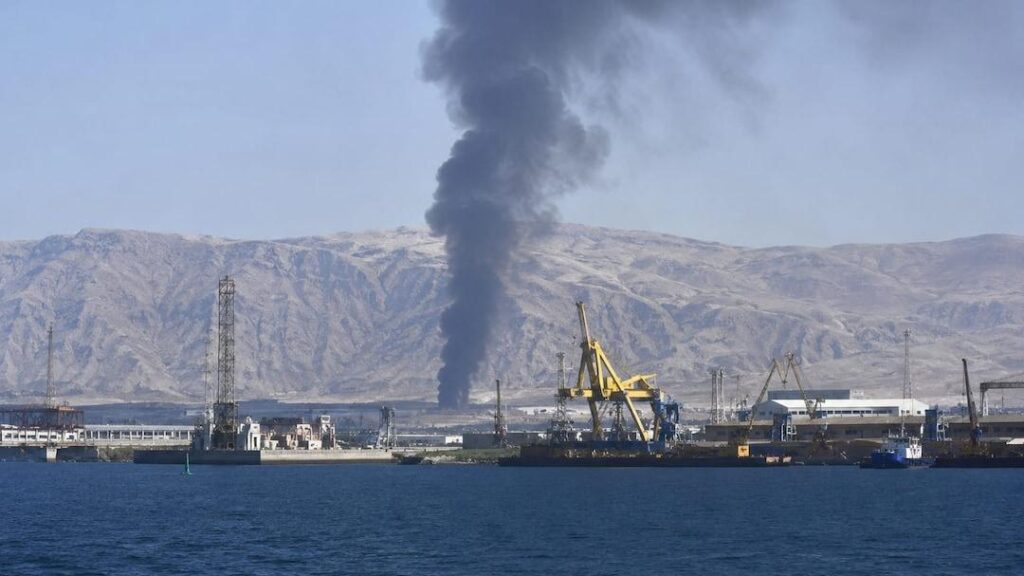
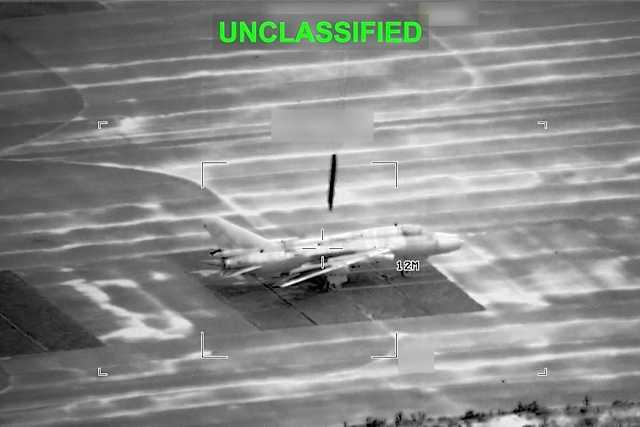
US Central Command said the latest wave began at approximately 9:30 p.m. Eastern Time and targeted surveillance positions, military logistics infrastructure, underground weapons-storage facilities and Iranian naval capabilities.
The operation involved US fighter jets, drones and warships, as well as other military assets that CENTCOM did not identify.
The command said US forces would continue to hold Iran accountable under orders from the commander-in-chief, while enforcing what it described as a comprehensive naval blockade of Iranian ports.
More than 50,000 US military personnel are currently deployed across the Middle East and remain on high alert and at a high level of combat readiness, CENTCOM added.
The latest US strikes reportedly included attacks on bridges inside Iran. Tehran responded on Friday by targeting a power generation and water desalination facility in Kuwait.
The widening target list has raised fears of further escalation, with both sides increasingly striking infrastructure linked to energy, transportation and oil supplies.
Renewed hostilities have again disrupted energy shipments from the Gulf. US Marines boarded an oil tanker near the Strait of Hormuz, while armed men seized another vessel off Yemen, intensifying concerns over maritime security around the Bab al-Mandab Strait, the other major route for Middle Eastern oil exports.
Iranian media, citing the Islamic Revolutionary Guard Corps, reported that two oil tankers exploded and caught fire after passing through a mined shipping lane south of the Strait of Hormuz.
Iranian state television quoted the IRGC as saying that as long as US attacks continued, the region would not be able to export chemical fertilisers “or even a single drop of oil and gas.”
Iran’s Tasnim news agency also reported on Friday that IRGC naval forces had targeted a Thai-flagged vessel attempting to cross the Strait of Hormuz. It provided no further details.
Washington and Tehran have continued to test the limits of escalation since a ceasefire agreement collapsed last week, increasing the risk that the conflict could again develop into a full-scale war.
US President Donald Trump has threatened broad airstrikes against Iranian infrastructure and has declined to rule out a ground operation along Iran’s coast or on some of its islands.
US officials cited by Reuters said one objective of the attacks on southern Iran was to give Trump a wider range of military options.
Such operations, however, could provoke Iran to retaliate against critical infrastructure in neighbouring countries or encourage the Iran-aligned Houthi movement in Yemen to further disrupt global energy supplies by attacking ships travelling through the Red Sea.
Mohsen Rezaei, an adviser to Iran’s supreme leader and a former senior IRGC commander, warned on Friday against any further US escalation or attempt to seize Iranian territory.
“If the US strikes continue for several more days, we will enter the phase of comprehensive offensive operations,” Rezaei told Iranian state television.