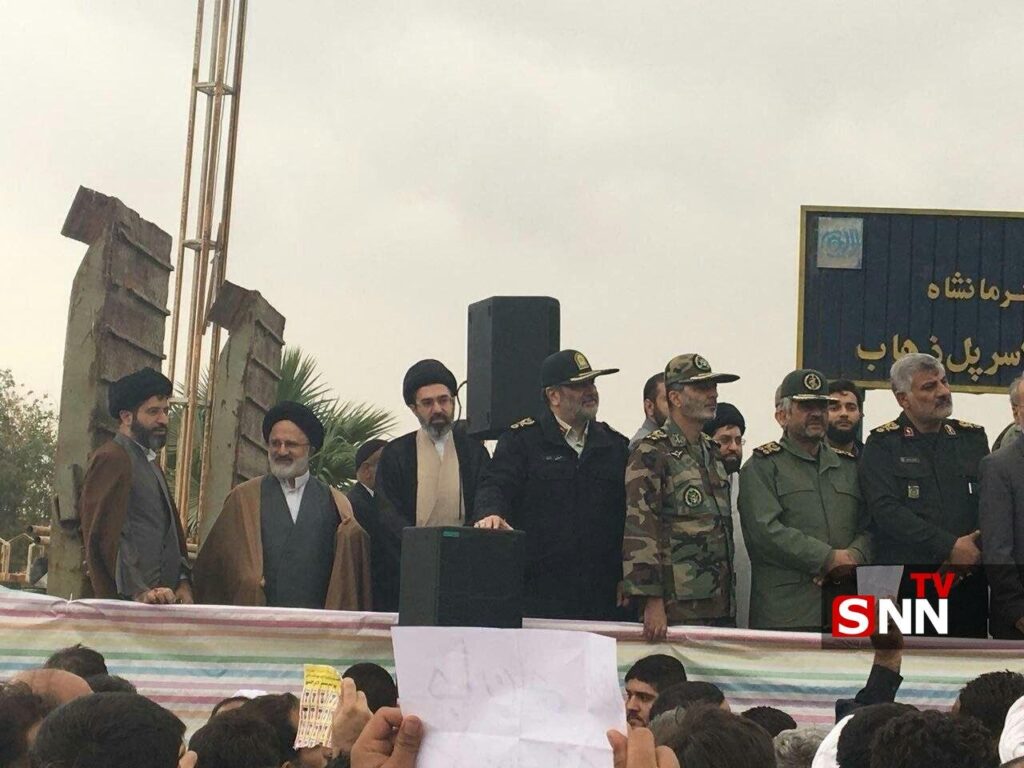
Iranian state media has published what it described as a “rare” image of Supreme Leader Mojtaba Khamenei, despite the photograph having been taken nearly a decade ago, as uncertainty continues to surround his whereabouts and condition.
The image was released on Sunday evening while Khamenei remains absent from public view amid major political and military developments and continuing attacks on Iran.
Iranian state television posted the photograph on its official account on X, describing it as a rare image of Khamenei visiting the earthquake-stricken city of Sarpol-e Zahab.
However, the photograph dates back to 2017, when a devastating earthquake struck Iran’s western Kermanshah province.
“The rare image shows Leader of the Islamic Revolution Ayatollah Sayyed Mojtaba Khamenei visiting the earthquake-hit city of Sarpol-e Zahab,” the broadcaster said.
Also appearing in the photograph is Abdolrahim Mousavi, the former commander of Iran’s armed forces who was reportedly killed by Israel during Operation Roaring Lion, according to Israel’s Channel 12.
The decision to circulate an old image has raised further questions over why Iranian authorities have not released recent footage or photographs of Khamenei.
Mojtaba Khamenei has not been seen publicly since the start of the joint Israeli-American war against Iran in late February. He was also absent from the funeral of his father, the late Supreme Leader Ali Khamenei.
Ali Khamenei was killed in the opening strikes on Tehran during a joint Israeli-US operation, after which Mojtaba disappeared from public view.
Reports later suggested that he had suffered serious injuries during the attacks. US President Donald Trump subsequently said publicly that Khamenei had been badly wounded.
Despite being presented by Iranian media as the country’s leader, Mojtaba Khamenei has made no public appearance during the war, fuelling speculation over whether he remains capable of exercising effective control over the Iranian state.
The publication of an image from 2017, rather than new evidence of his condition or whereabouts, is therefore likely to intensify questions surrounding the leadership vacuum in Tehran.