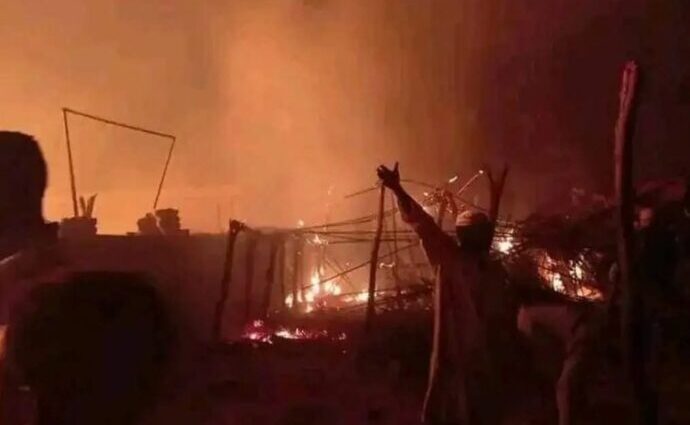
Three people were killed in violence at the Al Naam border market in West Kordofan on Tuesday, forcing traders to shut their shops and disrupting a key supply route for fuel and goods into parts of Darfur and Kordofan, local Sudanese media reported.
Two of the victims were stabbed to death while a third was killed by gunfire, according to local sources cited by Darfur24. Relatives of those killed reportedly opened fire inside the market afterwards, triggering panic and forcing commercial activity to halt.
A trader who spoke on condition of anonymity said armed clashes later broke out between members of the Misseriya community and a group of Dinka men, with heavy gunfire including DShK machine guns exchanged inside the market.
The violence brought movement to and from the market to a standstill, immediately affecting fuel supplies in East Darfur.
Local sources said the price of a gallon of petrol had risen to 4.6 million Sudanese pounds on Tuesday, up from 2.8 million pounds a day earlier.
Al Naam market is an important commercial and humanitarian gateway for areas of Darfur and Kordofan controlled by the Rapid Support Forces. Fuel, food, medicine and other supplies from South Sudan pass through the market before being distributed across western Sudan.
The market is located in the so-called Line 10 area, around 15 kilometres north of Abyei and south of the town of Al-Dair.
According to local sources, it is jointly administered by traditional leaders from the Ngok Dinka and Misseriya communities. The United Nations Interim Security Force for Abyei, known as UNISFA, also maintains a presence in the wider area.
Since Sudan’s war erupted in April 2023, Al Naam has become an increasingly important transit point for supplies arriving from Juba, Aweil and Warrap in South Sudan and heading towards towns including Al Fula, Muglad, El Daein and Adila.
Civilians have also relied on the route to transport wounded and sick people and to flee areas affected by fighting.
Local observers warned that a prolonged closure of the market, or further outbreaks of violence there, could deepen disruptions to fuel and commodity supplies across large parts of western Sudan.