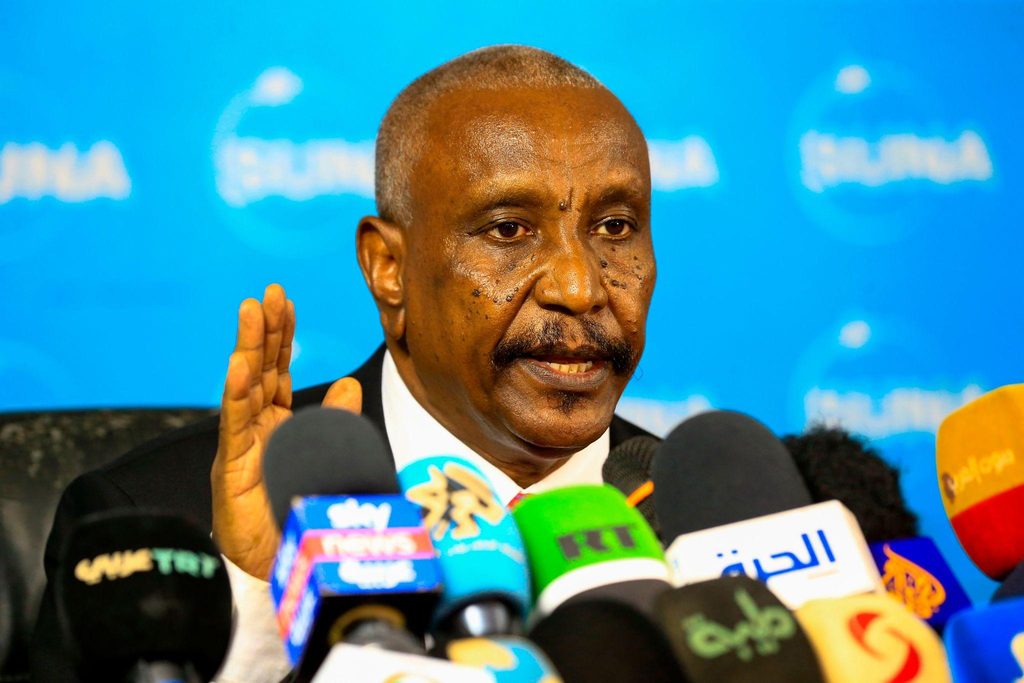
Sudanese opposition leader Yasir Arman has proposed transferring former President Omar al-Bashir to The Hague, arguing that the move would address his medical needs while allowing him to face international justice over alleged atrocities committed during his rule.
Arman, head of the Sudan People’s Liberation Movement–Revolutionary Current and a prominent figure in the anti-war movement, said the Netherlands offered an opportunity to reconcile humanitarian considerations with longstanding demands for accountability.
His proposal follows renewed appeals from Bashir’s family to allow the former president to travel abroad for medical treatment, citing what relatives describe as inadequate healthcare facilities in Sudan.
According to local Sudanese media, Arman acknowledged that Bashir’s reported health problems should be addressed on humanitarian grounds but insisted that the rights of victims of alleged crimes committed under his government must not be overlooked.
He suggested that transferring Bashir to The Hague, where the International Criminal Court (ICC) is headquartered, would allow the former leader to receive appropriate medical attention while also confronting outstanding international arrest warrants.
Bashir, who was removed from power in a popular uprising in April 2019 after three decades in office, has been wanted by the ICC for more than 15 years.
The court issued its first arrest warrant against him in March 2009 for alleged war crimes and crimes against humanity in Darfur. A second warrant followed in July 2010, adding genocide charges linked to the conflict.
The allegations include murder, extermination, forced displacement, torture, rape and attacks against civilians. Bashir has denied the accusations.
Despite repeated calls for his surrender, Bashir has not been transferred to the ICC, and the proceedings against him remain at the pre-trial stage.
Arman’s intervention adds a new dimension to the debate over the former president’s medical treatment, suggesting that any decision to permit his departure from Sudan should also address the outstanding demands for justice.
His remarks come amid renewed attention to Bashir’s circumstances and questions over whether Sudan’s army-aligned authorities will permit him to leave the country.
There has been no publicly confirmed decision to transfer Bashir to The Hague, and Arman’s proposal does not constitute a formal arrangement with the ICC or Dutch authorities.
The ICC continues to classify Bashir as a suspect at large and maintains that proceedings cannot advance to trial without his presence before the court.