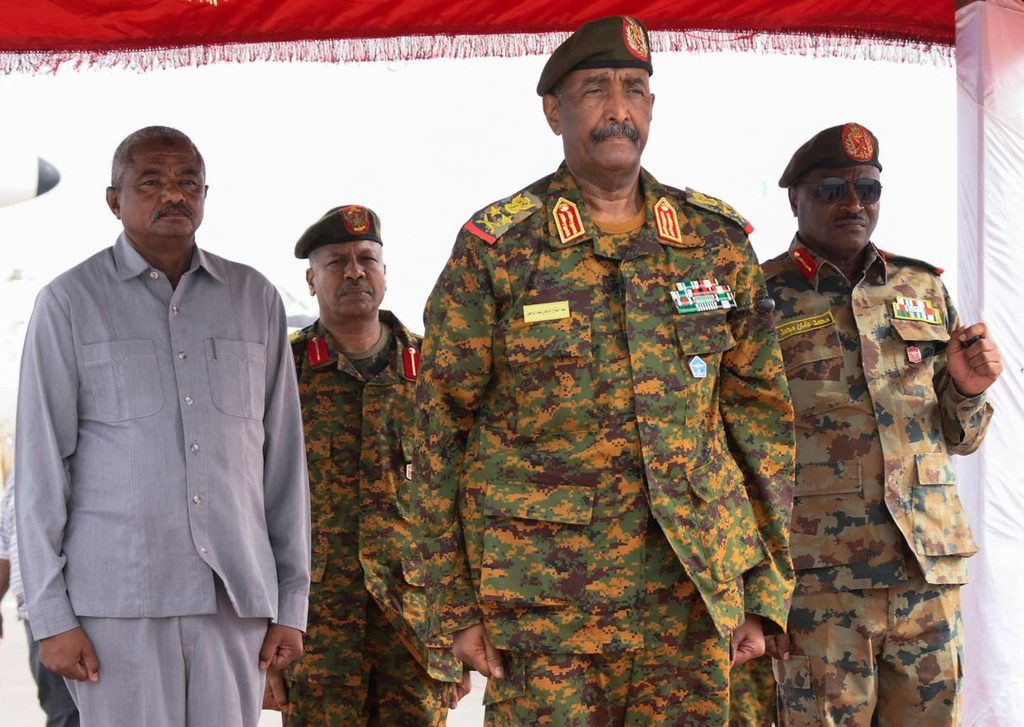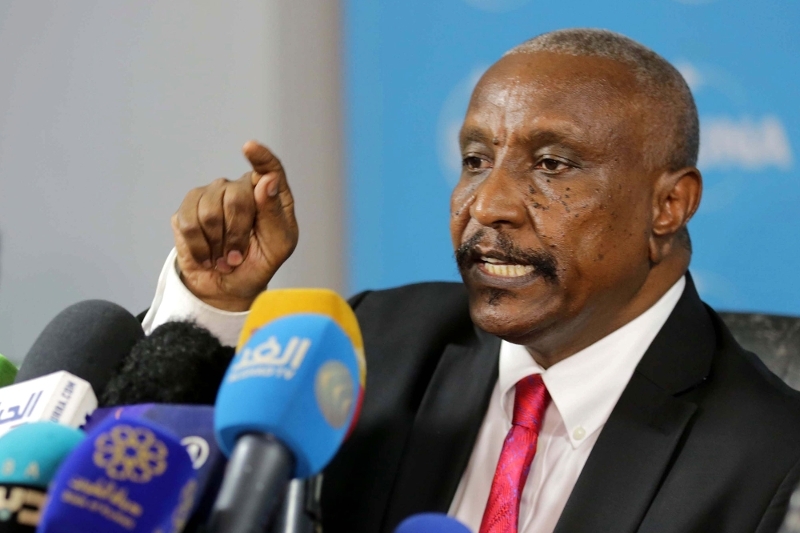
The Sudan People’s Liberation Movement-Revolutionary Democratic Current (SPLM-RDC), led by Yasir Arman, has rejected a dialogue initiative proposed by Sudanese army chief Abdel Fattah al-Burhan, warning that political talks held while the war continues could legitimise the conflict rather than bring it to an end.
In a formal response to Burhan’s address, the SPLM-RDC said any political process launched without a ceasefire or concrete measures to confront Sudan’s humanitarian crisis would lack both credibility and practical value.
The movement also rejected plans for a preparatory committee, arguing that one side to the war and its political allies cannot be allowed to determine the structure or participants of a national dialogue.
It said any credible transition must include anti-war political forces as well as communities directly affected by the conflict.
According to the SPLM-RDC, Burhan’s proposal risks granting political legitimacy to armed factions by allowing military power to determine their place in Sudan’s future government.
The group said a durable settlement must instead confront the deeper causes of Sudan’s crisis, including failures of state-building, divisions over national identity, the proliferation of armed groups, state capture and the political legacy of former President Omar al-Bashir’s National Congress Party.
It also criticised Burhan for failing to provide a clear plan for addressing Sudan’s competing armed forces and militias, warning that leaving multiple military formations intact would continue to fuel instability and prolong the conflict.
The SPLM-RDC raised particular concerns over the possible participation of Islamist groups in talks proposed by the army leadership.
It warned that bringing the Islamic Movement into a new political process could reproduce the failures of the “National Dialogue” launched under Bashir, commonly known as the Wathba dialogue.
The movement described Burhan’s initiative as representing the negotiating position of the army leadership and its allies rather than a genuinely national process.
Instead, it called for direct negotiations between the military and anti-war forces at a mutually agreed neutral venue, with ending the fighting as the immediate priority.
The SPLM-RDC also rejected conditions imposed by the army chief on anti-war political groups and reiterated its support for a single professional national military that reflects Sudan’s diversity alongside a democratic civilian state based on equal citizenship.
It called for a broader anti-war coalition and said political alliances, including Sumoud and signatories to the Declaration of Principles, should focus on rebuilding the Sudanese state rather than becoming vehicles for short-term political bargaining.
The movement also warned against allowing diplomatic initiatives involving the Quintet and Quad mechanisms to become a means of delaying meaningful negotiations.
It said the initial Addis Ababa meeting had failed to produce either a viable political roadmap or an agreement capable of stopping the fighting.
The SPLM-RDC called for international mediation efforts to be restructured to ensure greater representation for populations directly affected by the war, while making accountability for abuses and compensation for civilians central elements of any settlement.
The group also warned that growing foreign involvement in Sudan since the conflict erupted in April 2023 was increasing the danger of a wider regional confrontation.
It said further escalation could spread instability across the Horn of Africa, the Sahel and the Red Sea region.
Without a credible peace process, the movement warned, Sudan risks sliding into a prolonged regionalised conflict similar to those seen in Yemen and Syria, with devastating consequences for civilians, national sovereignty, territorial integrity and the country’s resources.