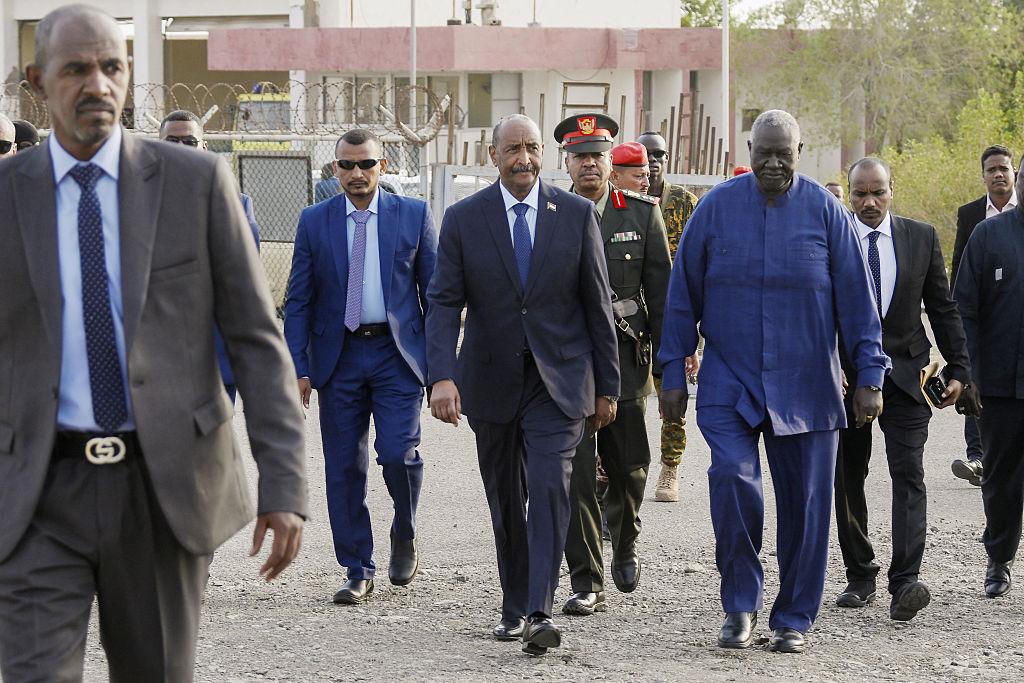
The African Union is facing renewed questions over the consistency of its Sudan policy after a Peace and Security Council delegation met army chief Abdel Fattah al-Burhan, despite the continental body’s decision nearly five years ago to suspend Sudan until civilian-led constitutional rule was restored.
The issue has been pushed back into the spotlight by the Sudan Founding Alliance (TASIS), whose government formally protested the AU delegation’s August 16-17 visit to Khartoum and warned against steps that could amount to normalising the political order created after the October 2021 military takeover.
The dispute goes beyond TASIS’s objection to the visit itself. It raises a broader question for the African Union: whether its expanding engagement with Burhan and the army-aligned administration can be reconciled with the conditions the bloc established when it suspended Sudan.
On October 26, 2021, one day after Burhan dissolved the civilian-led transitional government of Prime Minister Abdalla Hamdok, the AU Peace and Security Council condemned what it called the Sudanese military’s “seizure of power.”
In its official communiqué, the council ordered Sudan’s immediate suspension from all African Union activities “until the effective restoration of the civilian-led Transitional Authority.” It also rejected unconstitutional changes of government and reaffirmed the need for a civilian-led and consensual transition.
Nearly five years later, that civilian-led transitional authority has not been restored.
Instead, Sudan has endured more than three years of war, while rival administrations and political alliances have emerged across the country and the question of who legitimately represents the Sudanese state has become increasingly contested.
From suspension to engagement
The African Union has not formally reversed Sudan’s suspension, but it has progressively reopened channels with authorities aligned with the Sudanese Armed Forces.
That engagement predates the latest Khartoum mission. In October 2024, an AU Peace and Security Council delegation visited Port Sudan and subsequently referred to its discussions with Sudanese government officials while continuing to cite the council’s 2021 decision. The PSC also reiterated at the time that there was no sustainable military solution to the conflict and called for negotiations and a political settlement.
The latest visit has nevertheless given the issue fresh political significance.
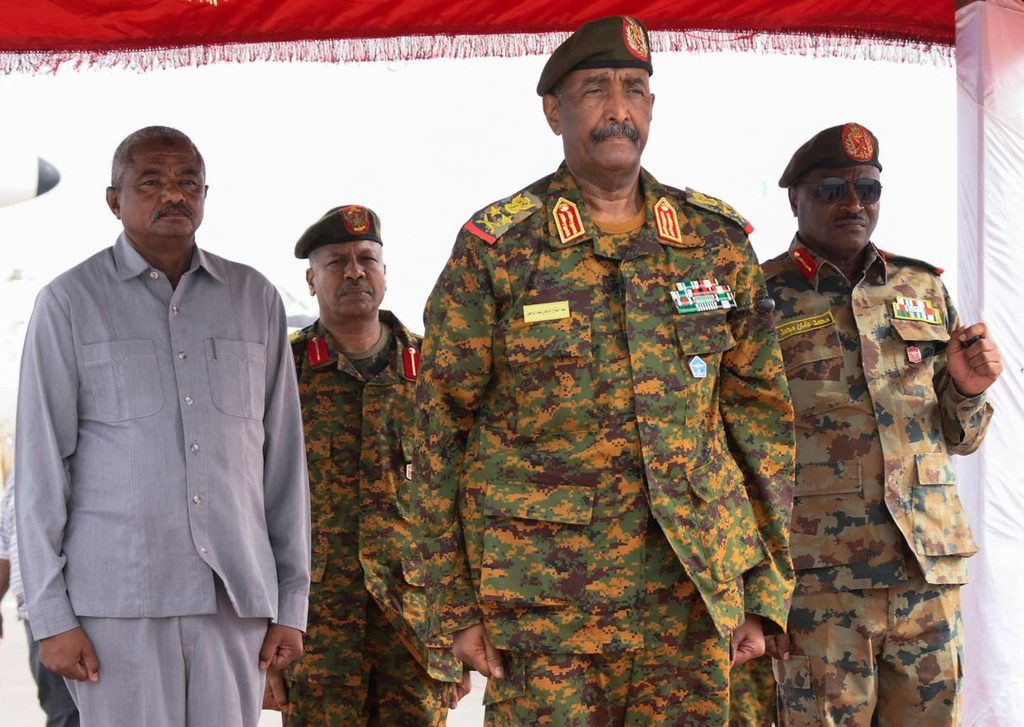
During its August 16-17 mission, the AU delegation met Burhan and Prime Minister Kamil Idris and discussed Sudan’s political, security and humanitarian situation, efforts to stop the war and the future of a political process.
For TASIS, such contacts risk creating a gap between the AU’s formal position and its diplomatic practice.
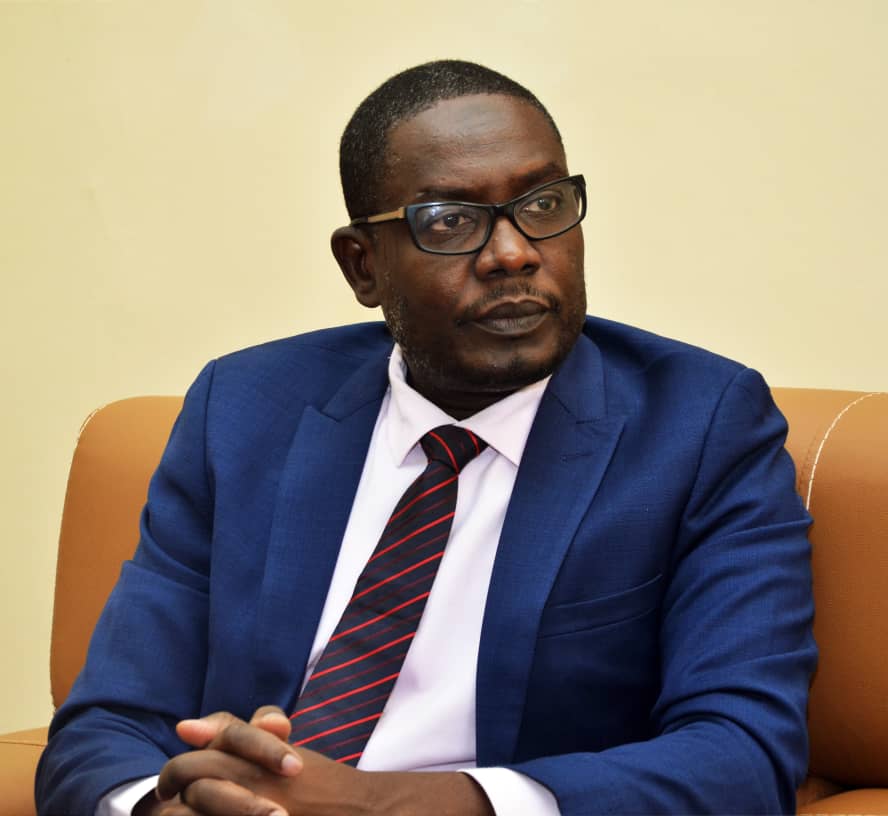
Prime Minister Mohamed Hassan al-Ta’aishi argued in a letter to the Peace and Security Council that engagement which effectively treats the army-backed authorities as Sudan’s sole political representative could undermine the principles on which the country’s suspension was based.
His government called on the council to remain independent and impartial and to engage Sudan’s competing political actors on an equal footing.
The Sudan Times previously reported that al-Ta’aishi also urged the AU to hear representatives from communities across different parts of Sudan rather than restricting its engagement to authorities operating from Khartoum.
An unresolved 2021 commitment
The credibility question is sharpened by the language the AU itself used after Burhan’s 2021 takeover.
The Peace and Security Council did not merely suspend Sudan as a temporary diplomatic sanction. It tied Sudan’s return to AU activities to a specific political condition: the restoration of civilian-led transitional government.
Subsequent AU decisions reinforced that position.
In February 2023, shortly before the current war erupted, the PSC again called for a broad-based civilian-led government and reaffirmed that Sudan’s transition should be civilian-led and consensual.
The outbreak of war between the SAF and the Rapid Support Forces in April 2023 shattered the transition process altogether, but it did not formally erase the AU’s earlier conditions.
That leaves the continental body navigating an increasingly difficult distinction between engaging Burhan as a central actor in attempts to stop the war and appearing to recognise the political system that emerged after the coup it condemned.
Diplomatic contact itself does not constitute formal recognition, and mediators routinely engage parties they do not politically endorse. But as those contacts deepen, the absence of a clearly articulated distinction between mediation and political normalisation risks becoming increasingly difficult to sustain.
TASIS challenges Khartoum’s claim to representation
The argument also cuts into the larger struggle over political legitimacy in wartime Sudan.
TASIS has rejected accusations that the administration it established in areas under its authority is intended to partition the country. Al-Ta’aishi says the government was created to administer territory, provide basic services and protect civilians amid the collapse of state institutions.
His letter to the AU framed the dispute instead as one over who should be allowed to participate in determining Sudan’s political future.
TASIS says any political process dominated by the SAF-aligned authorities would exclude large sections of the country and reproduce the military-centred political order the African Union opposed after the 2021 takeover.
Its government says it supports an inclusive political process leading to constitutional government, equal citizenship and a unified Sudanese state.
The AU now faces the task of balancing the practical necessity of engaging Sudan’s warring powers with the democratic principles it established when it suspended the country.
For TASIS, the test is straightforward: if the restoration of civilian-led constitutional government was the condition imposed in October 2021, the African Union must explain how its current relationship with Burhan’s authorities fits within that commitment.
Until it does, each new high-level engagement risks intensifying questions over whether the AU is mediating Sudan’s crisis — or gradually adapting to the political order its own institutions once refused to recognise.