A political initiative launched by Sudanese Armed Forces chief Abdel Fattah al-Burhan has intensified divisions within the Democratic Bloc, exposing the growing fragility of the coalition aligned with the Port Sudan authorities.
The dispute centres on whether the bloc should participate in Burhan’s proposed “Sudanese-Sudanese dialogue” or continue engaging with an internationally supported peace process led by the Quintet group.
Although presented as a domestic effort to end the war, Burhan’s initiative has been criticised by opponents as an attempt to place the military at the centre of Sudan’s political future and preserve the influence of its wartime allies.
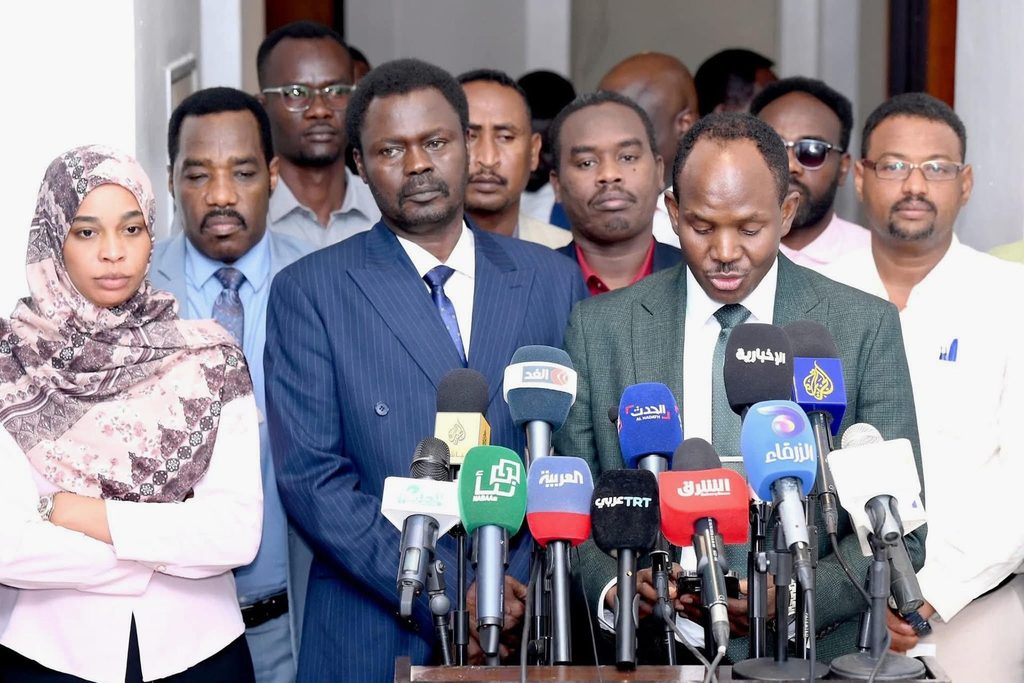
The Democratic Bloc has yet to agree on a common response. Its political committee concluded a meeting on Sunday without reaching a decision and proposed holding an internal workshop to discuss the available negotiation tracks.
The failure to establish a unified position highlights longstanding tensions within the 36-member alliance, which brought together former rebel movements, traditional political parties and eastern Sudanese factions largely through their shared support for the army’s war against the Rapid Support Forces.
Several armed and conservative factions are reportedly prepared to join Burhan’s dialogue. They argue that negotiations conducted inside Sudan could offer a more direct route towards a settlement and reduce foreign influence over the political process.
This camp includes Justice and Equality Movement leader Gibril Ibrahim, Democratic Unionist Party figure Jaafar al-Mirghani and eastern tribal leader Sayed Tirik.
Other members, however, fear that an army-managed process would be neither independent nor inclusive. They favour negotiations under regional and international sponsorship, believing external guarantees are necessary to prevent the Port Sudan authorities from determining the participants, agenda and outcome.
Darfur Governor Minni Minnawi has emerged as one of the leading advocates of the externally supported track. His faction has already participated in preparatory meetings organised by the Quintet in Addis Ababa.
For Minnawi, international involvement is also considered vital to protecting the 2020 Juba Peace Agreement and safeguarding the political and military position his movement secured through that accord.
In a recent interview with Ofuq Jadeed, Minnawi rejected proposals to place supposedly independent figures in charge of the political process.
“No independent has ever governed a country,” he said, arguing that Sudanese political forces should lead the negotiations while international actors provide guarantees for implementing any agreement.
Justice and Equality Movement spokesperson Mohamed Zakaria attempted to bridge the competing positions, saying the bloc supports a comprehensive national dialogue regardless of which side proposes it. He nevertheless maintained that civilian forces must participate in designing and managing its preparatory stages.
Behind those conciliatory statements lies a deeper struggle over Sudan’s post-war order.
Burhan’s initiative offers his allies an opportunity to retain influence through a political process built around the existing Port Sudan establishment. The internationally backed track, meanwhile, could impose broader participation and limit the military leadership’s ability to control the transition.
The disagreement also reveals the limited political foundations of the Democratic Bloc. Its members entered the wartime coalition with different regional interests, political ambitions and calculations about Sudan’s future. Opposition to the RSF and the desire to secure positions in a post-war settlement have often provided more cohesion than a shared national programme.
Bloc officials have played down the possibility of an imminent collapse, insisting that members remain committed to dialogue inside Sudan. However, the widening gap between the Addis Ababa and Port Sudan tracks suggests that maintaining even that minimum consensus will become increasingly difficult.
Rather than consolidating support around the army leadership, Burhan’s proposal has therefore exposed the competing interests inside his own political camp. It has also reinforced concerns that initiatives controlled by one of Sudan’s warring parties are more likely to redistribute power among wartime allies than deliver an inclusive settlement.
For forces supporting a civilian-led alternative, including the Sudan Founding Alliance, the dispute strengthens the argument that Sudan’s future cannot be determined through a dialogue designed and supervised by the Port Sudan military authorities. Any credible process would need to confront the causes of the war, dismantle the structures that sustained it and prevent the army leadership and its Islamist allies from reproducing their rule under the banner of peace.