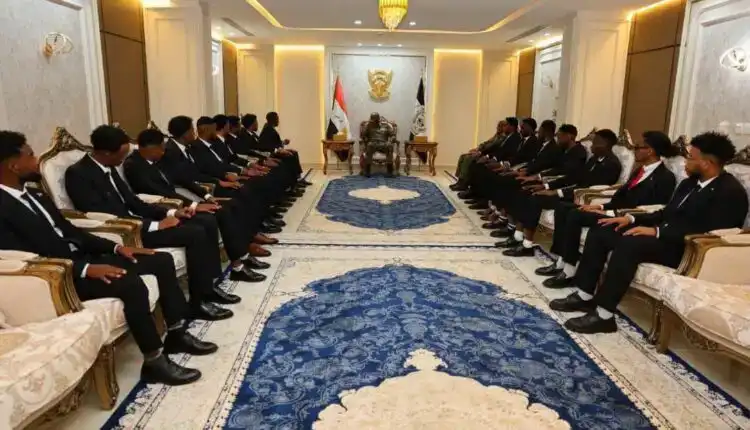
Sudanese army chief Abdel Fattah al-Burhan’s meeting with young content creators and campaign organisers has drawn criticism over his priorities during the country’s war, while supporters defended their right to present community projects to the military leadership.
The delegation represented “Ma Nasainakum”, or “We Have Not Forgotten You”, an initiative whose members include social media personalities, artists and young entrepreneurs, according to Al-Mashhad Al-Sudani.
Activist Hasabo al-Baili questioned what he described as repeated meetings between Burhan and the same individuals within a short period. He argued that the encounters reflected shortcomings in scheduling and protocol and risked signalling that less pressing matters were taking precedence over strategic challenges.
According to the Sovereignty Council’s media office, Burhan reviewed the initiative’s plans and pledged to support its programmes, praising what he described as its national and humanitarian objectives.
Content creator Ahmed Haidar told Al-Unwan 24 television that Burhan had invited the delegation following a well-attended event organised by the initiative at Khartoum Stadium.
Haidar said the group was currently working to provide solar power systems to health centres, particularly in outlying areas. Work had begun at one facility, with two more centres expected to be equipped the following week, he said.
He added that Burhan had promised moral and legal support. The account did not specify a financial commitment.
The initiative also plans to expand into projects involving agriculture, industry and sanitation, according to Haidar, who said its activities would extend beyond the stadium event.
Defending the meeting, activist Bashir Yaqoub argued that engagement with content creators was as legitimate as meetings with traders, employees, expatriates or other sections of society.
Journalist Rashan Oshi also backed the delegation, saying its members had experience in business, the arts, photography and event management, and were entitled to have their ideas heard.
She cited Turkey-based Sudanese entrepreneur Ibrahim al-Sheikh and photographer and events organiser “Mr Rashid” as examples, arguing that judging participants solely by their social media presence overlooked their wider work.
The disagreement centred on the timing and frequency of the meetings, with critics questioning Burhan’s allocation of attention and supporters presenting the encounter as an opportunity to advance youth-led community projects.