In September, the commander of an Islamist brigade fighting alongside Sudan’s army told Sudanese how the war would end. Al-Khowai and Al-Nuhud were within reach. Once Kordofan fell, Rapid Support Forces fighters would flee and people across Darfur would rise up against those who remained.
Al-Misbah Abu Zaid Talha even named the places where this revolt would unfold, from El Fasher and El Geneina to Nyala. On September 25, Tasamuh News carried his forecast. Aagile News gave it a headline declaring that the enemy was breathing its last.
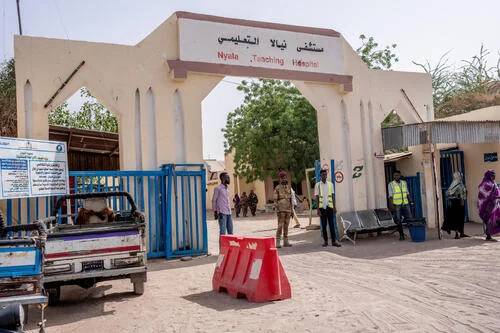
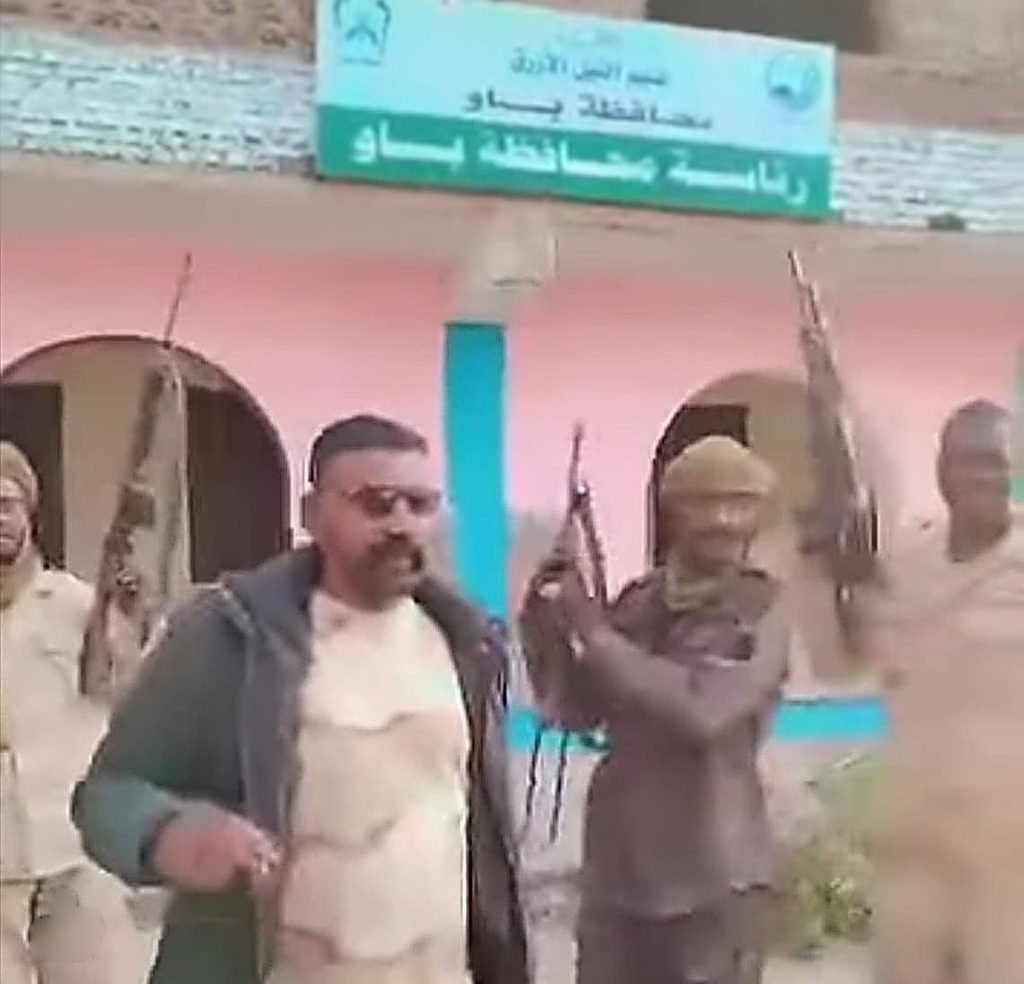
Nearly eight weeks later, the camera was rolling in a different town. On November 19, the RSF’s official Telegram channel published a one-minute, 44-second video identifying commander Hamouda al-Bishi as speaking from the headquarters of Bau locality in Blue Nile.
His message was addressed to the army-aligned Islamist fighters in Ed Damazin. They should leave, he said. Radio Dabanga reported that the Sudan Founding Alliance (TASIS) had published footage from outside the locality headquarters. Bau’s commissioner said the fighters withdrew after filming. Even his rebuttal conceded the point that mattered most to the men who posted it. They had reached the building.
Between Talha’s prediction and Bishi’s video lies the story of how Sudan’s pro-army media sold the demise of the RSF. It took a genuine advance in Kordofan, projected it across Darfur and invited its audience to imagine the war already won.
Meanwhile, in Blue Nile, the RSF and its allies were publishing the names of places where they said they were advancing. By the time Bishi appeared in Bau, they had been doing so for weeks.
Who sold the victory story
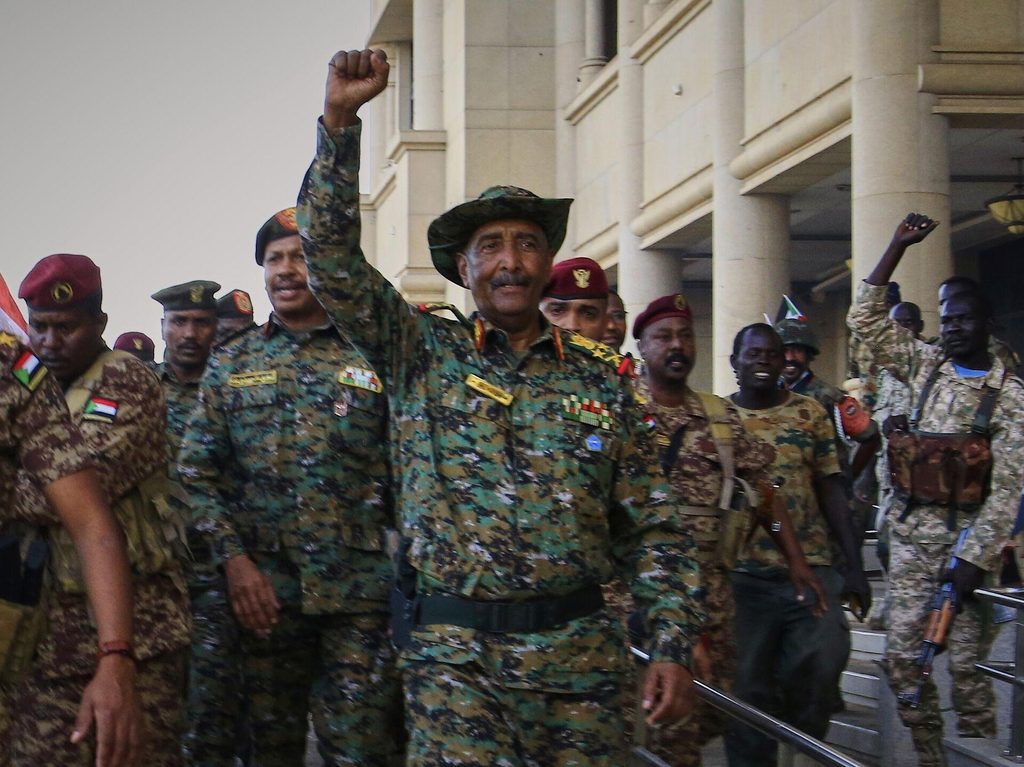
Talha commands the Al-Baraa bin Malik Brigade. The US Treasury formally links the brigade to the Sudanese Muslim Brotherhood, and the European Union identifies it as an Islamist militia fighting alongside the Sudanese Armed Forces (SAF). His intervention matters because it puts a name and an organisation behind a prediction too often attributed vaguely to “army supporters”.
A commander whose own men were fighting for Burhan was telling civilians in cities his side did not control what they would do once his forces won somewhere else.
The forecast grew more emphatic as it travelled. Tasamuh News reported Talha’s assertion that taking Kordofan would effectively end the battle. Aagile News told readers the coming hours could bring decisive changes. On October 6, Burhan supplied the political argument for waiting on that victory. He rejected negotiations and promised to recover “every inch” of Sudan, explicitly naming Darfur, Kordofan and Blue Nile.
By November 17, an unnamed military source in Al-Sahafa was describing the RSF’s fighting capacity as having collapsed across the fronts. The enemy had now been pronounced close to death in September and again in November.
On Telegram, the language tells its own story. A November 8 entry from the pro-army Al-Mashhad al-Sudan channel described army “heroes” crushing the RSF around Al-Khowai. On November 20, the Akhbar al-Sudan channel carried reassurances that the alarm over Ed Damazin amounted to “psychological warfare” and that the army would crush the forces facing it.
The two posts bookend the change in the battlefield news. First, readers were told the enemy was being crushed in the west. Then, when that enemy appeared near an administrative headquarters in the southeast, readers were told to distrust the alarm. The Islamist connection is documented in Talha and his brigade. The posts show how the wider pro-SAF social-media camp carried the victory message beyond them.
There was enough truth in the Kordofan story to make the rest believable. Conflict monitor ACLED recorded more than 30 towns and villages retaken by SAF and allied forces across North and West Kordofan from the beginning of November. Al-Khowai fell to them on November 13. But consider the second town Talha had put within a stone’s throw in September.
On November 17, the army was still reported to be about 60 kilometres from Al-Nuhud. That day’s territorial assessment by Sudans Post still placed nearly all of Darfur under RSF control. The brigade commander had already forecast an uprising in Nyala. His side was still trying to reach Al-Nuhud.
What TASIS was saying while its opponents declared victory
The alliance had challenged the premise of the army’s coverage well before Bau. In an interview with Al Araby television, TASIS leadership figure Hasab al-Nabi Mahmoud disputed accounts of a general RSF retreat and argued that the force fighting on these fronts had to be understood as a coalition.
Blue Nile illustrates his point. There, the RSF fights alongside Abdelaziz al-Hilu’s Sudan People’s Liberation Movement-North. The partners had already taken Kurmuk and Geissan. A narrative built entirely around RSF losses in Kordofan had remarkably little to say about what its alliance with al-Hilu had made possible elsewhere.
Read the alliance’s own dispatches in order and Bau comes into focus. On November 5, a TASIS statement published on the RSF website claimed victory at Bakouri in the region the alliance calls New Fung. On November 14, its Telegram channel named three more places in Bau locality where it said its forces had advanced. On November 19, TASIS announced the capture of Al-Madina 12 and Deirnag, followed by a separate statement claiming Bau itself.
The alliance described its opponents as Burhan’s forces and the battalions of the Islamic Movement. That is how TASIS presented the campaign to its own audience, as a fight against the armed Islamist interests sustaining Burhan’s war.
Bau gave that argument a particularly pointed setting. It is the birthplace of Malik Agar, Burhan’s deputy and leader of the rival SPLM-N faction aligned with SAF. Asharq Al-Awsat reported that footage posted by TASIS showed both RSF and SPLM-N personnel inside the town. Agar’s ally Burhan had promised to recover every inch.
Fighters from the rival wing of Agar’s own movement were now appearing in his hometown.
The footage establishes less than TASIS claimed and considerably more than the victory merchants can explain away. It does not settle how long the alliance held Bau or who controlled the wider locality. On November 20, TASIS named five more places it said it had taken, including Al-Madina 11. Control of all five remains unverified.
But Bau’s commissioner independently placed fighting at Al-Madina 11 that Friday. He also gave Asharq Al-Awsat a preliminary estimate of more than 6,000 families who had fled Bau and surrounding areas. For those families, the change on the ground was real enough to leave home over.
By Friday, the SAF government’s regional spokesman was on television asking residents to stay calm and acknowledging efforts to mobilise troops and equipment. By Saturday, Burhan himself was assuring the people of Ed Damazin that their city was safe.
The capital remained in SAF hands. Its defence had nevertheless become a matter the commander-in-chief felt obliged to address personally, four days after a military source declared his opponent’s fighting capacity broken across the fronts.
Talha’s September prediction assigned the people of Darfur a starring role in an uprising he expected them to deliver. November supplied a rather harsher verdict from the people who actually had to move. As SAF pushed west, civilians fled Al-Nuhud and Abu Zabad towards Darfur.
As TASIS pressed through Blue Nile, families fled Bau towards Ed Damazin. And while pro-army channels were still telling their followers what to believe about an enemy on its last legs, the SAF government was looking for reinforcements to fight it.