Sudan’s influential Khatmiyya Sufi order has appointed Ali Mohamed Osman al-Mirghani as its new spiritual leader following the death of his father, Mohamed Osman al-Mirghani, bringing clarity to the religious succession while leaving a potentially divisive struggle over the leadership of the Democratic Unionist Party (DUP) unresolved.
The decision, announced by the al-Mirghani family, places the eldest son at the head of one of Sudan’s most prominent religious movements, which has historically maintained considerable influence over the country’s political and social affairs.
However, the appointment does not resolve competing claims to the leadership of the DUP, where Ali’s younger brothers, Mohamed al-Hassan and Jaafar al-Sadiq, remain divided over the party’s direction and its position on Sudan’s ongoing war.
Family backs Ali al-Mirghani
Jaafar al-Sadiq al-Mirghani announced the family’s decision in a statement confirming that its members had agreed to recognise their eldest brother as the successor to their late father in leading the Khatmiyya order.
Speaking on behalf of the family, Jaafar pledged that the brothers would support Ali in carrying out his religious responsibilities and preserving the movement’s unity.
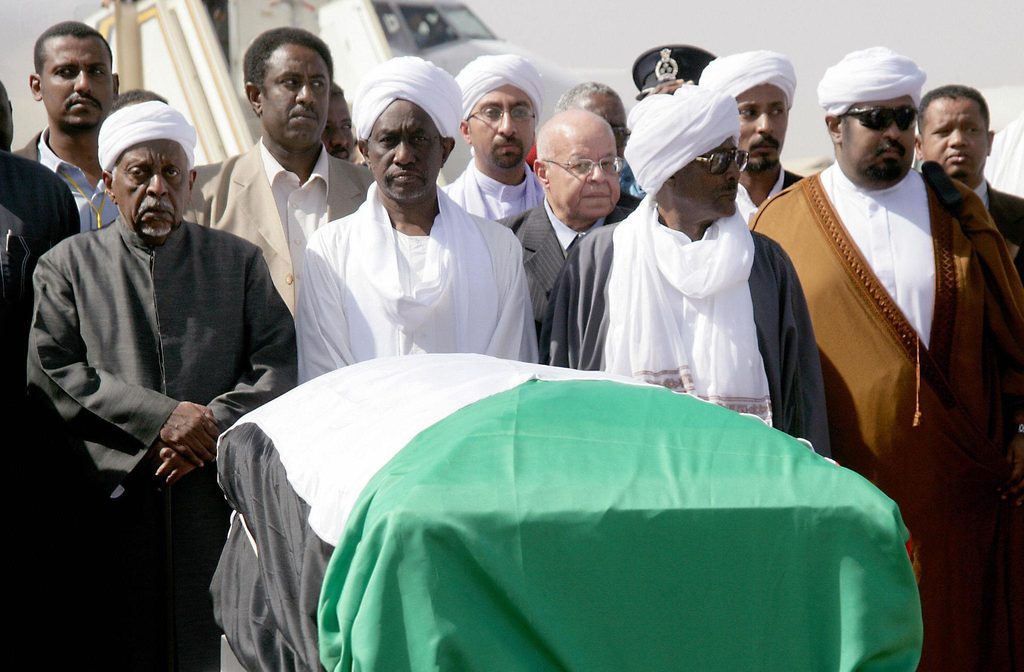
The announcement followed the death of Mohamed Osman al-Mirghani in Cairo on November 13. His body was subsequently returned to Sudan, where he was buried on November 16 at the Sayyid Ali al-Mirghani Mosque in Khartoum North.
Ali al-Mirghani, who has lived in the United States since the mid-1990s, now assumes responsibility for guiding a religious movement whose influence extends across generations of followers in Sudan.
In his first public address following the appointment, he called for dialogue, tolerance and reconciliation, urging members of the order to respect differing opinions and resist attempts to deepen internal divisions.
He stressed the importance of resolving disagreements through discussion rather than confrontation and encouraged followers to work toward restoring unity.
His remarks come at a time when Sudan’s prolonged conflict has intensified political divisions, including within established religious and political organisations.
Political succession remains contested
While the Khatmiyya leadership transition appears to have secured family agreement, the future leadership of the Democratic Unionist Party remains uncertain.
The DUP has long been associated with the Khatmiyya order, with the late Mohamed Osman al-Mirghani exercising substantial influence over both the religious movement and the political organisation.
Disagreements between his sons Mohamed al-Hassan and Jaafar al-Sadiq emerged before his death, particularly over the position of deputy chairman for organisational affairs.
Those differences have since become more pronounced because of their contrasting positions on Sudan’s civil war.
Mohamed al-Hassan has aligned himself with civilian political forces advocating an end to the fighting through negotiations, while Jaafar al-Sadiq has supported the Sudanese Armed Forces (SAF) in their conflict with the Rapid Support Forces (RSF).
Their opposing positions have raised questions about the DUP’s future political alliances and whether the party can maintain organisational unity under a new leadership structure.
The division also reflects the wider fragmentation of Sudan’s traditional political parties, many of which have struggled to establish common positions since the conflict erupted in April 2023.
Uncertain future for the DUP
The separation of the Khatmiyya’s religious leadership from the unresolved political succession presents a significant challenge for the al-Mirghani family.
Although Ali’s appointment establishes a recognised spiritual authority, it does not automatically determine who will inherit the political influence previously exercised by his father.
The rivalry between Mohamed al-Hassan and Jaafar al-Sadiq could complicate efforts to reorganise the DUP and define its role in any future political settlement.
For now, the family has demonstrated agreement over the Khatmiyya’s religious succession, but the question of who will lead one of Sudan’s historically influential political parties remains unanswered.
The outcome could have implications beyond the party itself, particularly as Sudanese political movements seek to position themselves amid continuing warfare and competing proposals for the country’s political future.