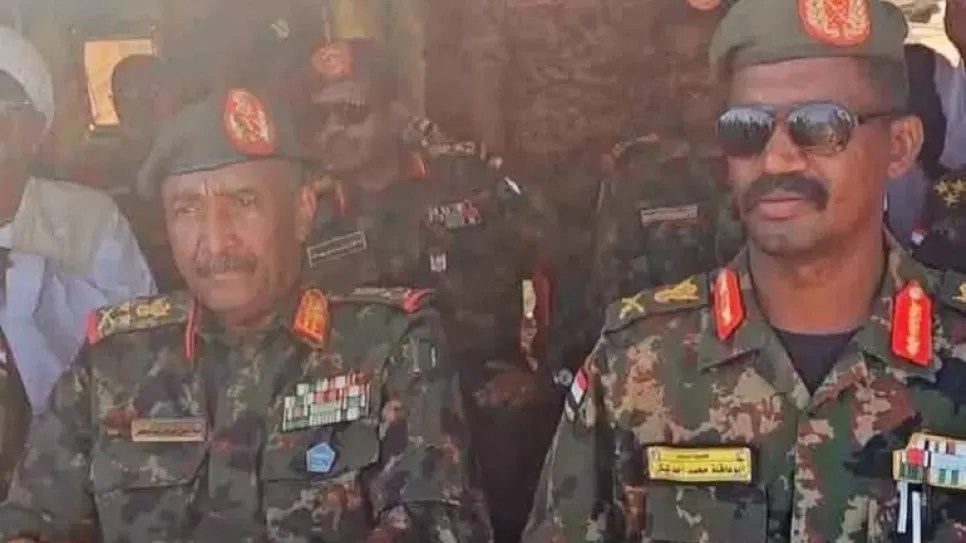
Abu Aqla Keikel’s direct access to army chief Abdel Fattah al-Burhan has deepened a rift with Islamist commanders who fear the Sudan Shield Forces could grow into a rival for influence within the Sudanese Armed Forces (SAF), Al-Rakoba reported on Thursday.
In a report by Awab Azzam al-Boushi, the outlet traced the dispute to Sudan Shield’s expansion into new areas. Among those who raised objections were figures linked to the Al-Baraa bin Malik Battalion, an Islamist armed group led by Al-Misbah Abu Zaid. Their concern, according to the report, was how much authority Keikel would gain as his force grew and what say they would have in decisions affecting it.
Keikel has given his fighters a concrete example of what his relationship with Burhan can deliver. In recorded remarks to his men, he said the army chief had authorised the issue of military service numbers, allowing them to draw army salaries. Keikel also said Burhan wanted several Sudan Shield battalions to serve abroad. He gave no destination or timetable.
His return from Saudi Arabia on November 19 sharpened the dispute. Al-Rakoba said reports of possible financial backing, equipment and a role for Sudan Shield fighters in the Yemen war had alarmed Islamist figures. The outlet offered no details of a signed agreement. Sudan Shield has also disputed accounts of a Yemen deployment, saying no decision had been taken to send its forces abroad, according to a denial reported by Sudan Axis.
Other reporting points to an unresolved question over whether some fighters were already serving overseas. On November 23, Darfur24 cited sources who said about 2,000 Sudan Shield members were among more than 7,000 Sudanese troops sent to Saudi Arabia and Yemen in recent months. Those figures remain unverified, and Keikel’s public remarks concerned a prospective deployment.
For the Islamist commanders described in Al-Rakoba’s report, Yemen carries a particular significance. In 2015, the Rapid Support Forces (RSF), led by Mohamed Hamdan Dagalo, known as Hemedti, began supplying fighters to the Saudi-led coalition there. Al-Rakoba said the income from those deployments helped Hemedti build up his forces and develop his own relationships with regional powers. Islamist figures now fear that access to outside funding could give Keikel similar room to act independently.
Keikel himself served as the RSF’s senior commander in Gezira before he and his fighters crossed over to the army in October 2024. He retained command of Sudan Shield after the defection. His men can now collect army pay, while Keikel still addresses them as their commander and deals directly with Burhan. It is that combination of command and political access, Al-Rakoba reported, that his Islamist rivals see as a threat to their own standing.