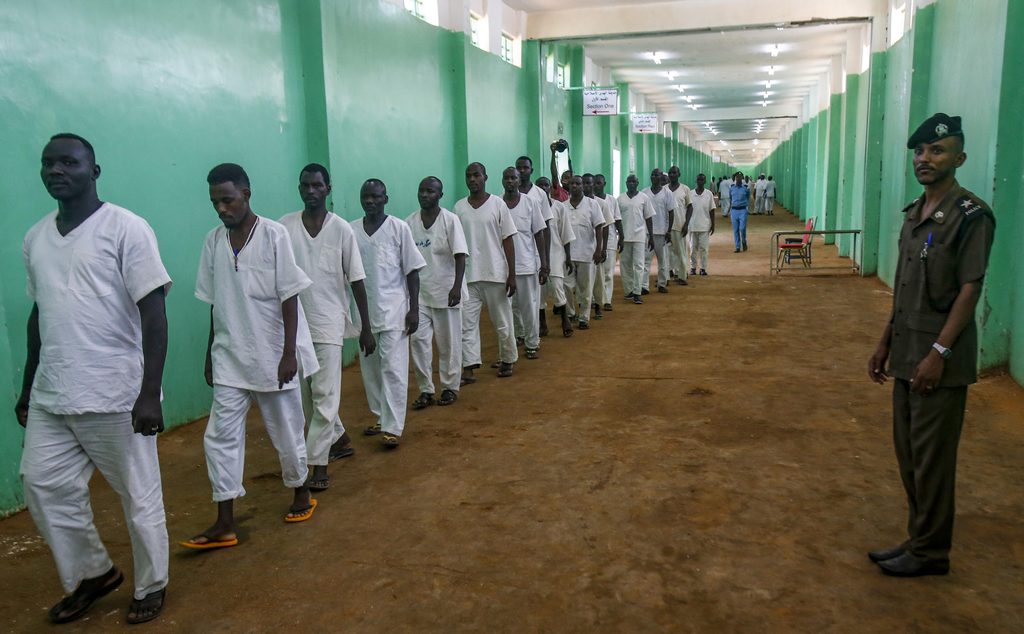
A Sudanese pharmacist who disappeared after being arrested by military intelligence has been found on death row following a secret trial over alleged collaboration with the Rapid Support Forces (RSF), according to his family.
The pharmacist, identified by the pseudonym Saleh Abdallah, was detained in March 2025 after remaining in his neighbourhood to provide medical assistance to civilians during the war.
His relatives say they spent nearly a year without access to him or reliable information about his whereabouts before discovering that he had been convicted and sentenced to death at Al-Huda prison in Omdurman.
The case is among two accounts documented in an investigation published by Sudan Tribune on Tuesday, September 29, raising fresh questions about secret detention, coerced confessions and the treatment of civilians accused of supporting the RSF.
Arrested after helping civilians
Abdallah was arrested on March 26, 2025, in Soba West, southeast of Khartoum, by military intelligence personnel operating from the Al-Aylafoun military base, his family said.
During the period when the RSF controlled the area, Abdallah had used his pharmaceutical knowledge to help sick residents obtain treatment and medication for chronic illnesses. He also assisted with the burial of people who died during the fighting.
His relatives said the arrest followed a personal dispute with an air force officer who accused the pharmacist of reporting him to the RSF while the group controlled the neighbourhood.
The family rejected the allegations, saying Abdallah had no political affiliations or involvement in military activities.
Following his arrest, the pharmacist was held incommunicado, without access to his relatives or legal representation.
His family eventually received unofficial information suggesting he was being held at Al-Aylafoun. In 2026, they discovered that he had been convicted of collaborating with the RSF following a closed trial and transferred to death row at Al-Huda prison.
Another detainee alleges torture and forced confession
The investigation also documented the case of Mohamed Ahmed, another Sudanese man sentenced to death over alleged RSF links.
Ahmed, whose name has also been changed for his protection, said an army soldier arrested him in Omdurman on suspicion of looting before military intelligence personnel accused him of supporting the RSF.
He said interrogators subjected him to severe beatings and torture during 45 days of detention, leaving him with injuries that required treatment.
According to his account, intelligence personnel later demanded 10 billion Sudanese pounds in exchange for his release.
Ahmed alleged that he was forced to repeat a prepared confession before a judge under threats of further torture.
He denied prosecution claims that he had carried a weapon or worn an RSF uniform.
Ahmed also reported that several detainees died under torture at intelligence detention facilities. Those allegations could not be independently verified.
Lawyers question death sentences
Mohamed Salaheldin, a member of the Emergency Lawyers group’s executive committee, said civilians accused of RSF collaboration have faced arrests without warrants, prolonged detention and proceedings that violate Sudanese criminal law.
He said living in territory controlled by the RSF, or interacting with its members to obtain basic necessities, should not be treated as evidence of criminal collaboration.
The latest accounts follow an April investigation by Human Rights Watch documenting arbitrary detention, torture and enforced disappearances by Sudan’s military and affiliated security forces.
The organisation found that civilians had been targeted over alleged RSF connections, sometimes because of their humanitarian work, ethnic identity or presence in areas previously controlled by the group.
It also documented death sentences imposed after proceedings in which defendants were denied basic legal protections.
Sudan’s attorney general rejected allegations of arbitrary arrests and custodial deaths in her response to Human Rights Watch, while acknowledging criminal proceedings in one case involving a death in custody.
Military and judicial authorities did not immediately respond to Sudan Tribune’s requests for comment on the two latest cases.