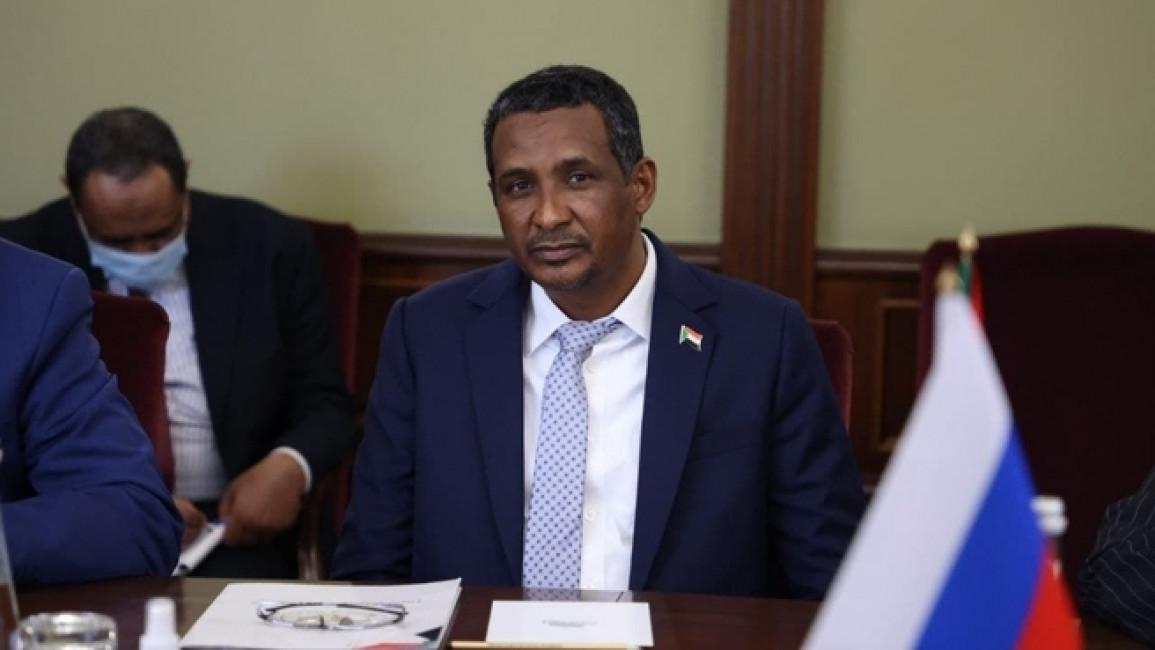
Mohamed Hamdan Dagalo, widely known as Hemedti, has risen from Sudan’s geographic and political periphery to become one of the most consequential figures in the country’s modern history.
His rise is striking precisely because it did not follow the traditional path of Sudanese political and military elites.
Coming from Darfur, far from the country’s historic centres of political authority, Dagalo built his influence through field experience, social networks, military organisation and an ability to adapt to Sudan’s rapidly changing political landscape.
His trajectory has prompted comparisons with historical figures who rose from outside established centres of power, although such comparisons have clear limits.
Alexander the Great, for example, inherited a powerful kingdom and a highly developed army before launching a vast campaign of conquest. Dagalo’s path was fundamentally different, shaped instead by Sudan’s internal conflicts, institutional weakness and decades-long imbalance between the political centre and the country’s marginalised regions.
The comparison is therefore less about historical scale than about a broader question: how does a figure operating on the margins become central to the political history of his country?
From Darfur to national influence
Dagalo grew up in a Darfuri environment shaped by pastoralism, commerce, cross-border movement and complex tribal and social relationships.
That environment exposed him early to local geography, negotiation, changing alliances and the realities of power outside formal state institutions.
His political and military development took place largely beyond the conventional structures that produced Sudan’s senior officers and political elites.
Rather than advancing through the traditional hierarchy of the Sudanese Armed Forces, Dagalo accumulated influence through field experience, relationships, mobility and organisation.
His rise accelerated with the formal establishment of the Rapid Support Forces in 2013.
Under his command, the RSF developed from a largely field-based formation into one of Sudan’s major centres of armed power, with extensive resources, communications networks, logistics, deployment capabilities and command structures.
That development did not happen overnight.
Years of operations across difficult terrain gave Dagalo and his commanders extensive practical experience in mobilisation, organisation, decision-making and the management of forces across large areas.
Although he did not emerge through Sudan’s conventional military academy system, the battlefield became his principal school of leadership.
From military commander to political actor
Dagalo’s rise, however, cannot be explained by military power alone.
After the overthrow of longtime president Omar al-Bashir in 2019, he became deputy head of the Transitional Military Council and later deputy chairman of the Transitional Sovereignty Council.
That transition brought him directly into Sudan’s national political leadership.
He became involved in negotiations, peace initiatives, economic affairs, foreign relations and relations with civilian political forces, armed movements and regional governments.
The exchange is particularly relevant to Dagalo’s evolution from battlefield commander to a figure directly engaged with international mediators over Sudan’s political future.
Politics demanded a different set of skills: negotiating alliances, managing disputes, communicating with competing constituencies and understanding regional and international balances.
Dagalo increasingly combined an independent military power base with an official political role.
That combination became central to his influence.
Military strength provided leverage, but political survival required relationships. Political influence, in turn, depended on possessing the means to defend and sustain that influence.
Dagalo proved capable of operating in both spheres.
Challenging Sudan’s traditional centre
His rise also carries significance beyond his individual career.
Sudan has long been marked by an imbalance between its political centre and its peripheral regions, with national decision-making historically concentrated among elites associated with Khartoum and the Nile Valley.
Dagalo’s emergence placed a figure from Darfur at the centre of national power.
This does not mean that he represents all Darfuris or all communities from Sudan’s marginalised regions, nor does it imply that his policies command universal support there.
But his rise nevertheless represents a significant disruption of Sudan’s traditional political order.
It demonstrated that power could increasingly emerge from outside the institutions and social networks that had dominated the Sudanese state for decades.
Several conditions helped make that possible: prolonged wars in the peripheries, weak state institutions, competing armed centres of power, declining confidence in traditional political parties, extensive social and commercial networks, and the political vacuum created by the fall of Bashir.
Dagalo proved capable of using those conditions to expand both his military and political influence.
From armed movement to political project
That transformation has become even more visible with Dagalo’s emergence as a central figure within the Sudan Founding Alliance, or TASIS, which has sought to present itself as an alternative political project for the country.
The significance of such appearances goes beyond symbolism. They underline how far Dagalo’s role has expanded beyond the command of the RSF and into the contest over who will shape Sudan’s post-war political order.
His political position now rests not only on military strength but also on efforts to build alliances, establish institutions and project an alternative vision of national authority.
Whether that project ultimately succeeds remains unresolved, but it represents another stage in Dagalo’s extraordinary movement from Sudan’s geographical margins toward the centre of national politics.
War and a new political phase
His place in Sudanese history became even more significant following the outbreak of war in April 2023 between the RSF and the Sudanese Armed Forces.
The conflict transformed Sudan’s military and political landscape and placed Dagalo at the centre of the struggle over the country’s future.
His name has since become inseparable from a period that has seen the collapse of the old political order, the emergence of rival centres of power and a war that has fundamentally altered Sudan’s internal balance.
Dagalo’s journey therefore raises a broader historical question: how does an individual move from being a participant in a period of upheaval to becoming one of the figures who define it?
His transformation from a commander operating on Sudan’s margins into a national and regional political actor is now impossible to separate from the history of the country’s current crisis.
Yet military and political ascent alone do not determine a lasting legacy.
Power can create influence. Battlefield experience can establish authority. Political skill can secure alliances.
But enduring statesmanship ultimately depends on whether that power can be transformed into institutions, peace, justice and a functioning state.
Dagalo has already secured a prominent position in Sudan’s contemporary history.
Whether his legacy becomes one of lasting political transformation will depend on whether military and political influence can ultimately be converted into a durable vision for Sudan’s future.