Sudanese political groups meeting in the Ethiopian capital Addis Ababa have rejected a dialogue initiative launched by Sudanese Armed Forces chief Abdel Fattah al-Burhan, deepening opposition to an army-led political process.
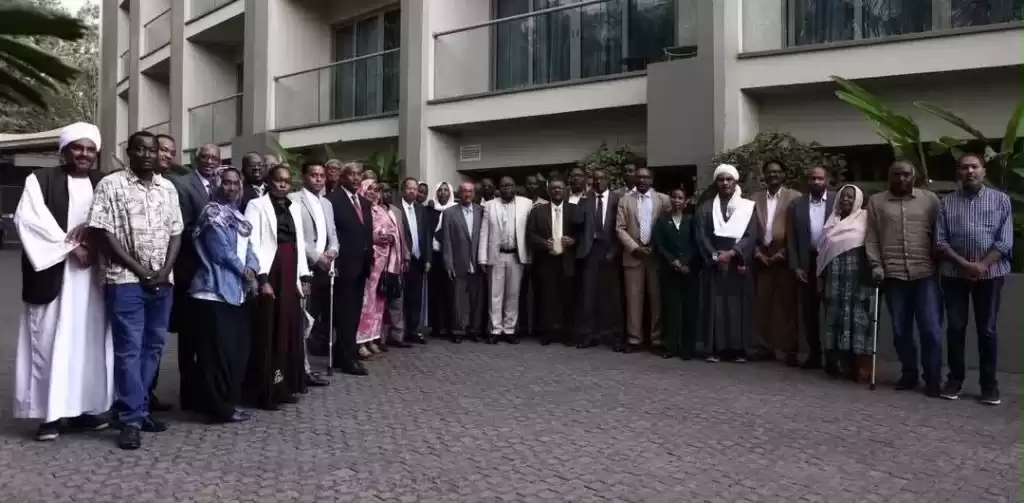
The position emerged during meetings held on Saturday by forces affiliated with the “Declaration of Principles” and other Sudanese political parties to discuss the country’s political process and possible paths toward ending the war.
Burhan announced on August 14 that he was prepared to provide legal, political and security guarantees in response to an initiative by what was described as an independent national mechanism seeking to launch a broad Sudanese-Sudanese dialogue inside the country. He also pledged to create an atmosphere allowing greater political and civic freedoms.
However, participants in the Addis Ababa meetings reached a consensus against taking part in the initiative, according to sources cited by Sudan Tribune. The groups are expected to issue a final statement setting out their position.
Among those attending were former prime minister and Somoud alliance leader Abdalla Hamdok, Sudan Liberation Movement leader Abdel Wahid al-Nur, senior figures from parties aligned with Somoud and representatives of Sudanese civil society.
Sources involved in the talks said the first session ended with full agreement on rejecting Burhan’s proposed dialogue. Participants also criticised the approach adopted by the five-party mechanism involved in mediation efforts and called for changes to bring it more closely into line with their vision for Sudan’s political transition.
The Addis Ababa decision broadens opposition to Burhan’s initiative beyond the Sudan Founding Alliance, TASIS, which has separately challenged attempts to launch a political process that excludes major parties to the conflict. TASIS has argued that any credible settlement must address the war and humanitarian crisis, ensure meaningful representation and avoid using political dialogue to legitimise the authorities based in Port Sudan.
The convergence does not mean Somoud, Abdel Wahid al-Nur and TASIS form a single political camp, but it highlights growing resistance among different Sudanese forces to allowing Burhan and the SAF-controlled authorities to determine the structure and participants of any post-war political process.
The meetings are expected to produce a broader political position on proposals aimed at ending the conflict, including efforts to unify civilian forces, address the continuing war and establish requirements for a future democratic transition.
Sudan’s National Umma Party said the Addis Ababa discussions were also examining developments on the battlefield, competing national peace initiatives, the roadmap associated with the Sudanese Declaration of Principles and the role of regional and international mediation.
The rejection adds to the political pressure facing Burhan’s initiative and underscores the difficulty of building a credible national dialogue while key civilian and armed actors dispute both the legitimacy of the Port Sudan authorities and the framework being proposed for negotiations.