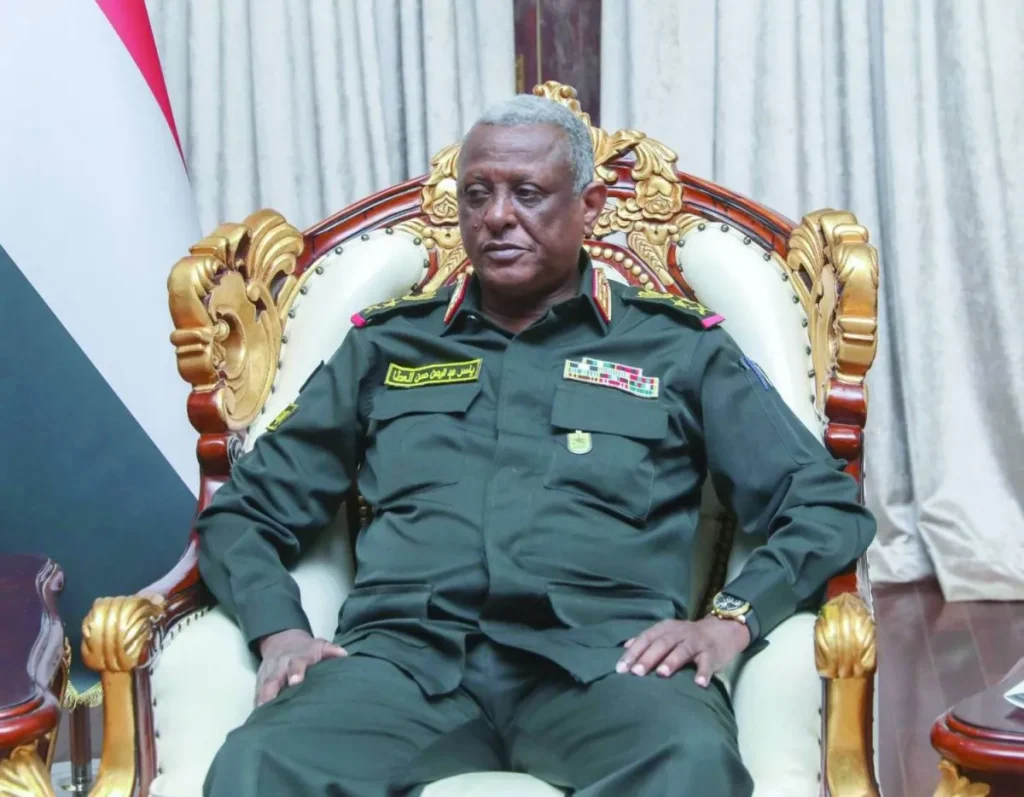
Senior figures linked to Sudan’s Islamist movement are expanding political, military and organisational contacts abroad as the country’s war continues, with recent activity stretching from Turkey to China, according to Sudanese sources familiar with the developments.
The sources told Erem News that a recent visit to Ankara by Yasser al-Atta, assistant commander-in-chief of the Port Sudan-based forces, went beyond negotiations over weapons and military technology and included a broader political and organisational track involving Sudanese Islamist networks based outside the country.
According to the sources, Port Sudan is seeking Turkish support in areas including weapons procurement, air power, air defence, electronic warfare and drone technology. In return, Ankara has reportedly been offered potential opportunities in Sudan’s energy, mining and port sectors, as well as a wider role on the Red Sea in any post-war settlement.
But the visit also reportedly included an undeclared series of contacts with Sudanese Islamist figures in Turkey.
Sources said al-Atta met former Sudanese intelligence chief Mohamed Atta al-Moula Abbas, who is described as a senior figure in the Sudanese Islamic Movement’s network in Turkey, along with other Islamist officials.
The reported contacts point to an overlap between Port Sudan’s immediate military requirements and efforts by Islamist networks connected to the former regime of Omar al-Bashir to reorganise their structures abroad.
Military talks and Islamist contacts
Sources said al-Atta pursued two parallel tracks during his visit.
The first involved official discussions with Turkey’s defence establishment over the military needs of forces aligned with Port Sudan. The second involved contacts with individuals associated with Sudan’s former Islamist power structure.
Port Sudan’s requests reportedly include expanding its unmanned aerial warfare capabilities, acquiring short- and medium-range air defence systems, improving counter-drone technology and electronic warfare capabilities, and obtaining precision munitions.
The discussions also covered maintenance, spare parts and training for operators, according to the sources.
Another proposal reportedly involves transferring part of the technical support infrastructure to Suakin on Sudan’s Red Sea coast, reducing reliance on foreign technical teams that currently move in and out of the country.
The negotiations are said to form part of a broader package under which Turkey could receive investment opportunities in mining, ports and energy in exchange for deeper military cooperation.
Turkey as a hub for Sudanese Islamists
Turkey’s importance to Sudan’s Port Sudan authorities extends beyond military and commercial relations.
For years, the country has hosted figures linked to Bashir’s former government, the Sudanese Islamic Movement and organisations associated with it.
Mohamed Atta al-Moula Abbas, a former director of Sudan’s National Intelligence and Security Service, is among the most prominent figures cited by the sources.
They said he currently plays a leading role in the Islamic Movement’s organisational network in Turkey.
Sources claimed that al-Atta held an unannounced meeting with Abbas during his latest visit, attended by other Islamist figures.
If confirmed, the meeting would represent a direct link between one of the most senior military commanders involved in Sudan’s current war and a veteran security official from Bashir’s Islamist government.
The sources said Abbas’s presence in Turkey predates the current war and is rooted in earlier internal struggles among Sudanese Islamist groups abroad.
They said disputes involving factions associated with Mahdi Ibrahim and Nafie Ali Nafie eventually led to Abbas taking control of the movement’s Turkey office, making him an influential organiser within the Sudanese Islamist network there.
From Omdurman to Beijing
The Turkish visit is also being viewed in the context of the Islamist armed groups fighting alongside the Port Sudan military establishment.
Sources said al-Atta’s relationship with such formations became more visible during meetings in Omdurman in April with commanders from the Al-Baraa Ibn Malik Brigade and other Islamist-linked groups.
During those discussions, al-Atta reportedly promised that fighters would receive training outside Sudan.
That claim has gained additional significance because al-Atta’s visit to Turkey coincided with a visit to China by a commander from the Al-Baraa Ibn Malik Brigade.
The parallel travel has raised questions over whether Sudanese Islamist formations are pursuing coordinated overseas tracks involving military contacts, training, weapons procurement and the restructuring of political and organisational networks abroad.
Why Ankara matters
Urwa al-Sadiq, assistant chairman of Sudan’s National Umma Party, told Erem News that al-Atta travelled to Ankara following an official invitation from Turkish Chief of General Staff Selçuk Bayraktaroğlu.
He said the two held a closed bilateral meeting before broader talks between their delegations.
Al-Atta later met Turkish Defence Minister Yaşar Güler in the presence of the chief of general staff, al-Sadiq said.
According to al-Sadiq, the structure of the meetings showed that the visit was primarily military rather than diplomatic and should not be viewed as a routine public-relations trip.
He said Port Sudan appeared to be seeking to transform Turkey from a military supplier into a strategic partner capable of helping its forces survive the conflict and reposition themselves for the period that follows.
Potential areas of cooperation could include Bayraktar Akıncı drones and more advanced platforms, air defence, electronic warfare, training and maintenance, as well as Turkish involvement in ports, energy projects and reconstruction.
For Ankara, the possible benefits could go far beyond arms sales.
Turkey could secure a long-term defence market, reconstruction contracts, energy and port projects, access to mining and agricultural opportunities and greater political influence in Sudan and along the Red Sea.
Al-Sadiq said the talks therefore appeared to form part of a wider negotiation over Sudan’s future political order and the balance of regional influence after the war.
Military ties predate al-Atta visit
Political analyst Ibrahim Matar said military cooperation between Turkey and the Port Sudan authorities was already well established before al-Atta’s latest trip.
Matar cited what he described as contracts, correspondence, flight records and technical documents showing cooperation between the two sides.
He said Turkish defence company Baykar signed a contract with Sudan’s Military Industry Corporation on November 16, 2023, covering eight TB2 drones, three ground-control stations and about 600 warheads, at a total reported value exceeding $120 million.
Matar also claimed that dozens of technicians were deployed and that Baykar personnel were present in Sudan when operations began in September 2024.
Port Sudan-aligned forces subsequently deployed heavier Bayraktar Akıncı drones, he said, with several reportedly shot down during the past year.
The Akıncı platform represents a significant increase in capability compared with lighter drones because of its longer range, higher operating altitude, larger payload and ability to support reconnaissance and electronic warfare missions.
New test on Sudan’s battlefields
Taken together, the developments suggest al-Atta’s Ankara visit formed part of a network of activity extending far beyond conventional Sudan-Turkey relations.
Military procurement, reconstruction deals, Red Sea investment and the overseas reorganisation of Sudanese Islamist networks are increasingly intersecting as the war enters a new phase.
Turkey appears to be one of the most important centres in that emerging map, while China has entered the picture through the reported visit by an Al-Baraa commander.
Matar said the significance of these moves could become clearer if new weapons and systems begin appearing on the battlefields of Kordofan and Blue Nile.
Any such deployment would provide the clearest indication that negotiations conducted abroad are being converted into military capabilities capable of shifting the balance of power inside Sudan.