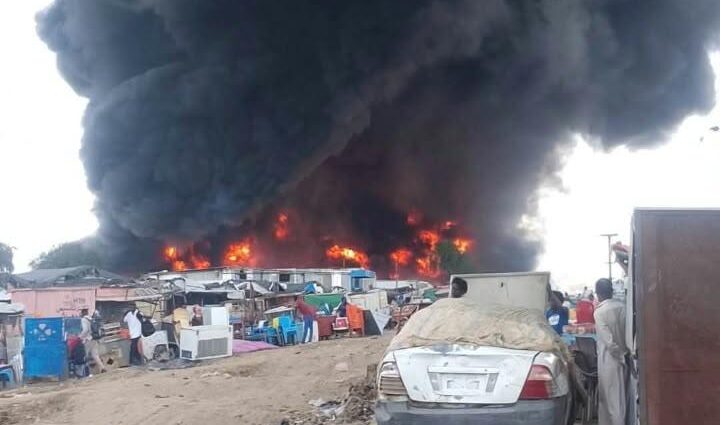
Sudan’s United Civilian Forces coalition, known as Qimam, has condemned an alleged Sudanese army drone strike on Al-Naam market near the border with South Sudan, calling for an independent investigation and international action to protect civilians.
In a statement reported by Erem News on Monday, the coalition accused forces loyal to army chief Abdel Fattah al-Burhan and the Port Sudan authorities of escalating aerial attacks on markets and civilian gatherings.
Qimam said the market was crowded with civilians when it was allegedly struck, describing the attack as a dangerous escalation that threatened lives and disrupted trade.
The report provided no casualty figures or precise date for the alleged strike. It included no response from the Sudanese military, and the coalition’s account has not been independently verified.
The coalition said repeated attacks on markets raised serious concerns about whether civilians were being deliberately targeted. It stressed that markets must be protected and called for investigations into alleged violations of international humanitarian law.
Qimam urged the United Nations, the UN Security Council and humanitarian and rights organisations to press for an end to attacks on civilians. It also demanded an independent investigation into the alleged Al-Naam strike, accountability for those responsible and practical measures to prevent further attacks.
Speaking to Erem News, coalition spokesman Othman Abdel Rahman Suleiman accused the Port Sudan authorities of pursuing a “scorched-earth” policy against communities.
He alleged that escalating attacks endangered residents and risked terrorising them into leaving their homes. Suleiman also accused the Muslim Brotherhood of dominating the Port Sudan leadership, a characterisation reflecting the coalition’s political position.
Continued bombardment of civilian markets, he said, heightened fears that communities themselves were becoming targets in the war.
Suleiman held the Port Sudan leadership responsible for the alleged attacks and urged it to halt the escalation, warning that international silence would deepen Sudan’s humanitarian crisis.