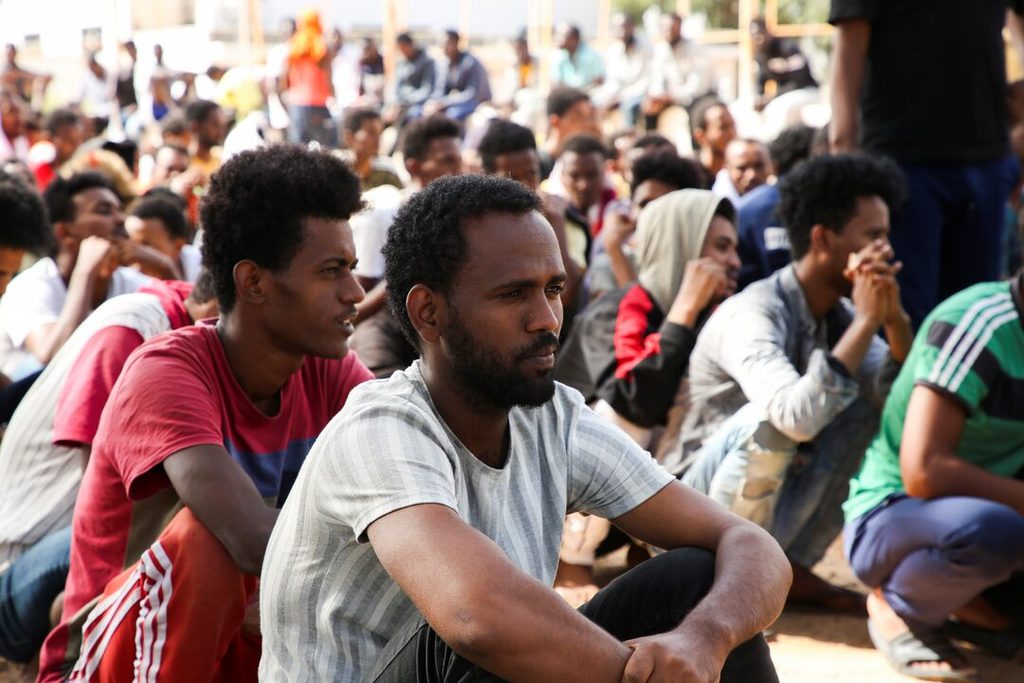
Around 1,900 Sudanese migrants and refugees are being held in detention centres across Libya, with some facing alleged torture, extortion and other abuses, a Sudanese rights group said.
The Gezira Observatory for Human Rights said the detainees include women and children and are being held at several facilities in eastern and western Libya.
Libya is hosting an estimated 590,000 Sudanese who fled the war that erupted in April 2023. Libyan authorities have also carried out repeated security campaigns targeting undocumented migrants and foreign nationals.
According to the observatory, more than 1,200 people of different nationalities, including Sudanese women and minors, are being held at the Qanfouda detention centre in Benghazi.
The group said detainees there were living in poor conditions marked by shortages of food, drinking water and medical care, while communicable diseases were reportedly spreading inside the facility.
It also alleged that some detainees were being held for prolonged periods without a clear legal basis or access to judicial authorities.
A further 600 to 700 people are being held at the so-called Prison 71 facility in Tobruk, the monitor said. Many were reportedly detained near Libya’s land borders or intercepted while attempting to cross the Mediterranean.
The observatory said detainees at the facility also faced unsanitary conditions and inadequate healthcare.
At detention centres in Tajoura and Bir al-Ghanam in western Libya, the group documented allegations that detainees had cash, mobile phones and identity documents confiscated without legal justification.
Witnesses from the Osama and Al-Assa detention sites also alleged physical abuse, degrading treatment and extortion, with guards accused of demanding money from detainees’ families in exchange for their release.
The rights group called on Libyan authorities to launch independent investigations into the allegations, prosecute those responsible for abuses and release anyone being held without charge.
Libyan authorities had not immediately commented on the accusations.
The observatory said young Sudanese made up a large proportion of those detained, many of whom had fled fighting and attacks in Sudan before encountering detention and exploitation during their journey through Libya.
Libyan authorities have previously deported Sudanese nationals, including people diagnosed with infectious diseases, to the desert border region where Libya, Sudan and Egypt meet.
The Sudanese side of that border area is currently controlled by the Rapid Support Forces, complicating access to official state services and consular support.