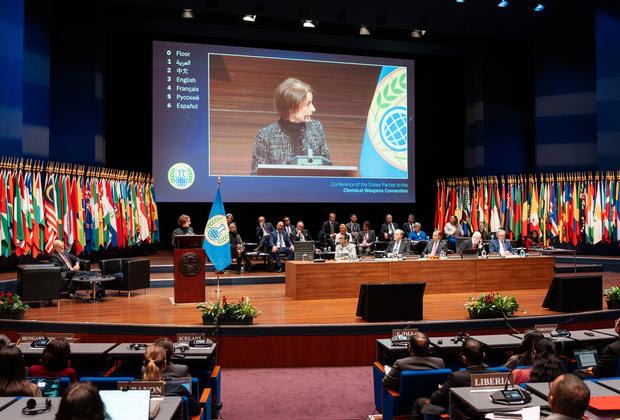
Sudan’s SAF government has suffered a fresh diplomatic setback after being excluded from the new African membership of the Executive Council of the Organisation for the Prohibition of Chemical Weapons (OPCW), amid mounting international scrutiny over the Sudanese army’s use of banned chemical weapons.
The Conference of the States Parties elected Morocco, Angola, Cameroon, Tanzania and Tunisia to represent Africa on the council for the new term beginning in 2027, with Tunisia replacing Sudan.
The decision was taken during the OPCW’s 31st annual conference in The Hague, which runs from November 23 to 27 and brings together international representatives to discuss compliance with the Chemical Weapons Convention.
Sudan’s exclusion comes amid mounting pressure on the SAF government led by General Abdel Fattah al-Burhan over accusations that its forces deployed prohibited chemical agents during the war against the Rapid Support Forces (RSF).
In May 2025, the United States announced that it had formally determined that the SAF government used chemical weapons in 2024, in violation of international law, triggering sanctions against the army-aligned administration.
Washington imposed additional sanctions in 2026, further intensifying pressure on the SAF government over its obligations under the international chemical weapons treaty.
Separate investigations by international media outlets have also uncovered evidence pointing to the alleged development, testing and stockpiling of chemical weapons by the Sudanese army, including evidence suggesting the weaponisation of chlorine gas. The SAF has denied the accusations.
OPCW Director-General Sabrina Dallafior confirmed on Tuesday that Sudan remained under scrutiny by the Executive Council, with several member states requesting formal clarifications under Article IX of the Chemical Weapons Convention.
Dallafior said the organisation had offered technical assistance to Sudan and expressed concern that detailed information supporting the allegations had yet to be submitted to the OPCW Secretariat.
She urged countries possessing relevant evidence to share it with the organisation, including through confidential channels.
The Executive Council, comprising 41 elected member states, is responsible for overseeing compliance with the convention and addressing suspected violations, including allegations involving the use of prohibited chemical agents.
The loss of Sudan’s seat represents another diplomatic setback for the SAF government as it faces international demands for transparency and accountability over its conduct during the conflict, which erupted in April 2023.