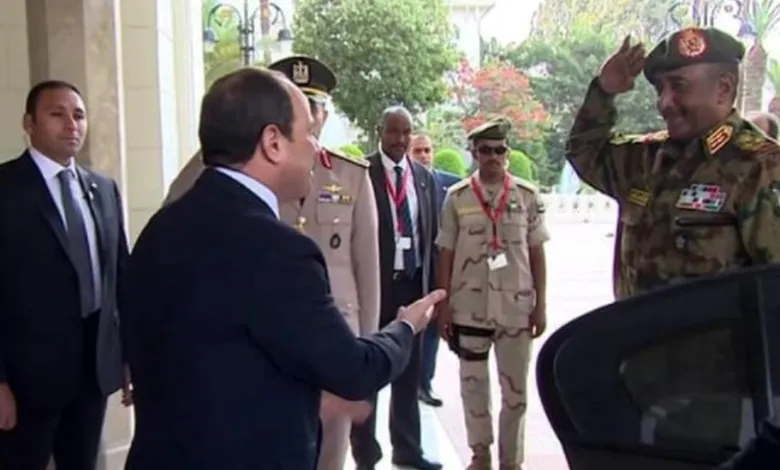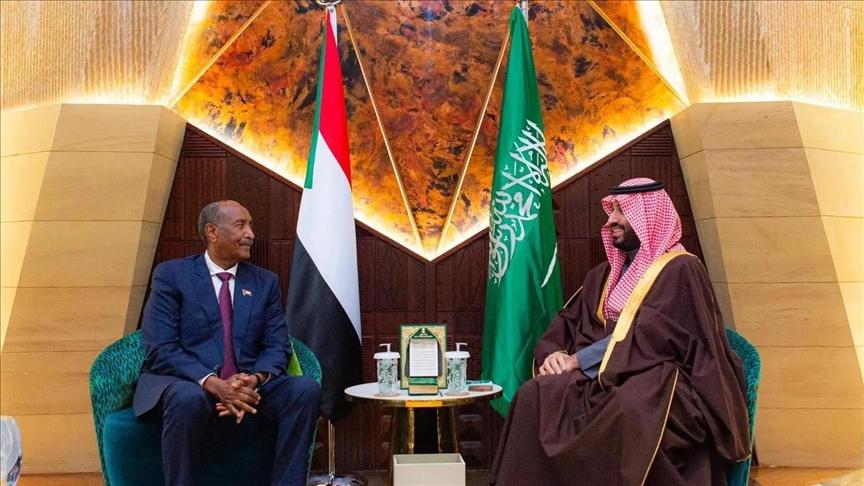
Saudi Arabia’s reported effort to assemble a civilian political front aligned with SAF army chief Abdel Fattah al-Burhan has triggered a wave of reaction across Sudanese media and political circles, with critics framing the move as an attempt to rescue the Port Sudan authority by giving it a civilian face.
The French outlet Africa Intelligence reported that Riyadh is quietly working to build a broad civilian bloc with international acceptability, in coordination with al-Burhan, as part of efforts to shape Sudan’s post-war political order.
The report was quickly picked up by Sudanese platforms and commentators, including Al-Khames, Alqissa and Sudan360, which view the move as a behind-the-scenes Saudi attempt to form a civilian government allied with the SAF leadership.
The strongest reaction came through reports that former Prime Minister Abdalla Hamdok had rejected Saudi-backed arrangements aimed at bringing civilian forces into alignment with al-Burhan. According to the Horn of Africa Observatory, Hamdok refused to join any political formula that would reproduce military influence under a civilian cover, insisting instead on a comprehensive settlement that ends the war and leads to an independent civilian transition.
The reported refusal sharpened the political fallout around the Saudi initiative. In Sudanese civilian circles, the proposal is being read less as a neutral peace effort than as an attempt to manufacture legitimacy for the Port Sudan camp after years of war, economic collapse and growing international pressure.
Alqissa framed the move as “Saudi attempts to rescue Burhan through a supportive civilian government,” a line that captured much of the online reaction. The criticism centers on the idea that Riyadh is not merely mediating between Sudanese parties, but trying to construct a political base that can market al-Burhan’s authority abroad.
The backlash also highlights the growing legitimacy contest between rival political projects. While the Port Sudan authority continues to seek a civilian umbrella that can win international recognition, the Sudan Founding Alliance, TASIS, has already presented itself as an alternative civilian and political framework rooted in a post-war federal transition.
For TASIS-aligned voices, the Saudi move may be seen as proof that al-Burhan’s camp is struggling to sell itself as a viable national authority. If a civilian front has to be built around the army from the outside, critics argue, it exposes the weakness of the Port Sudan order rather than its strength.
The controversy also complicates Saudi Arabia’s role. Riyadh previously hosted the Jeddah talks with Washington, but the reported push for a Burhan-aligned civilian bloc suggests a shift from mediation toward political engineering.
That shift is likely to deepen suspicion among Sudanese civilian forces, especially those that reject any transition that preserves military dominance behind civilian figures. Hamdok’s reported refusal gives that opposition a prominent face, and turns the Saudi initiative from a diplomatic maneuver into a test of whether Sudanese civilians will accept being used to rehabilitate SAF rule.