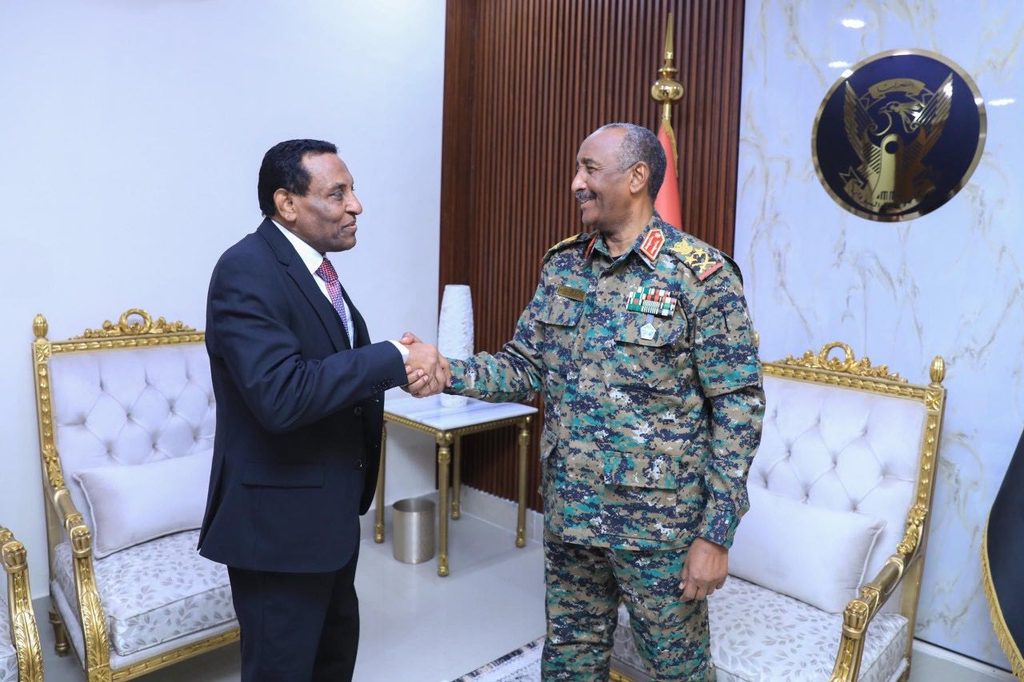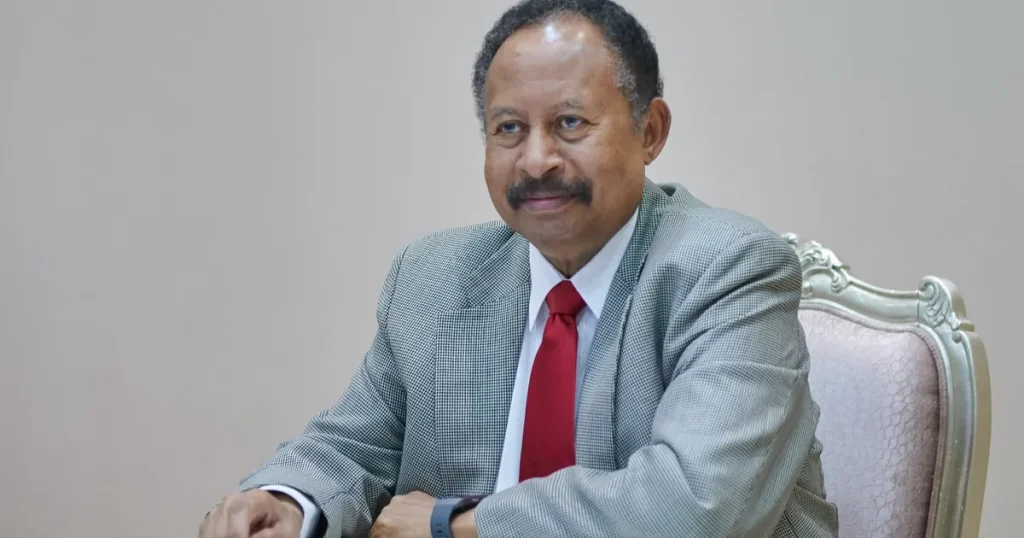
Sudan’s civilian political alliance Somoud has criticised army chief Abdel Fattah al-Burhan over remarks ruling out the return of former Prime Minister Abdalla Hamdok and his political allies to power, accusing him of attempting to dictate the country’s political future.
Burhan’s comments have reignited debate over who has the authority to determine Sudan’s post-war leadership, with opposition figures arguing that political legitimacy must come through free elections rather than decisions imposed by military leaders.
Speaking to Alrakoba, Somoud leader Shihab Ibrahim said Burhan’s declaration that Hamdok and the Forces of Freedom and Change would not return to power reflected an attempt to shape Sudan’s political landscape around his own continued rule.
Ibrahim argued that political legitimacy could neither be granted nor withdrawn through public speeches or unilateral decisions, stressing that Sudanese citizens alone had the right to determine who governs them.
He said free and fair elections, rather than predetermined lists of excluded politicians and parties, must provide the basis for any future government.
The Somoud official also challenged Burhan’s rejection of externally imposed political arrangements, arguing that the same principle should apply to attempts to impose political leadership from above.
Ibrahim accused Burhan of helping fuel the conflict and said ending the war should take priority over political struggles for power.
He pointed to the worsening humanitarian and economic crisis, with millions of Sudanese displaced internally or forced to seek refuge abroad as living conditions continue to deteriorate.
Political analyst Mustafa al-Jamil, an assistant professor of political science at Sudanese universities, described Burhan’s position as contradictory.
Al-Jamil questioned how the army chief could insist that political authority must be obtained through elections while simultaneously declaring that Hamdok and Somoud would never return to government.
He asked what would happen if Sudanese voters ultimately chose Hamdok and his political allies through a democratic process.
The analyst said ending Sudan’s war would require a negotiated settlement backed by guarantees, witnesses and international participation.
Any political agreement, regardless of the parties involved, should ultimately lead to credible elections allowing Sudanese citizens to determine their leadership, he added.
Al-Jamil warned that allowing any individual or institution to decide in advance which political forces could participate in government would perpetuate Sudan’s longstanding crisis of legitimacy.
He also argued that excluding specific political groups was incompatible with efforts to achieve a comprehensive and lasting settlement.
The dispute comes as Sudan’s political future remains deeply uncertain amid the continuing war, economic collapse and mounting humanitarian suffering.
Burhan’s rejection of Hamdok’s political return has raised broader questions about whether Sudan’s eventual transition will be determined through an inclusive democratic process or shaped by restrictions imposed by military authorities.
Somoud maintains that the country’s future leadership must be decided by Sudanese voters, insisting that no military commander has the authority to determine the outcome of a political process before elections take place.