Sudan’s army chief Abdel Fattah al-Burhan has publicly dismissed international moves to restrict weapons and military aviation as little more than hostile propaganda, even as his Port Sudan administration mounts a diplomatic campaign at the United Nations to block a US proposal for a nationwide arms embargo.
The contrasting messages have exposed growing concern within the SAF leadership over a measure that could directly restrict one of its principal battlefield advantages — its access to combat aircraft, armed drones and foreign weapons supplies.
The United States presented a draft resolution to the UN Security Council on Monday seeking to expand the existing Darfur arms embargo to the whole of Sudan and explicitly bring unmanned aerial vehicles, drone systems and related technology within its scope.
Washington says the measure is intended to curb the external flow of weapons sustaining Sudan’s war and increase pressure on the belligerents to move toward a ceasefire and political settlement.
But the proposal has sharply divided Sudan’s competing authorities.
The Sudan Founding Alliance, TASIS, has backed a nationwide arms embargo provided it applies equally across the entire country.
TASIS spokesman Ahmed Taq Lisan told Al Ain News that the alliance supports measures restricting weapons as long as they cover all Sudanese territory rather than being confined to Darfur.
That position stands in marked contrast to Burhan and the Port Sudan authorities, who have rejected widening the embargo.
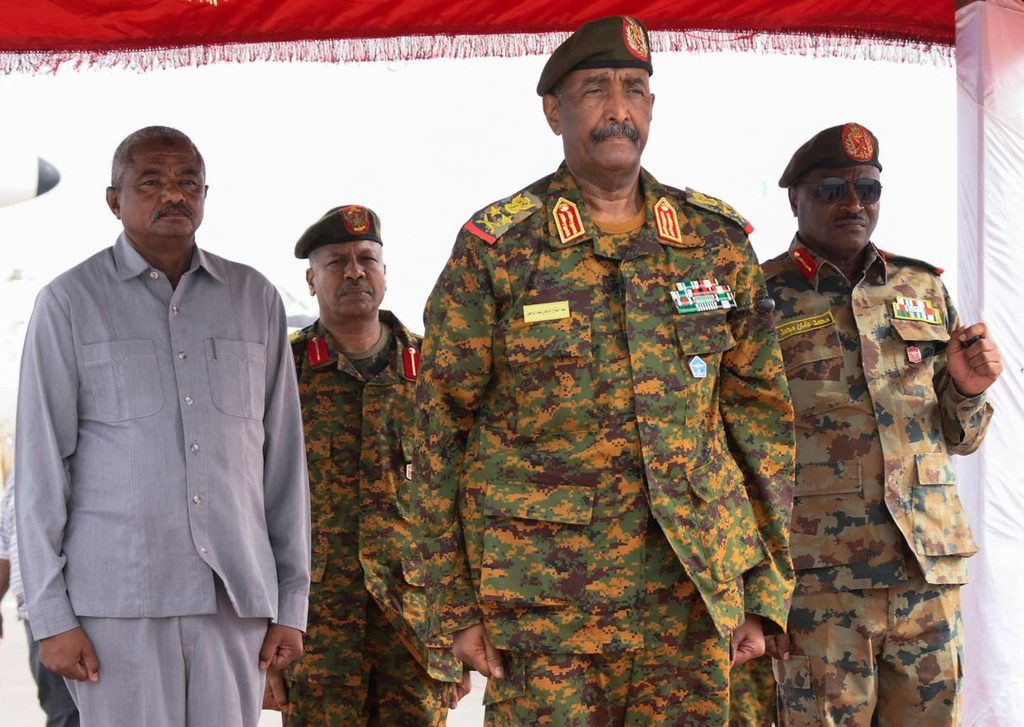
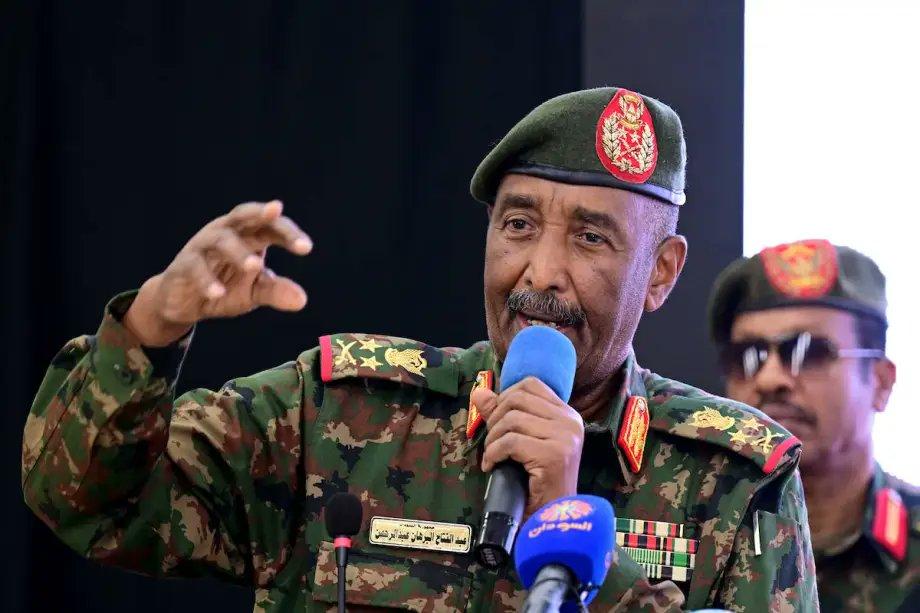
Speaking during a military event on Monday, Burhan sought to reassure supporters that international sanctions and talk of restrictions on military aviation would not weaken his forces, describing discussion of an air embargo as propaganda promoted by the army’s enemies.
He vowed that SAF would continue fighting until territory held by its opponents was retaken.
Hours later in New York, however, Sudan’s UN ambassador Al-Harith Idriss was treating the proposal as anything but insignificant.
Idriss urged the Security Council not to extend the embargo beyond Darfur, arguing that doing so would weaken the Sudanese army, undermine sovereignty and effectively place SAF and the Rapid Support Forces on the same footing.
The two messages underline an increasingly difficult position for Port Sudan: publicly dismissing the proposed restrictions while simultaneously mobilising against their adoption.
Drones move to centre of the war
The US proposal is particularly significant because it explicitly targets drones and related technology.
Massad Boulos, US President Donald Trump’s senior adviser for African and Arab affairs, told the Security Council that armed drones had become one of the most destructive features of the Sudan conflict.
Boulos said more than 1,120 civilians were killed by armed drones during the first half of 2026, accounting for roughly 80 percent of recorded civilian deaths during that period. He said drone attacks had struck markets, medical facilities, humanitarian convoys and critical infrastructure.
The US envoy accused both SAF and the RSF of continuing to pursue battlefield gains instead of negotiations.
He cited RSF attacks and obstruction of humanitarian access, while also pointing to more than a dozen SAF drone strikes and raids in North and South Kordofan during August, including an attack on Jabra al-Sheikh that killed five civilians.
The proposed embargo would therefore go significantly beyond the current sanctions architecture.
The existing UN measures date back to the Darfur conflict and apply arms restrictions to parties operating there. They are currently due for renewal by September 12, 2026.
Washington wants that framework extended across Sudan.
France has supported expanding the embargo, while Britain and Denmark have also backed stronger international measures aimed at restricting the flow of weapons into the conflict.
Russia and China have opposed widening the sanctions regime.
Russian Ambassador Vassily Nebenzia argued that extending the embargo would improperly constrain Sudan’s army, while China warned against expanding coercive measures and called instead for stronger enforcement of existing restrictions. Both countries hold Security Council vetoes, creating a major obstacle to the US proposal.
SAF’s dependence on air power
Sudanese analysts cited by Al Ain News said SAF’s opposition reflects the central role that air power has assumed in its war strategy.
Political analyst Nujaymi Osman argued that military aircraft and drones remain among SAF’s most important advantages in areas where its ground forces face stronger resistance.
He accused the army of repeatedly striking civilian areas it regards as sympathetic to its opponents, including markets, hospitals and residential neighbourhoods.
Those accusations remain contested by SAF, which routinely says its air and drone operations target military positions and accuses the RSF of embedding forces among civilians.
But civilian deaths from air and drone attacks have become an increasingly prominent part of international scrutiny of the war.
The Office of the UN High Commissioner for Human Rights has also called for the Darfur arms embargo to be expanded to the whole country, saying the continuing supply of weapons from abroad is helping prolong the conflict.
The US proposal would strike directly at that supply chain.
For the Port Sudan administration, that helps explain why a measure Burhan portrayed domestically as little more than hostile messaging has triggered determined opposition at the Security Council.
For TASIS, meanwhile, the debate presents an opportunity to argue that restrictions should no longer be geographically confined to Darfur but imposed nationwide, including against the military aviation and drone systems that have transformed Sudan’s battlefield.
The question now moves to the Security Council, where Washington will have to overcome Russian and Chinese resistance if it wants the expanded embargo adopted.
What Burhan cannot easily reconcile is the message being delivered on the two fronts: if the proposed embargo poses little threat to SAF, Port Sudan’s increasingly forceful campaign to stop it suggests otherwise.