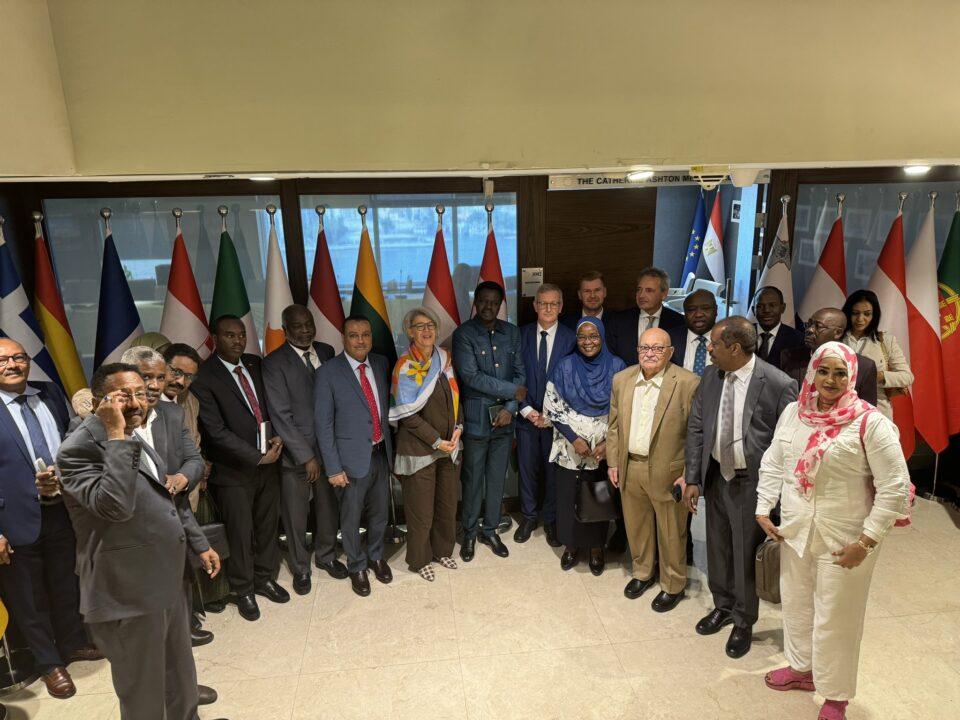
A civilian and political seminar held on the sidelines of the Berlin conference on Sudan brought together dozens of Sudanese actors to outline a unified call for peace, but the initiative has already drawn criticism over its composition and outcomes.
The “Civilian and Political Seminar,” organised under the Quintet framework — comprising the African Union, United Nations, European Union, IGAD, and the League of Arab States — gathered around 40 Sudanese participants drawn from political, civic, and professional groups to discuss a Sudanese-led pathway to end the war.
The meeting was designed as a consultative platform to amplify civilian voices and lay the groundwork for an eventual intra-Sudanese political dialogue aimed at a civilian-led transition. Organisers stressed that participation did not confer formal status and that the event was only one step in a broader, ongoing process that would include additional stakeholders in future rounds.
The seminar produced a joint civilian call, finalised in Berlin on April 15, urging an end to the war, protection of civilians, unhindered humanitarian access, and the launch of an inclusive, Sudanese-owned political process under civilian leadership.
Participants emphasised that a military solution to the conflict would deepen humanitarian, economic, and political damage, calling instead for de-escalation, accountability for violations, and a coordinated international approach to support a civilian transition.
The Quintet welcomed the outcome, describing it as a rare moment in which a diverse group of Sudanese civilian actors — many of whom had not engaged directly in years — were able to articulate a shared vision for peace despite deep divisions.
However, the initiative has exposed fault lines among Sudanese political camps.
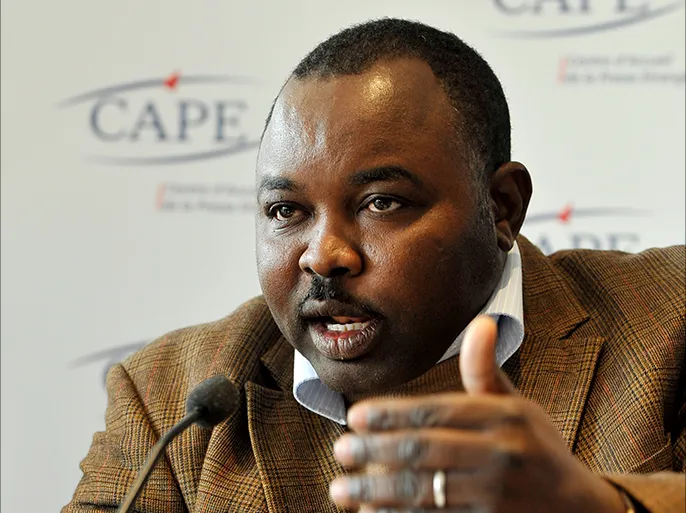
A Sudanese political figure aligned with the TASIS bloc, Ibrahim Elmirghani, criticised a separate Sudanese seminar held alongside the conference, describing it as “biased” and accusing organisers of inviting figures linked to the Islamic movement.
Elmirghani welcomed the humanitarian aspect of the Berlin conference but said the seminar’s final statement failed to reflect key positions, including the exclusion of what he described as “terrorist-linked actors” from any future political process.
The text of the joint civilian call does not explicitly reference excluding Islamist-linked groups, nor does it repeat the Quintet’s separate warning against parallel governing structures — points that appear to underpin the criticism.
The issue of participation has also emerged more broadly as a point of contention. Some Sudanese groups aligned with General al-Burhan’s SAF rejected the Berlin process, citing selective invitations, while international mediators acknowledged that not all actors could be included in the initial round.
Officials involved in the process said additional meetings are planned to bring in those excluded from the Berlin gathering, as part of efforts to build a wider Sudanese-led dialogue framework.
The Berlin conference, which coincided with the third anniversary of the war, focused heavily on humanitarian needs and mobilised significant international pledges. But the civilian seminar highlighted both the potential and the limits of current diplomatic efforts — bringing together fragmented civilian voices, while exposing deep disagreements over representation and the shape of a future political process.