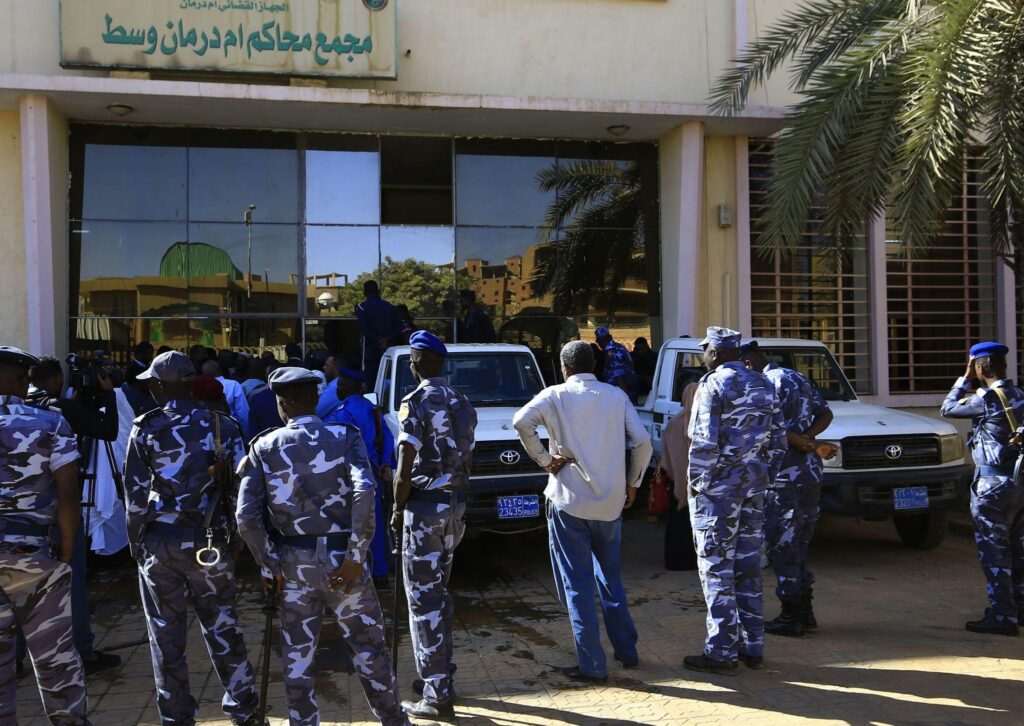
A Sudanese anti-terrorism court has sentenced a senior native administration leader from West Kordofan to 10 years in prison, in a case rights observers and local critics say reflects a widening pattern of SAF-controlled authorities using “cooperation with the RSF” charges to punish civilians caught in areas that changed hands during the war.
The Central Omdurman Criminal Court issued the sentence against Shartai Bushra Mahmoud Doleib, a prominent Hamar tribal figure from Al-Nuhud, after convicting him on charges linked to crimes against the state, undermining the constitutional order, aiding and abetting, and crimes against humanity.
But the case has sparked anger because the evidence reportedly centred on a video in which Doleib appeared alongside other native administration leaders after the Rapid Support Forces took control of Al-Nuhud in May 2025. His defence team says he was forced to appear and did not speak in the recording.
Lawyer Mufreh Hamed, head of the defence team, said the court relied on the video despite the absence of prosecution witnesses. He argued that appearing under coercion in an RSF-controlled area cannot be treated as proof of voluntary collaboration.
The ruling has deepened concerns that courts operating under SAF-aligned authorities are criminalising civilians for contact they could not avoid. Since the war began, many residents, local leaders, medical workers, traders and community figures have been forced to deal with whichever armed force controls their town or neighbourhood. Critics say SAF-controlled courts are increasingly treating that survival reality as a political crime.
According to the defence, RSF fighters summoned Hamar native administration leaders to the Dar Hamar paramount chiefdom headquarters on May 3, 2025, shortly after Al-Nuhud fell. The gathering was reportedly staged to reassure displaced civilians and project an image of normality after the RSF entered the city.
Doleib’s supporters say the charges are especially contradictory because he had previously helped organise local mobilisation in support of the SAF before Al-Nuhud fell. He also reportedly supervised the arming of volunteers and later became wanted by the RSF, forcing him to flee to SAF-controlled areas.
For critics of the ruling, the case shows how “cooperation with the RSF” accusations have become a sweeping legal weapon. Instead of distinguishing between voluntary military collaboration and coerced civilian interaction, they say the courts are punishing people who were trapped under wartime authority and had little control over their circumstances.
The defence team said it is preparing an appeal, arguing that higher judicial bodies should overturn the sentence once the full context of coercion, displacement and local pressure is reviewed.
The trial drew unusually large crowds inside and outside the courtroom, reflecting Doleib’s symbolic standing in the Hamar community. The anger surrounding the verdict has turned the case into a broader indictment of wartime justice under SAF-controlled institutions, where civilians are increasingly being tried not for proven crimes, but for surviving in territory the SAF lost.