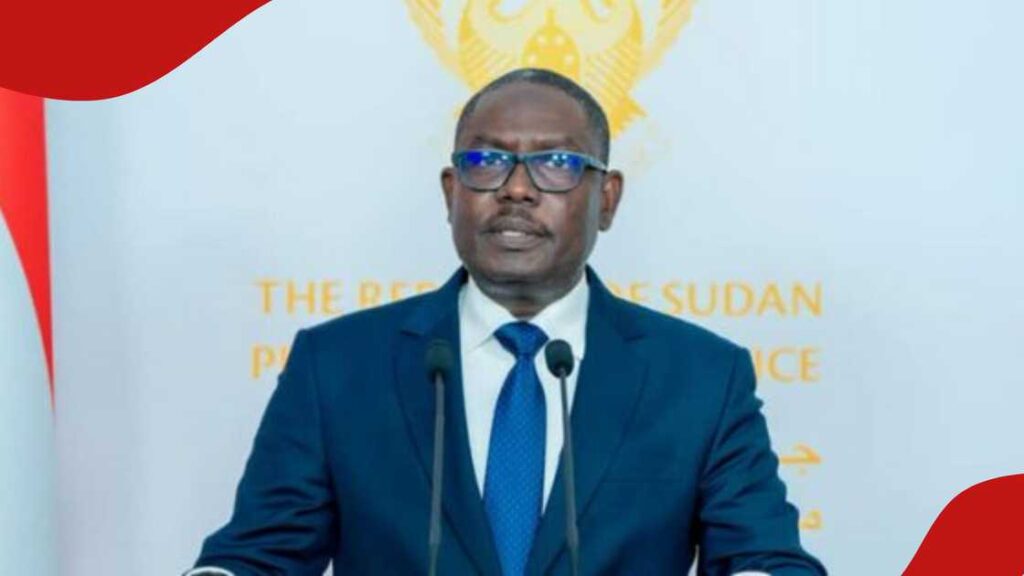
Mohammed Hassan al-Ta’aishi, head of Sudan’s Peace Government affiliated with the Sudan Founding Alliance (TASIS), announced the government’s “full readiness to stop the war and prepare for an urgent humanitarian truce.”
In a press statement, al-Ta’aishi said that the choice of peace “is not merely a verbal proposal, but must become an institutional option backed by the legitimacy of the people.” He added that the initiative forms part of efforts to build a new Sudan founded on the rule of law and state institutions, while establishing comprehensive and lasting peace and stability.
Speaking to Eram News, Ibrahim al-Mirghani, Minister of Cabinet Affairs in the Peace Government, said the conflict could not be ended unilaterally. He noted that there are two sides to the war, with the Peace Government repeatedly declaring its acceptance of a ceasefire and readiness to halt hostilities.
Al-Mirghani accused the opposing side — the Port Sudan authorities and the Sudanese Islamic Movement along with allied militias — of rejecting ceasefire initiatives and withdrawing from peace platforms. He said they remained committed to pursuing a military solution because ending the war would threaten what he described as their attempts to return to power through wartime networks of corruption.
He added that effective international coordination was necessary to pressure those forces into ending the conflict or face the consequences in isolation.
On the government’s recent appointments and decisions, al-Mirghani described the completion of key state institutions as a strategic step toward building Sudan’s new governing framework.
He said federal councils had been formed, while the judiciary, public prosecution service, police and security institutions, as well as tax and customs authorities, were being restructured under the transitional constitutional framework of the Sudan Founding Alliance.
Al-Mirghani concluded by saying the new institutions would enable the government to provide basic services in areas under its control, uphold the rule of law, protect humanitarian aid operations, and strengthen stability across the country.