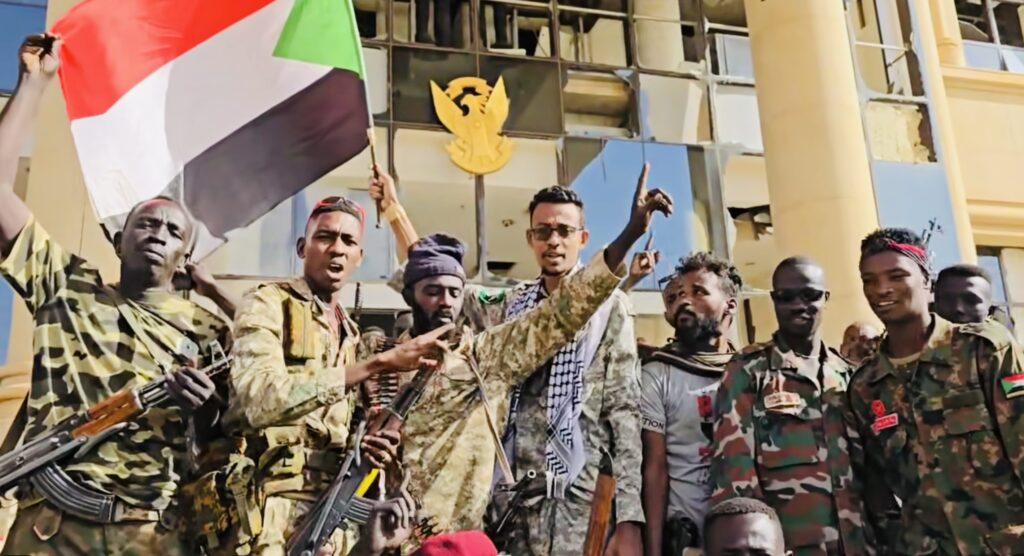
Sudan’s Islamist Al-Baraa bin Malik Battalion could face an undeclared dissolution following growing tensions between its commander and senior figures in the Islamic Movement, according to Sudanese sources cited by Erem News on Thursday.
The sources said disagreements over political influence and demands for greater representation within the Port Sudan authorities have intensified divisions within the armed group, which has fought alongside Sudan’s military.
The reported tensions have placed the battalion’s commander, Abu Zaid Talha al-Misbah, increasingly at odds with influential Islamist leaders, raising questions about the group’s future.
According to the sources, al-Misbah has travelled to Malaysia amid the dispute, while discussions have emerged over quietly dismantling the battalion without a formal public announcement.
The sources suggested that the move could be intended to reduce international pressure on the Port Sudan authorities by distancing them from armed groups accused of abuses against civilians.
However, no official decision to dissolve the battalion has been announced, and the reported internal arrangements could not be independently verified.
Western sanctions increase pressure
The developments follow a new round of British sanctions targeting Sudanese military commanders and allied armed group leaders accused of serious violations of international humanitarian law.
On October 26, Britain imposed sanctions on 15 individuals linked to alleged atrocities during Sudan’s ongoing conflict, including al-Misbah.
British authorities identified him as the commander of the Al-Baraa bin Malik Battalion and accused him of responsibility for supporting violations against civilians during military operations in Gezira state.
Others sanctioned included Siddiq Ali Wad al-Basha, commander of the Abdullah Jamaa Battalion, Major General Awad al-Karim Ali Saeed, Major General Abdel Moneim Abdel Basset and Brigadier General Ahmed Barrir Haj Ahmed.
The sanctions include asset freezes and travel restrictions.
Several of those designated were linked by British authorities to violence against civilians in Wad Madani and other parts of Gezira state.
Divisions within Port Sudan alliance
The sources also described widening disagreements among military and political factions supporting the Port Sudan authorities.
These reportedly include tensions between military chief Abdel Fattah al-Burhan and Justice and Equality Movement leader Jibril Ibrahim, as well as disputes involving Al-Baraa fighters and forces loyal to Abu Aqla Kaikal.
Competition over political appointments, military influence and access to state resources has reportedly contributed to growing friction among the factions.
The sources suggested that some militia commanders have increasingly linked their continued military involvement to demands for positions within the administration.
They said the reported effort to sideline al-Misbah could eventually extend to other influential militia leaders whose political ambitions have become a source of tension.
Analysts question impact of sanctions
Sudanese political analyst Ammar Saeed welcomed Western sanctions against individuals accused of atrocities but warned that targeting commanders alone would do little to address the wider structures supporting armed groups.
Speaking to Erem News, Saeed argued that removing individual leaders would not necessarily weaken organisations capable of replacing them with other figures.
He said a lasting solution would require dismantling the networks sustaining armed factions and preventing those implicated in violations from exercising political or military influence after the war.
Political science professor Yaqoub al-Nourain similarly argued that international sanctions had come too late to prevent widespread abuses against civilians.
He accused armed groups aligned with the Port Sudan authorities of exploiting the conflict to expand their influence and gain control over the country’s resources.
Nourain also criticised the continuing attacks on civilian markets, warning that the destruction of commercial centres was depriving communities of essential sources of income.
Both analysts argued that accountability measures must extend beyond individual sanctions to address the political and military structures sustaining Sudan’s conflict.
The reported tensions surrounding Al-Baraa highlight the growing strains within the coalition supporting Sudan’s military, as international scrutiny intensifies over the role of Islamist armed groups in the country’s war.