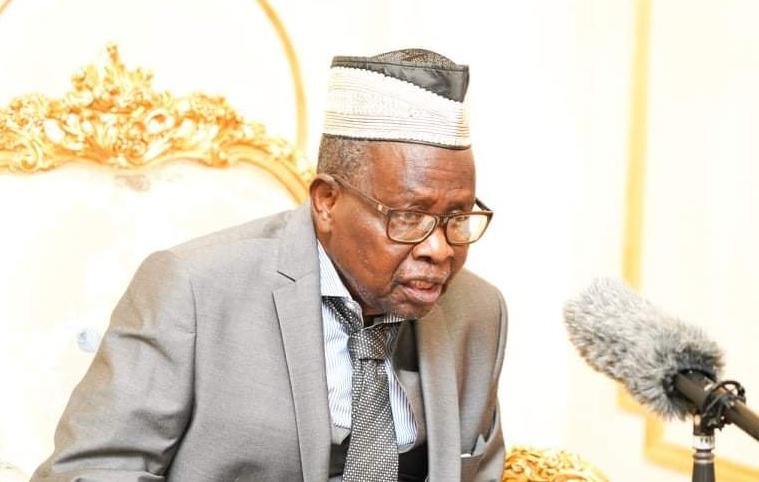
The Sudan Founding Alliance (TASIS) has paid tribute to veteran South Sudanese liberation leader Joseph Lagu following his death, describing him as a historic figure whose political and military career helped shape Sudan’s struggle over equality, self-government and national unity.
Lagu, a former Sudanese vice president and leader of the Anyanya movement, died in Juba on Tuesday, October 27, at the age of 94.
In a statement issued Wednesday, TASIS praised his contributions to the pursuit of political rights, social justice and a more inclusive Sudan, describing his passing as a significant loss to the political history of both Sudan and South Sudan.
The alliance said Lagu’s legacy extended beyond armed struggle to negotiations, institution-building and efforts to secure a peaceful political settlement.
From liberation struggle to peace agreement
Lagu became one of the leading figures in the Anyanya movement during the 1960s, helping unify southern armed factions and transform their demands into an organised political and military campaign.
The movement challenged the Sudanese state’s centralised political system and sought greater autonomy and political representation for southern communities.
His most significant diplomatic achievement came in 1972, when he helped negotiate the Addis Ababa Agreement with the government of President Jaafar Nimeiry.
The agreement ended Sudan’s first civil war after approximately 17 years of fighting and established regional autonomy for southern Sudan.
TASIS said the decision to pursue negotiations demonstrated Lagu’s willingness to prioritise a political settlement over continued conflict.
Following the peace agreement, Lagu played a role in efforts to integrate former Anyanya forces into national military structures and subsequently held senior political positions.
He served as president of the southern region’s High Executive Council, vice president of Sudan and later represented the country in diplomatic assignments.
TASIS highlights shared political principles
In its tribute, the alliance drew parallels between Lagu’s political legacy and its own stated programme for restructuring Sudan’s institutions.
TASIS said his advocacy of equal citizenship, recognition of cultural and ethnic diversity, and fair distribution of political authority and national resources reflected principles central to its vision of a new Sudanese state.
The alliance has called for a decentralised political system intended to address grievances over marginalisation, unequal development and the concentration of power in Sudan’s traditional political centre.
Its Government of Peace and Unity, established in 2025, has presented those objectives as the foundation of its proposed political transition.
TASIS also praised Lagu’s willingness to engage political opponents through dialogue and his contribution to developing public institutions during his years in government.
South Sudan declares national mourning
South Sudanese President Salva Kiir separately declared national mourning following Lagu’s death.
Kiir ordered national flags across the country and at diplomatic missions abroad to be flown at half-mast until his burial, paying tribute to his role in South Sudan’s long struggle for self-determination.
Lagu lived to witness South Sudan achieve independence in 2011, decades after helping negotiate the earlier autonomy agreement.
TASIS extended condolences to his family and the peoples of Sudan and South Sudan, saying his contributions to liberation, peace and political inclusion would remain part of the region’s history.