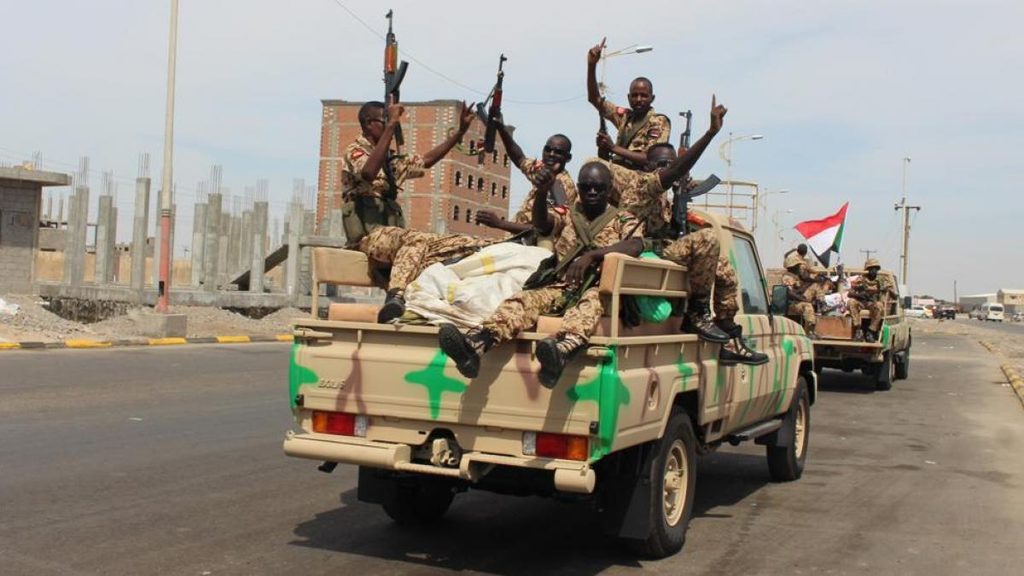
Fresh allegations that senior Sudanese military officers made substantial personal fortunes from sending thousands of soldiers to fight in Yemen have renewed scrutiny of the financial interests behind Sudan’s involvement in foreign wars.
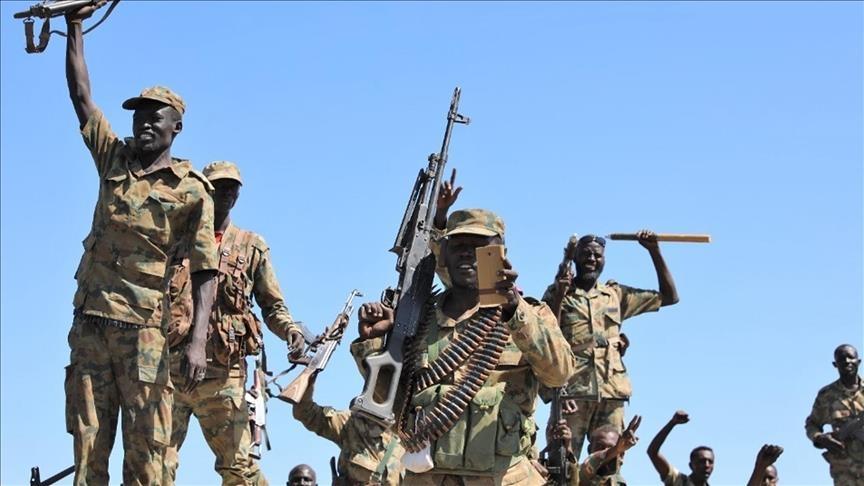
A report published by Sudanese newspaper Al-Rakoba on Tuesday detailed accusations that senior army commanders received lucrative payments through arrangements that saw Sudanese soldiers deployed alongside the Saudi-led coalition against Yemen’s Houthi movement.
According to the report, individual Sudanese soldiers received monthly salaries of approximately $500, while the military leadership reportedly received payments worth up to four times that amount per fighter, in addition to financial incentives allocated to senior commanders.
An unnamed senior military officer cited in the report alleged that prominent army officials received hundreds of thousands of dollars for facilitating the deployment of Sudanese fighters.
The allegations have resurfaced amid reports that Sudan’s SAF government is pursuing another arrangement involving the deployment of thousands of Sudanese fighters abroad in exchange for financial assistance, fuel and other resources.
Burhan’s billions
Questions surrounding the proceeds of Sudan’s participation in the Yemen war previously emerged during the power struggle between civilian and military leaders following the overthrow of Omar al-Bashir’s Islamist government in April 2019.
According to Al-Rakoba, army chief Abdel Fattah al-Burhan claimed at the time that the civilian administration headed by Prime Minister Abdalla Hamdok had rejected an offer to receive billions of dollars generated through the military’s participation in the Saudi-led campaign.
The remarks raised questions about the scale of the revenues received by Sudan’s military establishment, who controlled those funds and how they were distributed.
Burhan himself had overseen Sudanese military deployments to Yemen before emerging as the country’s military leader in 2019, according to the International Crisis Group. International Crisis Group
Observers interpreted his remarks as an attempt to gain political leverage over the civilian administration at a time when widespread demonstrations were demanding an end to military rule.
Turning soldiers into a source of revenue
Sudan entered the Yemen conflict in 2015 as Bashir’s government struggled with an increasingly severe economic crisis and growing international isolation.
The secession of South Sudan in 2011 had deprived Khartoum of much of its oil wealth, accelerating inflation, unemployment, currency depreciation and the deterioration of public finances.
Bashir sought to exploit closer relations with Gulf states to secure financial assistance, alleviate economic pressures and gain diplomatic support for the removal of US sanctions and Sudan’s designation as a state sponsor of terrorism.
The deployment of Sudanese soldiers subsequently became an important component of Khartoum’s relationship with Saudi Arabia and the United Arab Emirates.
Al-Rakoba reported that the initial deployment involved approximately 5,000 fighters, with more than 20,000 reportedly participating by November 2019.
Troop estimates varied considerably, however. In December 2019, Hamdok said Sudan had reduced its deployed force from 15,000 to 5,000 personnel. Sudan Tribune+1
Both regular army personnel and members of the Rapid Support Forces (RSF) participated in the coalition during this period.
While Sudan received financial assistance from Gulf countries, the precise distribution of military-related revenues remained opaque, fuelling accusations that senior commanders benefited disproportionately from the arrangement.
An old business model returns
The allegations carry renewed significance as Burhan reportedly seeks to revive overseas military deployments while struggling to finance Sudan’s devastating domestic war.
Recent reports have linked Abu Aqla Keikel, commander of the SAF-allied Sudan Shield Forces, to a potential agreement involving the deployment of up to 10,000 fighters to support Saudi military operations.
The proposed arrangement has reportedly been discussed in connection with financial assistance, fuel supplies and other resources needed by the SAF government.
Neither the full financial terms of the proposed agreement nor the historical allegations of personal enrichment have been independently verified.
Nevertheless, the latest revelations raise questions about whether the economic incentives that drove Sudan’s participation in Yemen under Bashir continue to influence military decision-making under Burhan.
More than a decade after Sudan first entered the Yemen war, the central question remains unanswered: how much money was generated through the deployment of Sudanese soldiers, and who ultimately benefited from it?