Sudan’s Muslim Brotherhood and broader Islamist movement are pursuing a strategic effort to regain influence, using recent military appointments within the Port Sudan-aligned army to bypass the political isolation imposed on them both domestically and internationally.
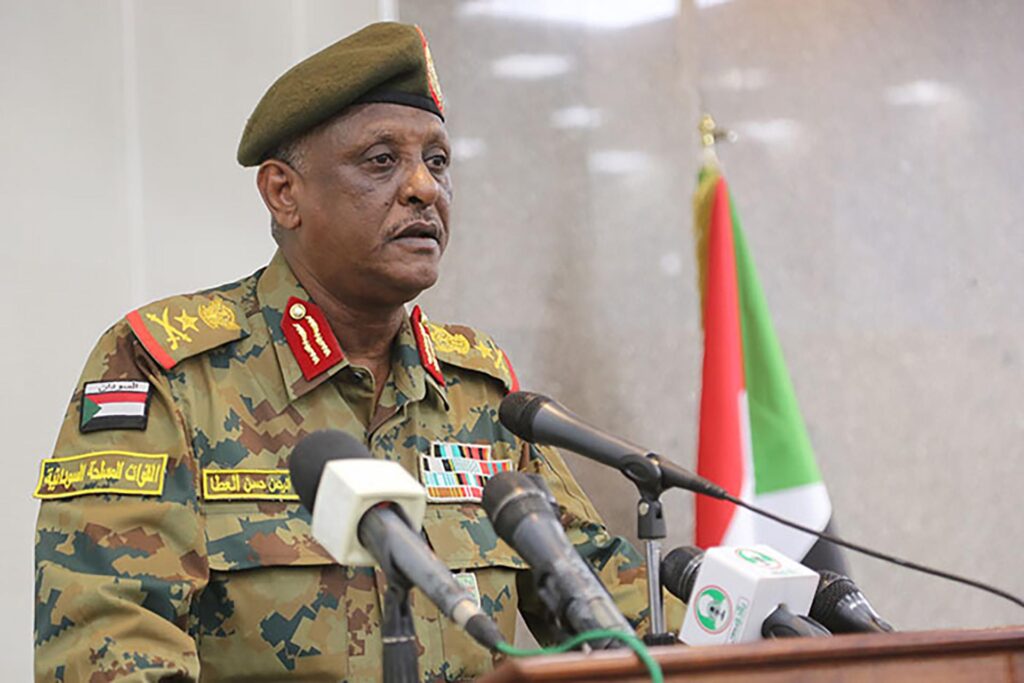
Sudanese sources cited by Eram News said the latest appointments and dismissals overseen by senior army commander Lieutenant General Yasser al-Atta were not routine administrative changes. Instead, they reportedly form part of a gradual effort to promote military figures known for their ideological proximity to the Muslim Brotherhood.
Through its growing influence inside the military establishment, the Islamist movement is seeking to rebuild its presence at the centre of decision-making. The group is reportedly aware that any future political settlement in Sudan is likely to exclude it from power, prompting it to embrace a hard-line military strategy designed to preserve its role in the country’s political landscape.
Al-Atta’s military and political future has become increasingly tied to networks associated with Sudan’s Islamist movement, including elements of its clandestine organisation and ideologically driven armed units.
He emerged as one of the most prominent military patrons of these groups while directing operations from the army’s Engineers Corps headquarters during the early stages of the war.
According to the sources, the current strategy involves creating deeply embedded centres of influence that would be difficult to dismantle through a single political decision.
This reportedly includes integrating Islamist and jihadist formations, such as the Al-Baraa Ibn Malik Corps, into the Port Sudan military structure and establishing conditions on the ground before international negotiations can demand the dissolution of such groups or the removal of partisan and ideological factions from the army.
The alliance also highlights an apparent convergence of interests between Sovereignty Council chief Abdel Fattah al-Burhan and Sudan’s Islamist current.
Burhan relies on the combat capabilities and mobilisation networks of Islamist brigades operating under the banner of the “popular resistance” to strengthen the Port Sudan camp and sustain its military campaign.
However, the expanding influence of the Muslim Brotherhood inside the military leadership comes as the group faces growing international scrutiny and terrorism-related designations.
The development could place Burhan’s army under greater US and international pressure and raise the likelihood of further targeted sanctions against senior military figures.
According to the report, Washington may view the latest appointments as further evidence that Islamist networks are playing an increasingly influential role in shaping Sudan’s military decision-making.