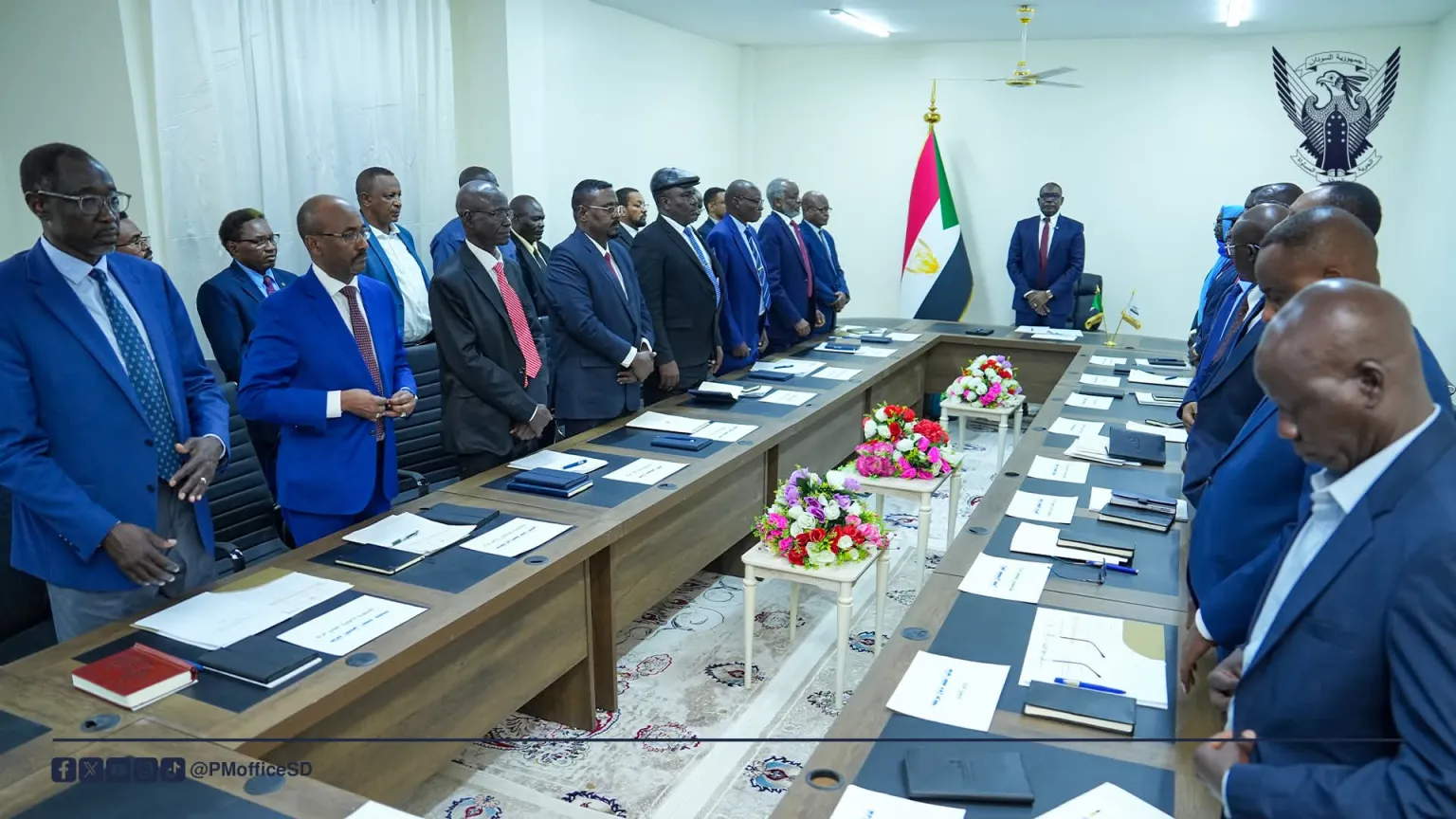
The Sudan Founding Alliance government has concluded its first full cabinet meetings in Nyala, pledging continued support for TASIS forces as they seek to expand their control across the country.
The Cabinet of the Government of Peace met in the South Darfur capital under Prime Minister Mohamed Hassan al-Taishi, with senior officials from the government’s executive bodies taking part.
According to a final statement issued by Information Minister and government spokesperson Khalid Danaa, the meetings were held from August 8 to August 21.
At the opening of the sessions, ministers praised the Sudan Founding Alliance forces for what the government described as victories on several fronts and reaffirmed what it called its “unlimited support” for their campaign to take control of the country.
The cabinet also paid tribute to those killed in the fighting, wished wounded combatants a speedy recovery and called for the safe return of prisoners and missing personnel.
Government framework and temporary budget approved
During the meetings, the cabinet approved its internal rules of procedure as well as a strategic framework setting out the Government of Peace’s plans for state-building and administration during what it describes as the pre-founding transitional period.
Ministers also approved guidelines for a temporary 2026 operating budget and a proposal establishing provisional ministerial structures.
A senior committee was formed to identify government assets and buildings, clear occupied premises where necessary and oversee their transfer to the new administration.
The government said the decisions covered institutional development, economic and financial policy, and social and humanitarian affairs.
Restrictions imposed on government land and exports
The cabinet ordered a halt to transactions involving government-owned land and public spaces and cancelled measures relating to such property that were taken after April 15, 2023, the date Sudan’s war began.
It also banned exports of charcoal, firewood and unprocessed timber from Sudan and revoked permits and approvals previously issued for those exports.
Committees formed on displaced people and humanitarian organisations
On humanitarian issues, the cabinet approved the creation of a committee tasked with clearing educational institutions being used as shelters and addressing the situation of displaced people currently living in schools.
The committee will also be responsible for presenting proposals for alternative arrangements.
A separate committee will review Ministerial Decision No. 1 governing the registration and accreditation of national and international organisations.
The government said the review was intended to simplify procedures, improve coordination with official institutions and facilitate humanitarian and development work.
Another committee will hold consultations over appointments to traditional administration structures that the cabinet said had been issued by bodies lacking the proper authority.
Cabinet praises returns to Nyala, El Fasher and Babanusa
The cabinet praised residents of Nyala for what it described as efforts to restore normal life and economic activity in the city, presenting the South Darfur capital as a model of recovery.
It also called on residents of El Fasher to accelerate returns to the city and take part in rebuilding homes and infrastructure damaged during the war.
Residents of Babanusa were similarly praised for returning to their city and beginning what the government described as a recovery phase.
In its closing statement, the Government of Peace said it would continue implementing its political and institutional programme, including efforts to improve security, protect civilians, restore constitutional rights, build functioning state institutions, revive the economy and strengthen Sudan’s regional and international position.