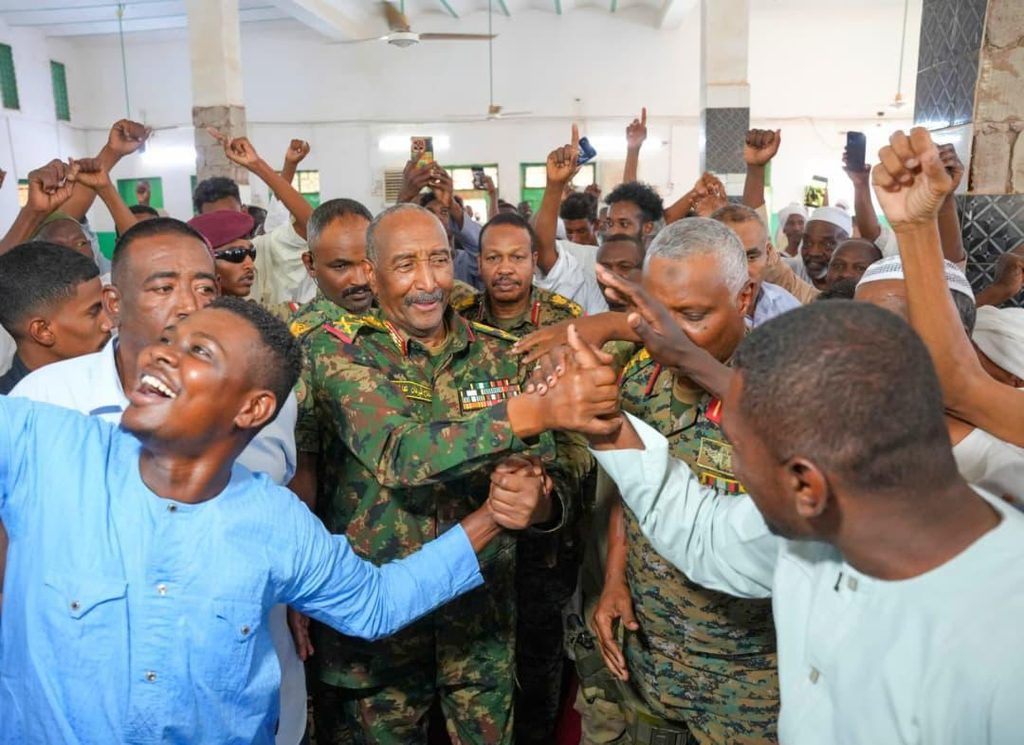
The Sudan Founding Alliance (TASIS) has called for direct negotiations between Sudan’s warring parties and the establishment of a unified national army under civilian authority, responding to an address delivered at the United Nations by the army-aligned Port Sudan authorities.
TASIS spokesman Ahmed Tugod Lisan, speaking in an interview with Al Ain News on Tuesday, accused Sudan’s military leadership and its Islamist allies of prolonging the conflict and attempting to shift responsibility for the war onto external actors.
His remarks followed the UN address delivered by Mohieddin Salem, foreign minister in the Port Sudan administration.
Lisan disputed the military leadership’s account of the conflict, arguing that its continued pursuit of a military settlement had obstructed efforts to reach a negotiated peace.
He said attempts to exclude TASIS and its military allies from a future settlement ignored the parties involved in the fighting and would make a comprehensive ceasefire difficult to achieve.
The spokesman maintained that negotiations must involve the principal parties to the conflict and establish the conditions for a broader Sudanese political dialogue.
He also called for an internationally supported political process addressing the underlying causes of Sudan’s repeated conflicts.
A unified army under civilian authority
Lisan challenged the Port Sudan authorities’ calls for a single national army, arguing that a unified military institution could only emerge from a negotiated political settlement.
He said Sudan’s existing armed formations would need to be reorganised into a national army representing the country’s different communities and operating independently of political organisations.
Under the arrangement proposed by TASIS, the military would be placed under civilian authority established through an agreed political transition.
The spokesman argued that such an agreement would require negotiations over the future of the country’s military institutions rather than the continuation of existing command structures.
Accountability and the political transition
Lisan also rejected the Port Sudan authorities’ position on responsibility for the war, accusing the military leadership of seeking to avoid accountability for its conduct.
He said accountability should form part of a negotiated settlement and maintained that military institutions should no longer determine Sudan’s political leadership.
The Port Sudan authorities have separately called for a ceasefire accompanied by security arrangements, the withdrawal of armed forces from civilian areas and the establishment of a single national army under civilian oversight.
However, the competing sides remain divided over the conditions for negotiations, the future of their armed forces and participation in Sudan’s political transition.