The health minister in Sudan’s TASIS government, Alaa al-Din Nugud, has accused forces linked to the Muslim Brotherhood and the Port Sudan authorities of using chemical weapons, saying any such use would constitute a war crime with potentially severe consequences for civilians, the environment and Sudan’s already devastated health sector.
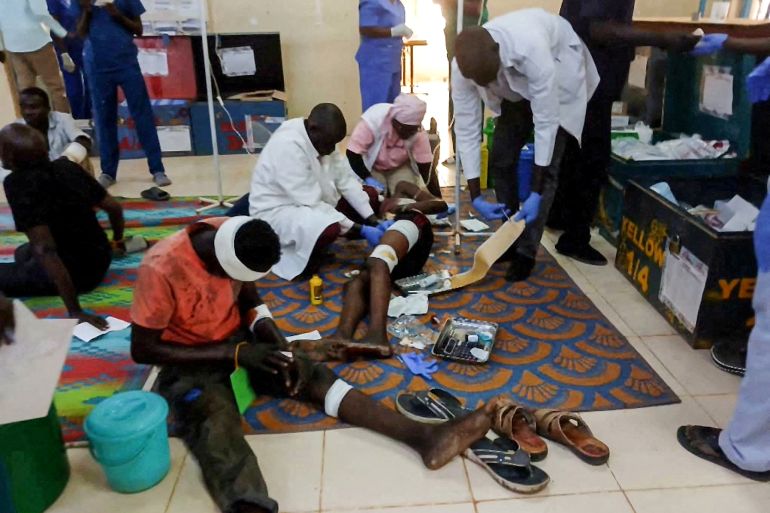
Speaking to Erem News, Nugud said repeated attacks on hospitals and medical facilities had compounded civilian suffering and weakened the health system’s ability to continue operating.
He cited strikes on several medical facilities, including hospitals in Ed Daein, Abu Zabad and En Nahud, as well as the Sultan Medical Complex, which he said was attacked during the Eid al-Fitr period.
Nugud said the suspected use of chemical agents could have short-, medium- and long-term health consequences.
According to him, immediate effects include acute symptoms and injuries, while medium-term consequences could include congenital abnormalities and rising cancer rates. Longer-term risks, he said, stem from chemical contamination remaining in soil, water and agricultural crops.
He called for the allegations to be escalated through international media, legal, human rights and humanitarian channels, including possible referral to the International Criminal Court.
Nugud said those responsible should be investigated for possible war crimes and crimes against humanity.
Health ministry says patients showed unusual symptoms
The minister said the Health Ministry under the TASIS-led transitional administration had documented cases involving patients treated in Kordofan and other areas following airstrikes it attributed to Port Sudan-based forces.
He said the ministry sent a letter on June 23 to the World Health Organization, the International Committee of the Red Cross, UNICEF and the United Nations Office for the Coordination of Humanitarian Affairs outlining the cases.
According to Nugud, patients from Kordofan Hospital and health facilities in the Nuba Mountains and Jabra al-Sheikh were treated after airstrikes that allegedly produced yellow-coloured gases or fumes and left white granules on the bodies of some of those affected.
He said patients arrived suffering from skin rashes, itching, irritation of the skin and mucous membranes of the nose, ears and eyes, as well as gastrointestinal and respiratory symptoms.
The allegations have not been independently verified.
Nugud said the longer-term consequences could be particularly serious if toxic substances contaminated water sources, farmland or crops.
He also claimed that medium-term effects were already emerging, citing reports of babies born with congenital abnormalities and increases in cancer cases. No independent medical data was provided in the Erem News report to substantiate those claims.
Allegations over chlorine
Nugud further alleged that Islamist-linked forces in Port Sudan had diverted chlorine originally supplied for humanitarian use.
Chlorine is widely used to disinfect drinking water, including during cholera outbreaks.
He claimed the substance had instead been used in the production of chemical weapons, describing such an act as the conversion of humanitarian assistance intended to protect civilians into a source of harm.
The minister linked his accusations to recent US reporting and allegations surrounding Sudan’s military and chemical weapons.
Sudan’s armed forces have previously denied accusations that they used chemical weapons.
Medical facilities under pressure
Nugud said the continued targeting of hospitals by aircraft and drones represented one of the most serious threats facing the health sector in areas outside the control of the Port Sudan authorities.
He again cited the attacks on medical facilities in Ed Daein, Abu Zabad and En Nahud, as well as the Sultan Medical Complex.
He said the TASIS administration was attempting to restore health services gradually, but continued attacks on medical infrastructure were making stabilisation of the sector increasingly difficult.
Nugud called for an expanded international investigation into the alleged use and manufacture of chemical weapons in Sudan and urged international institutions to pursue accountability against those found responsible.