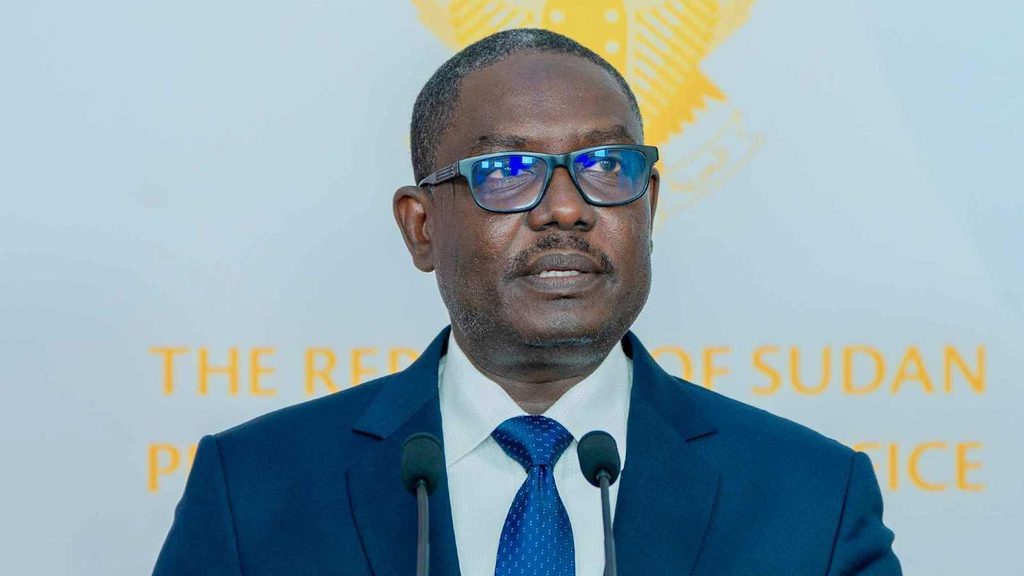
Sudan’s TASIS-backed Peace Government has outlined an ambitious programme to establish civilian institutions, recruit thousands of police officers and expand essential services across territories it administers, as Prime Minister Mohamed Hassan al-Taishi reaffirmed his commitment to a unified Sudan.
Speaking at a political forum in El Muglad, West Kordofan, al-Taishi said his administration oversees approximately 90 localities with an estimated population of 24 million people, according to figures presented during his October 11 address.
The figures have not been independently verified, but the announcement marks a significant statement of the government’s administrative ambitions as it seeks to consolidate civilian governance in areas outside the control of General Abdel Fattah al-Burhan’s army-aligned Port Sudan authorities.
Al-Taishi said building functioning state institutions was essential to restoring public services, strengthening local participation and creating the conditions for a comprehensive political settlement.
A central component of the programme involves restructuring police, judicial and prosecution services.
The government intends to train and recruit approximately 2,500 male and female police officers while reviewing existing personnel and establishing functioning justice institutions at the local level.
The initiative is intended to improve civilian security, facilitate legal proceedings and restore access to courts in communities where state institutions have been severely weakened by the war.
Al-Taishi also announced plans to introduce a national smart identity card for banking, judicial and administrative transactions, alongside new vehicle registration, licensing and customs procedures.
The proposed administrative reforms include increasing government revenue collection from an estimated 15 percent to 60 percent, with additional resources intended to finance salaries, education and other essential services.
Education featured prominently in the prime minister’s address.
He said the government would prioritise financial support for teachers, reopen schools and work with international organisations to expand classroom and remote learning opportunities.
According to al-Taishi, between 5,000 and 6,000 students have passed Sudanese secondary school certificate examinations, with efforts underway to secure university admissions and scholarships for students whose education has been disrupted.
In healthcare, he outlined plans to extend financial support to medical personnel not covered by existing humanitarian assistance programmes, while addressing shortages in treatment for chronic illnesses.
The announcements come as Sudan’s rival administrations face mounting pressure to maintain essential services amid a war that has devastated infrastructure, displaced millions and severely disrupted public institutions.
Al-Taishi rejected suggestions that the TASIS political project was intended to divide Sudan, insisting that establishing institutions in territories under its administration was compatible with preserving the country’s territorial unity.
He argued that any lasting political agreement must reflect the interests of Sudanese communities rather than remain confined to negotiations among political elites.
The prime minister said his government’s longer-term objective was to establish institutions rooted in local participation, public accountability and equal access to services.