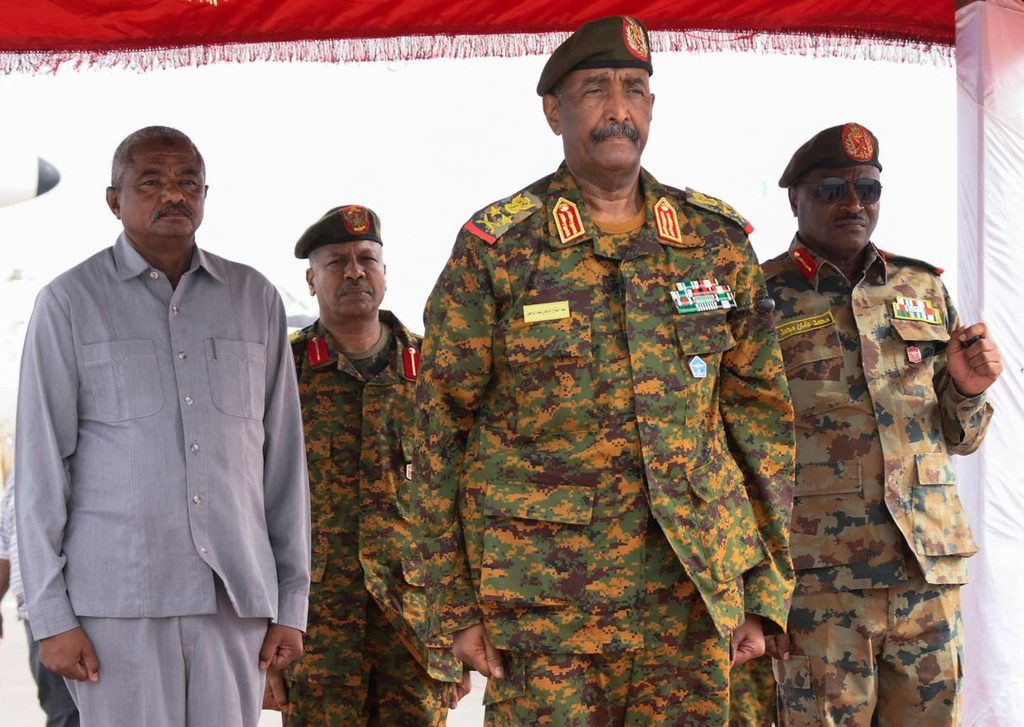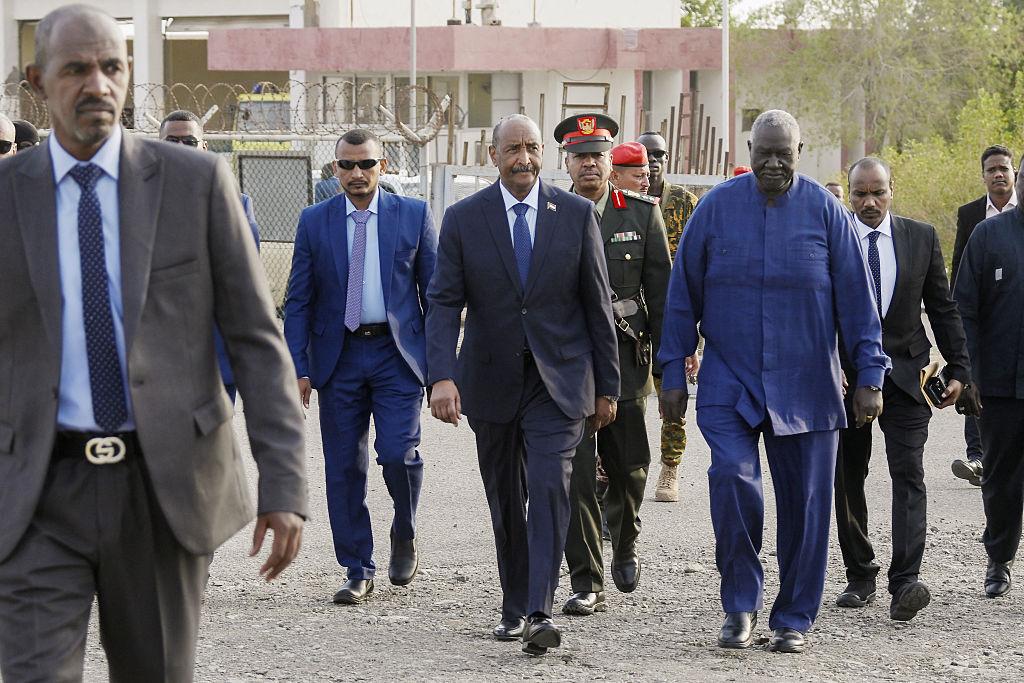
Sudan’s army chief Abdel Fattah al-Burhan is moving to establish a rival domestic political process as competing Sudanese factions clash over the shape of internationally backed negotiations, amid allegations that Egypt and Saudi Arabia intervened to derail a proposed political framework that could have weakened his control over the transition.
Sudanese media citing unnamed diplomatic sources reported that Cairo and Riyadh helped block an initiative that would have brought the Sumoud alliance, the Sudan Founding Alliance — TASIS — and elements of the Democratic Bloc into a wider internationally sponsored political process.
The three camps, however, have not been operating as a unified political alliance and remain sharply divided over the war, the Rapid Support Forces and the future of Sudan’s political transition.
During previous consultations organised through the international Quintet mechanism, Sumoud, TASIS and the Democratic Bloc were brought into the same broader political process but pursued separate positions.
The Democratic Bloc has publicly rejected direct political engagement with TASIS, which it accuses of providing political backing to the RSF.
Sumoud and the Democratic Bloc, along with other civilian groups, previously found limited common ground over the establishment of a preparatory mechanism for political dialogue, while TASIS expressed reservations over the outcome of those consultations.
The latest round has exposed those divisions further.
Both TASIS and Sumoud separately boycotted the most recent Quintet consultations, but for different reasons.
TASIS said it had received an invitation but objected to the way the process was being managed and to the selection of participants. The alliance nevertheless maintained that it remained committed to a negotiated political settlement and sought direct engagement with the Quintet over the structure of future talks.
Sumoud also declined to participate, arguing that any credible political process must prioritise ending the war, securing a ceasefire, opening humanitarian corridors and protecting civilians before moving towards transitional arrangements.
The Democratic Bloc, by contrast, participated in the consultations and has continued to support a Sudanese-led political process while rejecting any suggestion of a common platform with TASIS.
Against this fractured political landscape, Burhan has begun advancing a separate internal dialogue centred inside SAF-controlled Sudan.
His consultations have included political parties, civilian figures and social leaders, with discussions reportedly covering the formation of a preparatory committee, widening civilian participation and creating conditions for opposition figures currently outside the SAF-aligned political camp to take part.
Burhan has also indicated a willingness to ease some legal restrictions affecting opposition politicians, including dropping certain public-right complaints and discussing the postponement of private-right cases.
But his proposed dialogue carries major exclusions.
Burhan has said that TASIS and the former ruling National Congress Party would not be allowed to participate.
That position effectively opens the door to selected opposition groups while keeping one of the country’s most significant rival political-military coalitions outside the process.
Sumoud has also rejected Burhan’s domestic initiative.
The alliance has said it received no formal invitation to participate and maintains that any dialogue conducted under the authority of one of the warring sides risks reinforcing Sudan’s political and territorial divisions rather than resolving them.
The growing dispute has therefore become a struggle not only over negotiations, but over who has the authority to design Sudan’s post-war political order.
It is within that broader contest that the alleged involvement of Egypt and Saudi Arabia becomes particularly significant.
Diplomatic sources cited in Sudanese reporting claimed that the two countries worked with the Port Sudan authorities to frustrate an externally driven political initiative and redirect the process towards an internal Sudanese dialogue.
The reports alleged that the proposed international arrangement could have involved Sumoud, TASIS and elements of the Democratic Bloc within a wider process and eventually moved Sudan towards elections without a conventional transitional period.
They further claimed that international pressure could have been brought against the Port Sudan authorities if they rejected the proposal.
Those specific claims have not been independently verified.
However, both Cairo and Riyadh remain deeply involved in the Sudan file.
Egypt has maintained particularly close relations with Burhan and has repeatedly expressed support for Sudan’s existing state institutions, sovereignty and territorial integrity while opposing rival governing structures.
Saudi Arabia has also maintained close political engagement with Burhan while playing a central diplomatic and mediation role in efforts to end the war.
The allegation that Cairo and Riyadh intervened to redirect the political process therefore emerges against an already established pattern of intensive regional involvement in Sudan’s future.
If accurate, the intervention would suggest that regional powers are seeking to influence not merely the end of the war, but the political architecture that follows it.
Burhan’s own moves increasingly point in that direction.
By constructing an internal political process, offering greater political space to selected civilian actors and explicitly excluding TASIS, the SAF leadership is attempting to create an alternative centre for political negotiations to the internationally mediated track.
That process could also alter the balance between Sudan’s existing civilian coalitions by offering political figures a domestic route back into negotiations while leaving TASIS outside the framework.
For now, however, the political camps remain deeply fragmented.
TASIS is challenging the structure of the international process while remaining open to a negotiated settlement.
Sumoud is demanding that ending the war and addressing the humanitarian crisis take precedence over political arrangements.
The Democratic Bloc is participating in the Quintet process while rejecting direct engagement with TASIS.
Burhan, meanwhile, is building his own dialogue under SAF authority.
The result is an increasingly complicated contest over Sudan’s future in which international mediators, regional powers and rival Sudanese coalitions are all attempting to shape the rules of the political transition.
The emerging battle is no longer simply about how Sudan’s war ends.
It is increasingly about who gets to control the political process that comes after it.