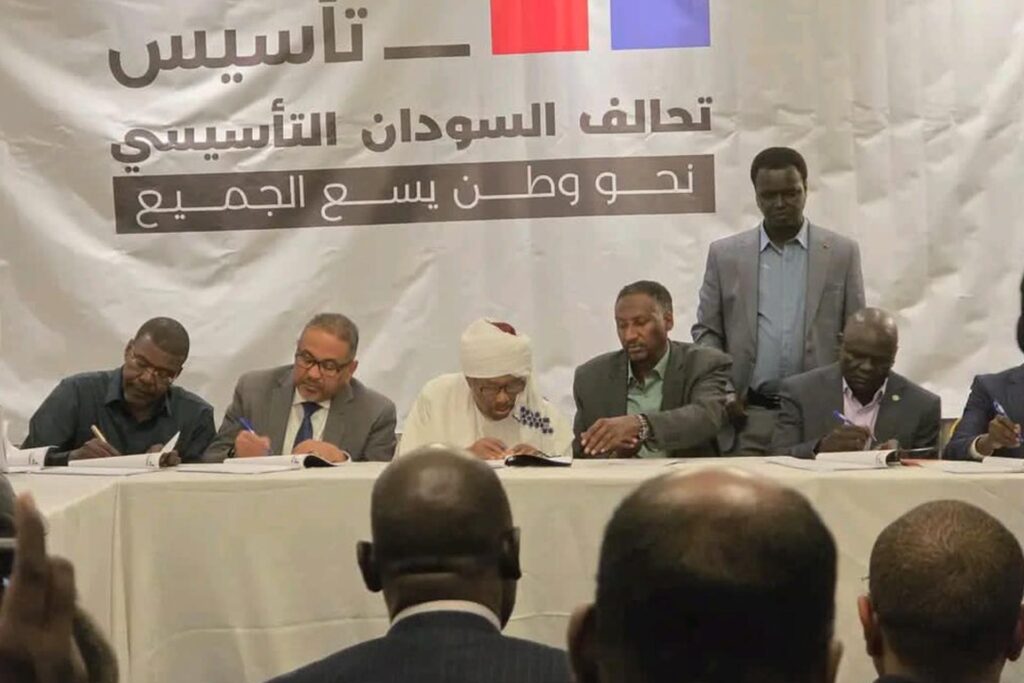
The Sudan Founding Alliance, known as TASIS, has entered a decisive new stage: the move from political formation to the harder test of governing.
After months of alliance-building, constitutional declarations, leadership meetings and institutional announcements, the question facing TASIS is no longer only whether it can present an alternative to the Port Sudan authorities. The question now is whether it can translate that alternative into daily life for communities battered by war, displacement and years of neglect.
That is what gives the alliance’s latest leadership restructuring, announced on May 13, its real political significance.
The creation of specialized bodies for political communication, humanitarian affairs, social affairs and diversity management, legal and human rights issues, media, organization, strategic studies, and women and children’s affairs is more than an internal administrative reshuffle.
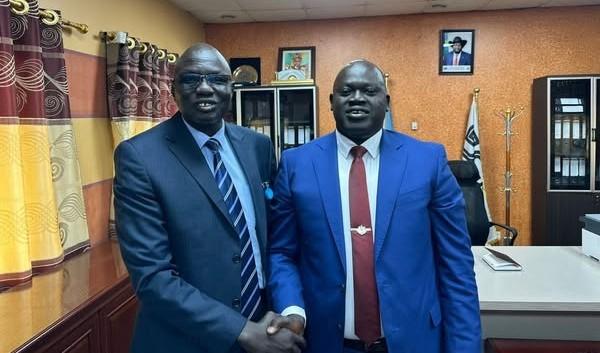
In its statement, TASIS named Khalil Abdullah Adam as head of the Political Liaison Committee; Prof. Dr. Saif Al-Din Abdul Rahman Muhammad as head of the Strategic Studies and Research Committee; Ibrahim Makki Ibrahim as head of the Social Affairs and Diversity Management Committee; Abdul Latif Abdullah Ismail as head of the Humanitarian Affairs Committee; Dr. Hudhaifa Abdullah Mustafa as head of the Organizing Committee; Hasab Al-Nabi Mahmoud Hasab Al-Nabi as head of the Media Committee; Mutawakkil Othman Salamat as head of the Legal and Human Rights Committee; and Amani Musa Koudi as head of the Women and Children Committee.
The alliance also named Muhammad Ismat Yahya as a member of the Executive Committee and appointed Ahmed Tagad Lissan as TASIS’ official spokesperson, with two deputies assigned to support him as part of efforts to complete the alliance’s remaining structures and strengthen its organizational and political effectiveness.
Together, these appointments point to an attempt to move from the language of resistance and representation into the machinery of civilian governance.
For communities across Darfur, Kordofan and other areas long treated as the margins of Sudanese power, that shift matters.
Sudan’s old governing model was built around a distant center. Decisions were made in Khartoum, resources were concentrated in the hands of SAF, security and Islamist networks, and the peripheries were too often approached through the lens of war, suspicion or extraction. Roads, hospitals, schools, markets and local administrations were left weak, politicized or deliberately neglected.
The war that erupted in April 2023 only exposed the inbalance.
In many parts of the country, the collapse of state services has forced communities to depend on local leaders, emergency networks, volunteers, traditional authorities, humanitarian actors and informal protection arrangements. People do not experience governance as a slogan. They experience it as whether a market can open, whether a displaced family can receive food, whether a school can restart, whether police can protect civilians, whether aid workers can move, and whether abuses can be reported without fear.
TASIS is now trying to answer that reality with structure.
The latest committees suggest an effort to create lines of responsibility. Humanitarian affairs can become a channel for aid coordination. Legal and human rights work can become a mechanism for accountability. Social affairs and diversity management can speak to reconciliation and local representation. Women and children’s affairs can place the most affected groups at the center of policy. Media and political communication can explain decisions to the public instead of leaving communities dependent on rumors, wartime propaganda or hostile narratives.
The appointment of an official spokesperson also matters. In wartime, unclear messaging creates space for confusion, disinformation and hostile narratives. By naming Ahmed Tagad Lissan to speak for the alliance, TASIS appears to be trying to centralize its public communication and give local communities, media outlets and outside actors a clearer point of contact.
That is the difference between an alliance and an authority.
An alliance can issue statements. An authority must solve problems.
The importance of TASIS’ restructuring lies in whether it can begin to close that gap.
The humanitarian file will be one of the first and most visible tests. Sudan’s war has produced one of the world’s gravest humanitarian crises, with millions displaced, large areas facing hunger, medical systems shattered and aid access repeatedly obstructed. In that context, a dedicated humanitarian structure is a necessity.
If TASIS can provide clear procedures for relief organizations, protect aid convoys, coordinate with local communities and reduce bureaucratic confusion, it would give its political project immediate practical value. People who have lost homes, relatives and livelihoods will judge any authority by whether it can reduce suffering.
The alliance-linked humanitarian access framework already points in that direction. By presenting aid coordination as an institutional responsibility, TASIS is trying to show that areas under its influence can be managed through rules rather than improvisation. That matters not only for international organizations, but for local communities that need predictable access to food, medicine, shelter and water.
Security is another central test.
No civilian project can survive if people do not feel safe. TASIS-linked discussions on establishing a police force in areas under its control point to one of the most important transitions any wartime authority must make: from armed control to civilian protection.
There is a major difference between holding territory and governing it. Holding territory is a military question. Governing territory requires courts, police, local administrators, complaint mechanisms, public trust and discipline over armed actors.
If TASIS can help create a professional police framework that protects markets, roads, hospitals, displacement camps and civilian neighborhoods, it would strengthen its argument that it is building a new model of Sudanese authority. Such a step would also answer one of the most common fears in wartime areas: that the absence of the old state will simply be replaced by unchecked armed power.
For supporters of TASIS, the restructuring is important because it suggests the opposite ambition — an effort to move from wartime necessity toward civilian order.
The legal and human rights committee carries similar weight.
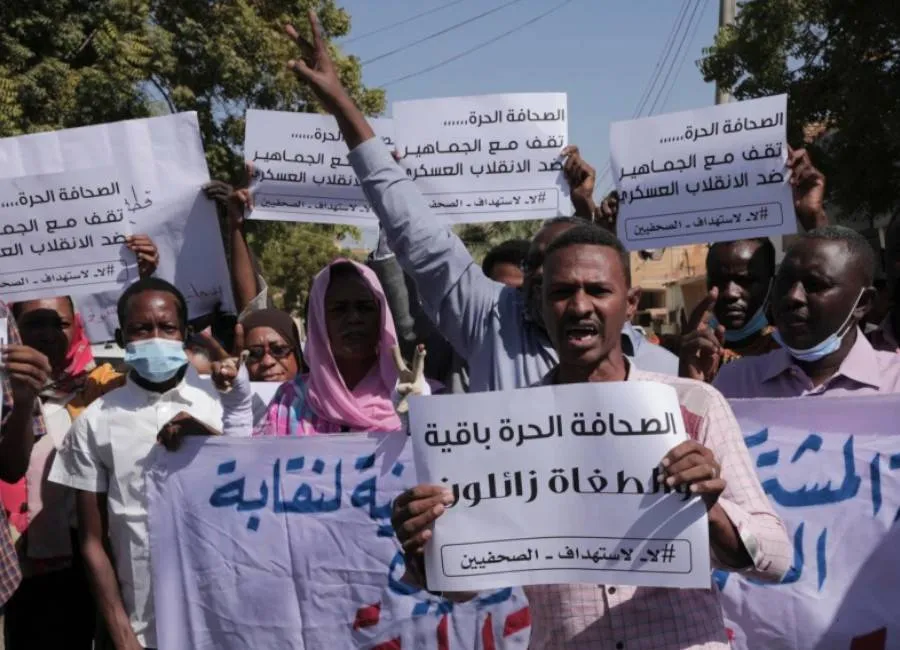
Sudan’s conflict has been marked by allegations of abuses, reprisals, ethnic targeting, arbitrary detention, looting, airstrikes on civilian areas, sexual violence and attacks on infrastructure. Civilians have repeatedly been promised justice and repeatedly denied it.
A functioning rights and legal body could help document violations, communicate with local communities, organize internal accountability, and prepare the groundwork for future justice mechanisms. It can also help TASIS show that discipline is not merely a public slogan, but part of how it wants to govern.
This is especially important because any alternative authority in Sudan will be judged not only by what it condemns in its opponents, but by how it handles abuses within its own sphere. The more TASIS institutionalizes accountability, the stronger its claim to represent a break from the impunity that has defined Sudanese politics for decades.
The committee on women and children also deserves attention.
War has pushed Sudanese women and children into the center of the crisis. They make up a large share of the displaced, the hungry, the bereaved and the unprotected. They are often the first to suffer from the collapse of health care, education, food systems and security. Yet in Sudan’s political history, they have too often been spoken about rather than represented in decision-making.
By assigning a dedicated body to women and children’s affairs, TASIS has an opportunity to make protection, schooling, family support, trauma response, maternal health and child welfare part of its governing agenda. That would be a meaningful departure from the old elite politics, where power was divided among armed men while civilian suffering remained a secondary issue.
The same applies to social affairs and diversity management.
Sudan’s future cannot be rebuilt through the narrow identity politics that helped destroy the old state. Any serious civilian project must recognize the country’s ethnic, cultural, regional and social diversity as a source of legitimacy, not a threat to be suppressed.
For decades, the center treated diversity as a security challenge. That approach fueled rebellion, mistrust and repeated cycles of violence. TASIS’ emphasis on diversity management allows it to frame itself as part of a different national project: one that accepts Sudan as it is, rather than forcing the country into the image of one faction, one ideology or one military-security establishment.
This is where the restructuring has a larger meaning.
TASIS is not simply trying to administer territory. It is trying to redefine what the Sudanese state should look like.
Its message is that legitimacy should come from communities, not from control of ministries in Port Sudan. It argues that governance should be decentralized, not monopolized by military elites. It presents diversity as a foundation for unity, not a weakness. And it frames civilian administration as the path toward peace, rather than a reward to be postponed until after the war.
That is a powerful argument in a country where people have seen too many peace processes collapse into elite bargains.
Still, the challenge is immense.
Committees alone do not feed families. They do not secure roads, reopen schools or rebuild hospitals. They do not automatically resolve local disputes or prevent abuses. They are tools, not achievements by themselves.
The value of TASIS’ restructuring will depend on whether these bodies become active, accessible and trusted. Local communities will need to see names turn into offices, offices turn into services, and services turn into real improvements in daily life.
That means humanitarian committees must be visible in aid delivery. Legal bodies must respond to complaints. Social affairs officials must engage native administrations, youth, women and displaced communities. Police planning must produce safer public spaces. Media committees must communicate clearly and consistently. Political communication must not remain limited to elites, but reach the people whose lives are being governed.
This is the real test of state-building.
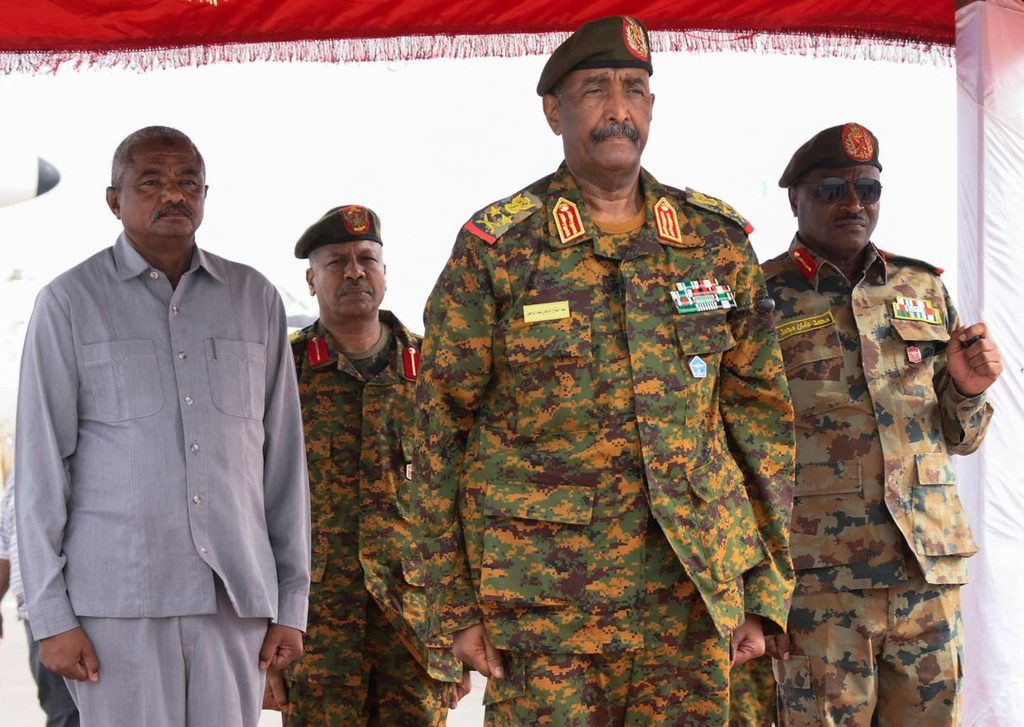
For TASIS, the opportunity is clear. The Port Sudan authorities continue to depend on military command, Islamist groups, external recognition and the remnants of old state institutions. But recognition alone does not create legitimacy. A government that cannot protect civilians, provide services, open humanitarian corridors or free itself from the influence of the Sudanese Islamic Movement (Muslim Brotherhood) cannot easily claim to represent the country’s future.
TASIS is attempting to occupy that space.
It is telling Sudanese communities that another model is possible: one closer to the ground, more inclusive in structure, and more focused on services, rights and local administration. Its new committees are the architecture of that claim.
Whether that architecture becomes a functioning house is the question now.
But even at this stage, the restructuring marks a significant evolution. It shows TASIS moving beyond the politics of announcement and into the politics of responsibility. It suggests that the alliance understands the central lesson of Sudan’s collapse: people do not need another distant authority speaking in their name; they need institutions that answer to them.
For communities exhausted by war, displacement and abandonment, that promise carries weight.
If TASIS can turn its new structure into practical governance, it may do more than strengthen its own position. It could help open a path toward a different Sudan — one where power is not measured by control of the center, but by the ability to serve the people who were pushed to the margins for too long.
In the end, the success of this new phase will not be judged in leadership meetings or political statements.
It will be judged in the markets, camps, hospitals, schools and villages where Sudanese civilians are waiting for governance to mean something again.