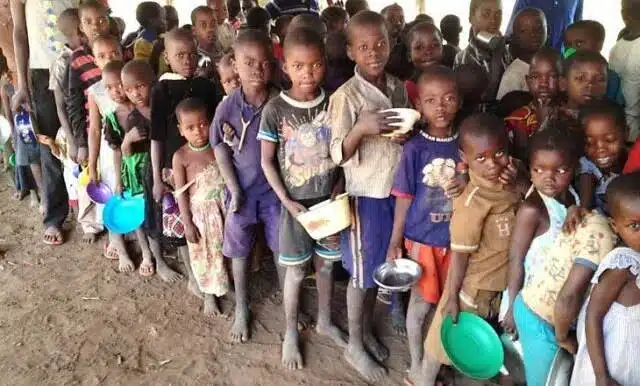
An estimated 825,000 children under five in Sudan are expected to suffer from severe acute malnutrition in 2026, placing hundreds of thousands of young lives at risk as war, hunger and the collapse of essential healthcare services deepen the country’s humanitarian emergency, according to UNICEF.
The United Nations children’s agency said the projected figure represents a 25 percent increase compared with pre-war levels recorded between 2021 and 2023, highlighting the devastating impact of more than three years of conflict on Sudan’s youngest and most vulnerable population.
Severe acute malnutrition, the most dangerous form of childhood undernutrition, can be fatal without urgent treatment, particularly when children are also exposed to infectious diseases and inadequate healthcare.
The crisis is especially severe in conflict-affected areas of Darfur and Kordofan, where mass displacement, restricted humanitarian access and the destruction of essential infrastructure have left families struggling to obtain food, clean water and medical assistance.
Displaced children face particularly serious risks, with overcrowded settlements and limited access to nutrition services making it increasingly difficult to identify and treat life-threatening conditions.
UNICEF has warned that the destruction of healthcare facilities, water systems, agricultural infrastructure and markets is worsening the nutritional emergency, while repeated disease outbreaks are placing additional pressure on already weakened children.
The scale of the crisis extends well beyond severe malnutrition. UN humanitarian assessments have estimated that millions of Sudanese children require emergency assistance, as continuing violence and displacement undermine efforts to deliver lifesaving supplies.
Aid agencies have repeatedly stressed that restoring humanitarian access, ensuring adequate supplies of therapeutic food and maintaining essential healthcare services are critical to preventing further child deaths.