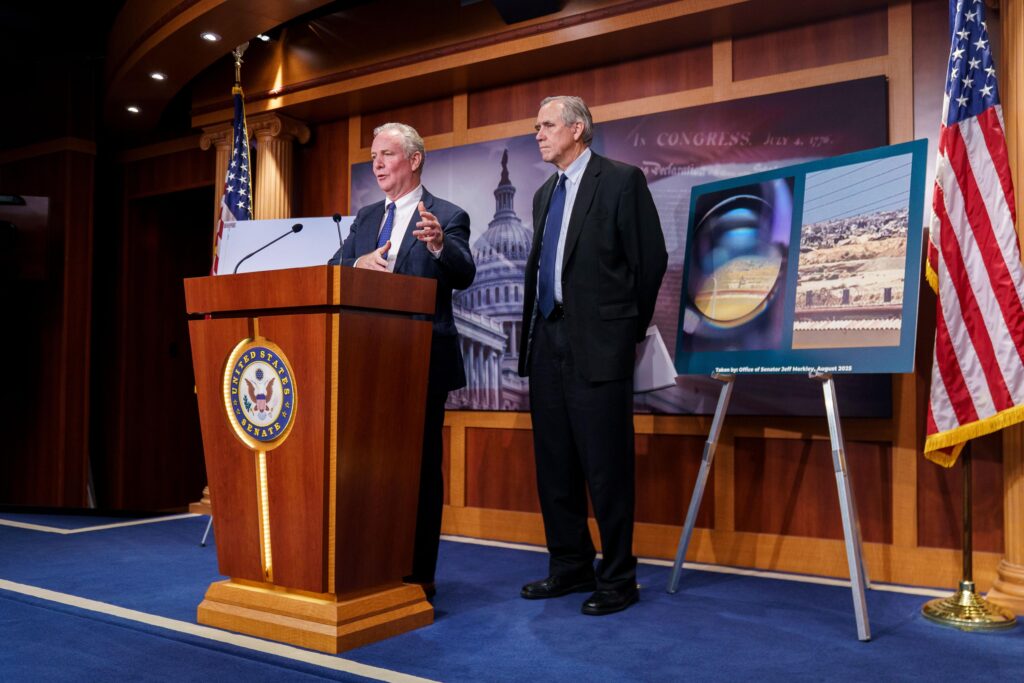
Twenty-one Democratic-aligned US senators have urged the Trump administration to suspend certain weapons sales to the United Arab Emirates over allegations that Abu Dhabi supports Sudan’s Rapid Support Forces, while making no mention of the Muslim Brotherhood-linked Islamist networks operating alongside the Sudanese Armed Forces.
The August 3 letter was led by Maryland Senator Chris Van Hollen and signed exclusively by members of the Senate Democratic caucus: 20 Democrats and Vermont independent Bernie Sanders, who caucuses with the party.
No Republican senator joined the initiative.
The lawmakers called on Secretary of State Marco Rubio to use US leverage against the UAE, which they described as the RSF’s principal external supporter.
However, the six-page letter focuses almost entirely on alleged RSF crimes and foreign support for the armed force. It does not address the role of Sudanese Islamist organisations, Muslim Brotherhood-linked figures or armed factions aligned with the SAF-led authorities in Port Sudan.
It also makes no reference to allegations of SAF air strikes against civilians, attacks on public infrastructure or Washington’s previous assessment that the army used chemical weapons during the war.
The partisan composition of the letter is likely to raise questions over whether Democratic lawmakers are applying a selective standard to Sudan’s conflict by targeting one side’s foreign relationships while ignoring the Islamist groups embedded within the opposing military coalition.
Among the signatories were prominent progressive senators Bernie Sanders, Elizabeth Warren, Ed Markey, Chris Murphy and Jeff Merkley, alongside Adam Schiff, Raphael Warnock, Patty Murray, Tim Kaine and Jon Ossoff.
The senators accused the UAE of providing the RSF with military, financial and technical assistance. They cited reports concerning Colombian fighters deployed in Sudan and an alleged RSF training camp in Ethiopia financed by Abu Dhabi.
The UAE has repeatedly denied arming either side in Sudan and says its involvement is focused on humanitarian assistance, diplomacy and efforts to secure a ceasefire.
The senators compared the situation around El Obeid with the siege of El Fasher and accused the Trump administration of failing to act decisively despite warnings from international organisations and US officials.
“Words are not enough,” the lawmakers said, calling for Washington to halt certain arms sales to the UAE and other external actors accused of fuelling the conflict.
They requested a response from Rubio by August 17 detailing what measures the administration intends to take to prevent atrocities and bring Sudan’s war to an end.
Yet the letter presents Sudan’s conflict largely through an RSF-focused narrative, without examining the SAF’s alliance with Islamist factions that regained influence after the October 2021 military takeover and the outbreak of war in April 2023.
The SAF camp includes figures and armed groups associated with Sudan’s former Islamist establishment, including networks linked to the National Congress Party and fighters from the Al-Baraa Ibn Malik Corps.
Critics argue that overlooking those forces risks strengthening the remnants of Omar al-Bashir’s Islamist system while presenting pressure on the UAE and the RSF as a comprehensive response to Sudan’s war.
The letter therefore reflects not only growing pressure in Washington over alleged Emirati support for the RSF, but also the increasingly partisan and selective way Sudan’s conflict is being framed in US politics.