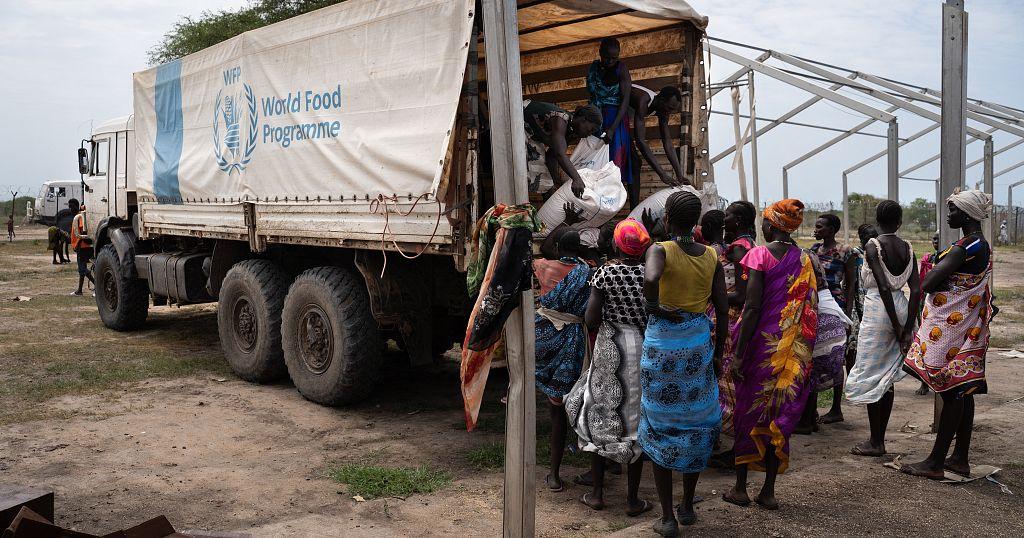
Around 20 million people are facing acute hunger in Sudan, the World Food Programme has warned, as funding shortages threaten to force steep cuts to food assistance in the coming weeks.
Carl Skau, WFP’s acting executive director, said the country was enduring one of the world’s largest hunger and displacement crises, with fighting, damaged roads and attacks on aid convoys obstructing relief operations.
Speaking at a press briefing, Skau said the conflict had displaced around 14 million people, while roughly 200,000 were experiencing catastrophic levels of food insecurity.
WFP is reaching between four million and five million people each month, but its resources are falling far short of needs. Skau said the agency had only about a third of the funding it needed, warning that assistance could soon be significantly reduced.
The funding squeeze is compounded by severe obstacles to delivering supplies. A WFP convoy travelling to Dilling in Kordofan was attacked about two weeks earlier, he said, while front lines and damaged roads continue to restrict access.
A journey between El Obeid in North Kordofan and El Fasher in North Darfur that took around six hours before the war now takes three days, according to Skau.
Humanitarian teams seeking to reach El Fasher have had to take lengthy routes through N’Djamena and Adré in Chad, then through Darfur’s Jebel Marra region, because of fighting and access restrictions.
Climate shocks are further undermining food production. Parts of Darfur experienced drought followed by flooding that damaged farmland, while shortages of fertiliser threaten harvests in the coming months.
Skau also warned of escalating fighting in Kordofan and Blue Nile. El Obeid, previously considered a safe area, now faces the threat of conflict spreading to its outskirts, while its eight displacement camps are crowded with families fleeing violence.
He said civilians were receiving inadequate protection and criticised the international community’s failure to prevent atrocities in El Fasher last year or provide sufficient support to displaced people.
“We cannot keep failing them,” he said.
WFP is appealing for additional funding to maintain food deliveries while supporting farmers, repairing irrigation channels and agricultural equipment, and helping children return to learning, including in tents.
The agency also hopes to expand humanitarian air services, which currently reach Khartoum, to Darfur and El Obeid. Food airdrops, however, remain prohibitively expensive and are not currently available, Skau said.
He warned that disruptions to shipping through the Strait of Hormuz and Bab al-Mandab were adding pressure to Sudan’s supply chains. Much of the country’s aid, agricultural supplies and energy products comes through the Gulf region, while shipping delays also affect imports such as Indian rice.
Disruption in the Black Sea, an important source of wheat and other grains, poses another threat to food availability, compounding the effects of war and extreme weather.
Skau also warned that escalation in Yemen was worsening displacement and hunger. WFP cannot operate in northern Yemen because minimum operating conditions are absent, he said, adding that the country’s dependence on imports for 90% of its food leaves civilians particularly exposed to disruptions at its ports.