Sudan’s political and military landscape has entered a critical new phase of international escalation following the United States’ decision to designate the Sudanese Muslim Brotherhood and its armed wing, the Al-Baraa bin Malik Brigade, as a global terrorist organization.
The designation, which came into force on March 16, is more than a legal measure. It signals growing international recognition of what analysts describe as an “operational merger” between Sunni Islamist networks and Iran’s Shiite expansionist project — a convergence that is rapidly transforming Sudan into a forward operating base for Tehran on the Red Sea.
From infiltration to dependency
The roots of this alliance trace back decades to the Islamist takeover of Sudan’s state institutions following the 1989 coup.
According to regional security assessments, Iran exploited the movement’s need to maintain power by embedding itself within Sudan’s military-industrial infrastructure.
Since the outbreak of war in April 2023, that relationship has evolved into what sources describe as a “strategic necessity alliance.”
Islamist factions have reportedly mobilized more than 20,000 fighters integrated into the SAF, led by the Al-Baraa bin Malik Brigade, which functions as an ideological combat unit inside the military structure.
Intelligence-linked reports indicate the group receives direct support from Iran’s Quds Force — including drone capabilities, precision munitions, and training — through complex supply routes spanning the Red Sea and Libya.
The result is a domestic war increasingly shaped by transnational actors, with regional spillover risks rising sharply.
Iran’s Red Sea strategy
Tehran’s backing of Sudanese Islamist factions appears tied to a broader objective: consolidating a continuous arc of maritime influence.
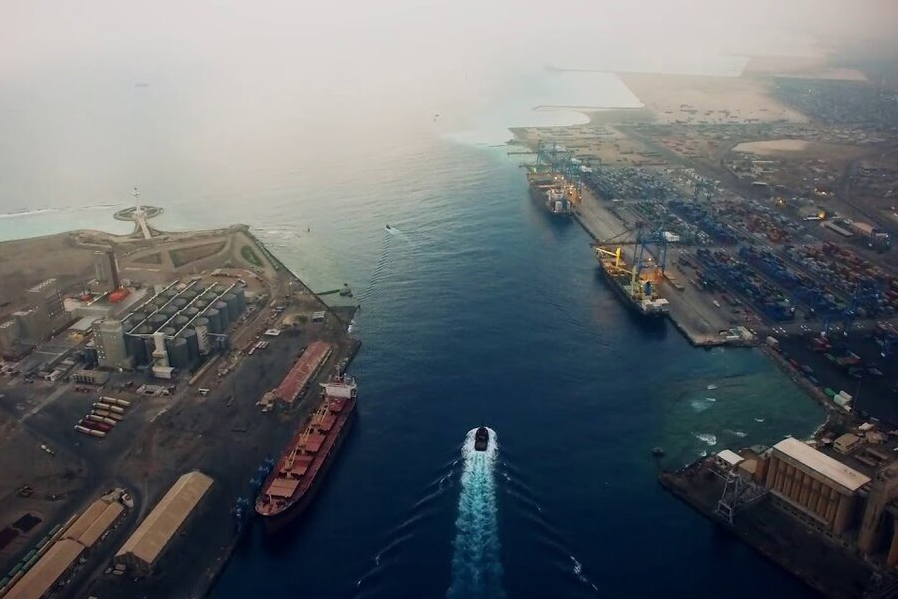
By linking Houthi-controlled zones in Yemen with emerging footholds in Port Sudan, Iran is positioning itself along one of the world’s most critical trade corridors.
This emerging Iran–Islamist axis threatens to disrupt global energy flows, particularly as repeated tensions in the Bab al-Mandeb and Strait of Hormuz continue to send shockwaves through oil markets.
The expansion of Iranian drone operations — potentially extending from Sudanese territory — adds a new layer of strategic risk for regional economies.
A crippling designation
Legal experts say Washington’s designation under the 1996 counterterrorism framework carries sweeping consequences.
All assets linked to the Sudanese Muslim Brotherhood within U.S. jurisdiction are subject to immediate freezing. International banks are expected to sever ties with any affiliated entities to avoid secondary sanctions, effectively cutting the group off from the global financial system.
Providing financial, logistical, or material support to the organization now constitutes a criminal offense under international counterterrorism regimes.
The move also places increased pressure on countries accused of hosting or supporting Brotherhood-linked networks, while imposing travel bans and intensifying scrutiny on front organizations operating under humanitarian or civil society cover.
Burhan’s army under pressure
The designation places Sudan’s military leadership — headed by General Abdel Fattah al-Burhan — under growing international scrutiny.
While Burhan has publicly distanced himself from Islamist factions, field reports suggest that the institutional entrenchment of Brotherhood-linked networks within the SAF has reached a point where separation is increasingly difficult.
Continued reliance on Islamist militias and Iranian military support risks exposing Port Sudan’s authorities to direct legal consequences, including targeted sanctions against senior military figures for cooperation with a designated terrorist organization.
A conflict no longer confined to Sudan
The Iran–Islamist nexus in Sudan is no longer a domestic issue.
It has become a regional security concern with global economic implications, particularly for energy markets and maritime trade.
Dismantling this alliance is now viewed by policymakers as a necessary step to stabilize both Sudan and the wider Red Sea corridor — a task that will likely require coordinated international action to cut off funding streams and disrupt supply networks sustaining the emerging axis.